World Bank launches first digital strategy, targets AI access for 1.2 billion youth

Synopsis
For the first time in its history, the World Bank has a single, unified digital strategy — and its ambition is staggering. With 1.2 billion young people set to enter developing-economy workforces but only 420 million jobs projected to be available, the bank is betting on affordable AI, shared GPU access, and 'small AI' tools to close a gap that no traditional development playbook has solved.
Key Takeaways
The World Bank Group unveiled its first comprehensive digital strategy in Seoul on 20 October 2026 .
An estimated 1.2 billion young people will enter developing-economy workforces over the next 10–15 years , but only about 420 million jobs are projected to be created.
Only 23% of people in low-income countries used the internet in 2025 , versus 94% in high-income nations; more than 2 billion people remain offline globally.
The strategy introduces an AI Infrastructure and Readiness Initiative offering shared, pay-as-you-go GPU access , initially focused on Africa and Latin America . 'Small AI' — task-specific, locally adapted tools for farmers, health workers, and small businesses — is a central feature of the strategy.
No separate funding allocation was announced for individual countries, including India .
The World Bank Group has unveiled its first-ever comprehensive digital strategy, placing artificial intelligence, affordable internet access, and job creation at the core of its global development agenda — as an estimated 1.2 billion young people are set to enter the workforce in developing economies over the next 10 to 15 years. The strategy was announced in Seoul on Tuesday, 20 October 2026.
What the Strategy Covers
The initiative brings together the institution's public and private sector capabilities to help developing economies expand digital connectivity, improve technology access, and generate employment. It is built around four core priorities: expanding reliable connectivity, making digital devices and data affordable, strengthening digital services and skills, and preparing developing nations to benefit from artificial intelligence.
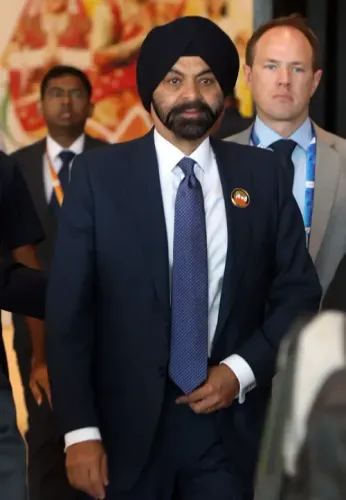
World Bank Group President Ajay Banga framed the strategy around practical utility. 'Digital technology can help countries create jobs and make scarce resources go further. Realizing that potential requires a comprehensive approach — from reliable connectivity and affordable devices to digital skills and useful services,' he said. Banga added: 'Our first digital strategy brings these pieces together, helping countries build the foundations to benefit from today's digital tools and the promise of small AI — AI for the people.'
The Employment Gap It Aims to Bridge
The strategy confronts a stark arithmetic: according to the World Bank, the 1.2 billion young people expected to reach working age over the next decade and a half will face economies projected to generate only about 420 million jobs — a shortfall of roughly 780 million. Digital technology is identified as a potential bridge, with applications spanning infrastructure, energy, agriculture, healthcare, tourism, and manufacturing.
Notably, more than two billion people remained offline globally as recently as 2025. Only 23 per cent of people in low-income countries used the internet, against 94 per cent in high-income economies — a gap the World Bank describes as both a connectivity and affordability challenge.
The 'Small AI' Push and GPU Access Initiative
A distinctive element of the strategy is its emphasis on 'small AI' — artificial intelligence tools adapted to specific tasks and local conditions rather than large-scale, resource-intensive models. Practical examples cited include applications that help farmers identify crop diseases, assist health workers in patient care, and support small businesses in managing inventories.
Alongside this, the World Bank announced an AI Infrastructure and Readiness Initiative, which proposes shared, pay-as-you-go access to specialised graphics processing units (GPUs) for emerging economies. The initiative positions this as a cost-effective alternative to building expensive standalone national data centres, with an initial focus on Africa and Latin America.
Implementation and Funding
The strategy will combine the institution's financing, policy advice, private investment, and guarantees to support country-specific priorities. Planned infrastructure investments span international cables, national broadband networks, and local connectivity infrastructure for homes, businesses, schools, and healthcare facilities. The World Bank also said it would work with manufacturers, mobile operators, and financial institutions to lower the cost of entry-level smartphones and broadband services.
Privacy protection, cybersecurity, and anti-fraud safeguards are described as essential components of the programme. The announcement did not specify a separate funding allocation for any individual country, including India. Under Banga, who became president in June 2023, the institution has increasingly prioritised employment generation and private capital mobilisation across its more than 100 country operations.
The strategy marks a significant institutional pivot for an organisation whose digital interventions have historically been piecemeal; consolidating them under a single framework signals sustained intent — though the scale of the employment gap means delivery timelines will face close scrutiny.
Point of View
As past digital inclusion efforts often were. The omission of country-specific funding commitments — including for India, one of the largest World Bank borrowers — leaves the strategy's ambition ahead of its operational specificity. Ajay Banga's instinct to mobilise private capital alongside public finance is the right frame; the unanswered question is whether the bank can move fast enough against a demographic clock that is already ticking.
NationPress
20 Oct 2026
Frequently Asked Questions
What is the World Bank's first digital strategy?
It is a comprehensive framework announced in Seoul on 20 October 2026, consolidating the World Bank Group's approach to digital connectivity, affordable technology, AI readiness, and job creation in developing economies. The strategy has four priorities: reliable connectivity, affordable devices and data, stronger digital services and skills, and AI preparedness.
Why did the World Bank launch this strategy now?
The institution points to a looming employment crisis: 1.2 billion young people are projected to enter developing-economy workforces over the next 10–15 years, while those economies are expected to generate only about 420 million jobs. Digital technology — particularly affordable AI — is positioned as a key tool to bridge that gap.
What is the AI Infrastructure and Readiness Initiative?
It is a World Bank programme offering emerging economies shared, pay-as-you-go access to GPUs — the specialised chips needed to develop and run AI applications — as a lower-cost alternative to building standalone national data centres. The initial focus is Africa and Latin America.
What does 'small AI' mean in the context of this strategy?
'Small AI' refers to artificial intelligence tools designed for specific, localised tasks rather than large general-purpose models. Examples include apps that help farmers diagnose crop diseases, assist health workers with patient care, and support small businesses in inventory management.
How does the digital divide look globally, according to the World Bank?
As of 2025, more than two billion people remained offline globally. Only 23% of people in low-income countries used the internet, compared with 94% in high-income economies. The bank notes that many people live within mobile network coverage but cannot afford smartphones or data services.