WUC Sounds Alarm on China's Rising Transnational Repression of Uyghurs

Synopsis
The World Uyghur Congress raises urgent concerns over China's escalating transnational repression against Uyghurs abroad, highlighting alarming surveillance practices in Germany and state-sponsored forced labor allegations.
Key Takeaways
WUC expresses deep concern over China's transnational repression against Uyghurs.
Demonstration in Switzerland showcased unity among Uyghur communities.
Concerns raised about surveillance technology used in Germany.
Allegations of state-sponsored forced labor in Xinjiang and Tibet.
International advocacy is crucial to address human rights violations .
Berlin, February 23 (NationPress) The World Uyghur Congress (WUC) has once again voiced serious alarm regarding what it characterizes as China’s increasing "transnational repression" aimed at Uyghurs living abroad.
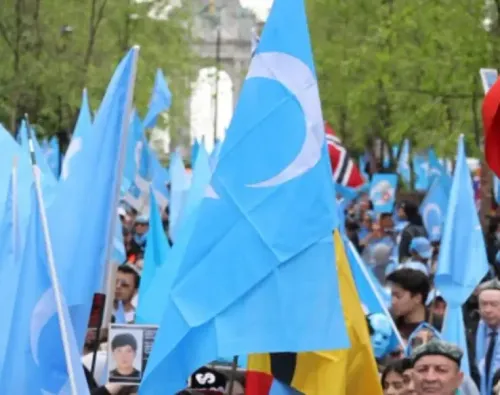
During its weekly briefing, the WUC revealed that it participated in a significant demonstration on February 15 alongside approximately 70–80 Uyghurs in Switzerland, organized by the Swiss Uyghur community to exhibit their "unity, resilience, and solidarity".
Referring to reports from German 'Table Media', the WUC raised serious concerns about the deployment of Chinese surveillance technology throughout Germany, especially devices manufactured by Hikvision and Dahua—companies associated with surveillance activities in East Turkistan, also recognized as the Xinjiang Uyghur Autonomous Region of China.
The organization cautioned that the extensive installation of such equipment in airports, train stations, government offices, and public areas erodes confidence in state protection, particularly given China’s history of transnational repression against Uyghurs overseas.
Moreover, the International Labour Organisation (ILO) Committee of Experts assessed China’s adherence to the Forced Labour Convention and the Abolition of Forced Labour Convention. The Committee highlighted allegations from the International Trade Union Confederation regarding widespread state-sponsored forced labour impacting Uyghurs and other minority groups in Xinjiang and Tibet.
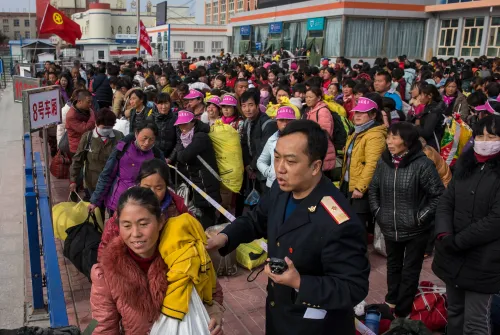
The WUC referenced reports that millions were relocated in 2024 under labor-transfer initiatives, including 3.34 million in Xinjiang and 648,000 in Tibet, often under the threat of detention for non-compliance. Conversely, the Chinese government denies the existence of state-sponsored forced labour, asserting that participation is voluntary.
The ILO Committee reminded that "forced labour encompasses work performed under the threat of punishment without freely given consent" and urged China to guarantee that labor transfers are truly voluntary.
At the Women’s Progress Dialogue during the World Forum 2026, featuring former US Secretary of State Hillary Clinton, WUC Executive Committee Chair Rushan Abbas, as the keynote speaker, emphasized forced sterilisations, forced abortions, forced marriages, and the continued imprisonment of her sister, Gulshan Abbas. She also disclosed how Uyghur forced labour contaminates global supply chains.
Earlier, on February 16, a German television program 'Weltspiegel' aired an investigation revealing how governments intimidate and threaten human rights defenders, even within United Nations spaces. The interview included insights from UN High Commissioner Volker Turk, WUC Vice President Zumretay Arkin, Kenneth Roth, and Ralph Weber.
“Zumretay Arkin recounted her personal experience of being monitored on UN grounds and detailed how the Chinese government targets Uyghur activists and their families for engaging with UN processes and speaking out about the genocide in East Turkistan. The report illustrates that reprisals transcend borders — or even the UN,” stated the WUC.
Emphasizing a report by the US-based advocacy group Human Rights Watch from February 18, the organization noted that Chinese authorities attempted to coerce two Uyghur activists in Paris, even asking one to act as a spy on the Uyghur community.
“These incidents highlight a surge in transnational repression, with officials allegedly offering contact with detained family members in exchange for cooperation and trying to silence activism. Both activists recorded and disseminated the calls,” the WUC remarked.
Point of View
Which not only threaten individual freedoms but also challenge global human rights standards. These developments warrant serious attention from the international community.
NationPress
3 Oct 2026
Frequently Asked Questions
What is transnational repression?
Transnational repression refers to the tactics used by states to control and intimidate individuals residing outside their borders, particularly targeting dissidents and minority groups.
What did the WUC demonstrate against?
The WUC demonstrated against China's increasing repression of Uyghurs living abroad, emphasizing solidarity and resilience among the community.
What is the role of Chinese surveillance technology in this context?
Chinese surveillance technology is being deployed in various countries, including Germany, raising concerns about the erosion of privacy and potential monitoring of Uyghur individuals.
What allegations were made regarding forced labor?
The ILO Committee noted allegations of state-sponsored forced labor affecting Uyghurs and other minorities, with significant numbers reported to be involved in labor-transfer programs.
How is the international community responding?
The international community is increasingly aware of these issues, with organizations and advocates calling for accountability and protection for Uyghurs facing repression.