MEA: 10 Indian Ships Exit Hormuz, 14 Still in Persian Gulf
Synopsis
India's MEA revealed 10 Indian ships have safely exited the Strait of Hormuz while 14 remain stranded in the Persian Gulf. With Iran's IRGC attacking vessels bound for Indian ports — including one hours after a US-announced ceasefire — New Delhi has summoned Tehran's ambassador and demanded immediate safe passage for its merchant fleet.
Key Takeaways
10 Indian ships have safely exited the Strait of Hormuz in the past few weeks, while 14 remain in the Persian Gulf , as confirmed by MEA spokesperson Randhir Jaiswal on April 23, 2025 .
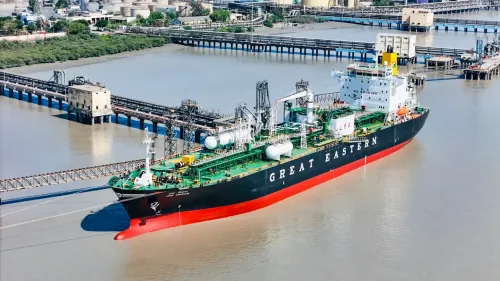
On April 22 , Iran's IRGC-N attacked and seized two ships — MSC-Francesca and Epaminodas — with the latter bound for Mundra Port, Gujarat .
The attack on the Epaminodas occurred hours after US President Donald Trump announced an indefinite ceasefire in the region.
The Epaminodas is a Liberian-flagged container ship owned by Greek firm Kalmar Maritime LLC , operated from Jebel Ali, Dubai .
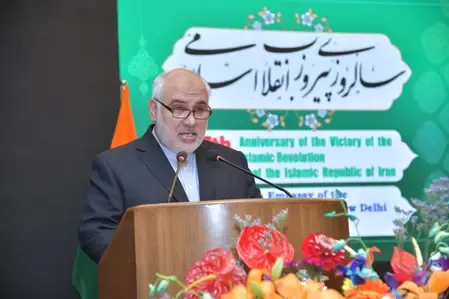
Iran's Ambassador Mohammad Fathali was summoned by the MEA , where Foreign Secretary Vikram Misri conveyed India's strong protest over attacks on Indian-flagged vessels .
The Strait of Hormuz handles roughly one-fifth of global oil trade , making safety of passage a critical energy security concern for India .
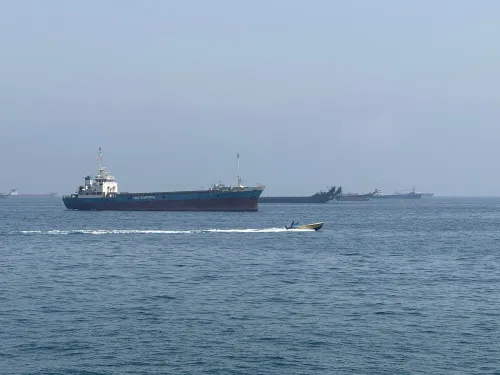
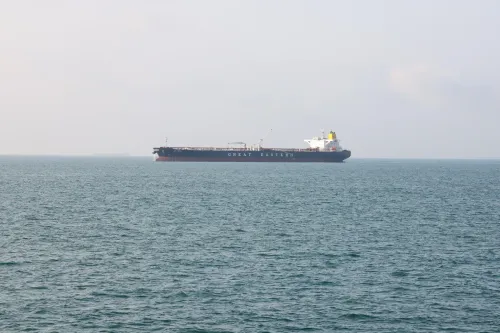
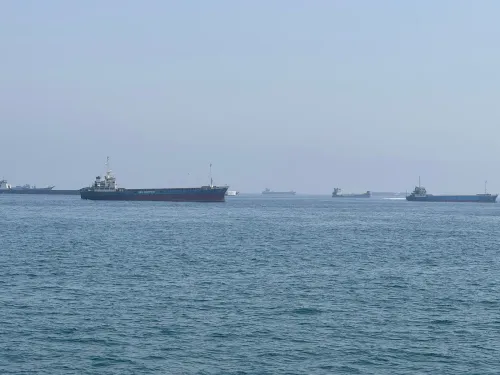
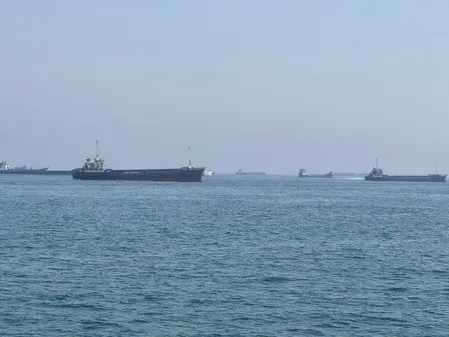
New Delhi, April 23: The Ministry of External Affairs (MEA) confirmed on Thursday, April 23, that 10 Indian ships have safely cleared the Strait of Hormuz over the past few weeks, while 14 Indian vessels continue to remain in the Persian Gulf amid escalating regional tensions. The disclosure came as India grapples with a string of hostile incidents involving its merchant fleet in one of the world's most critical maritime chokepoints.
What MEA Officially Said
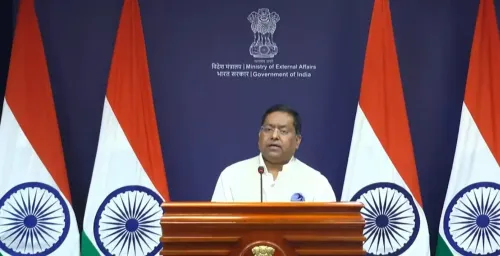
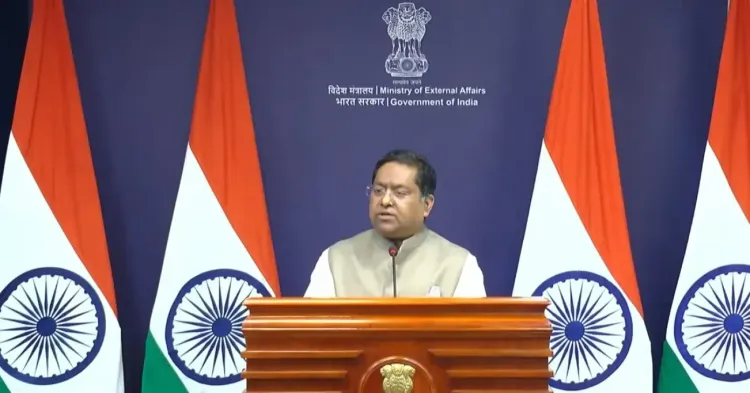
MEA spokesperson Randhir Jaiswal, addressing a weekly media briefing in New Delhi, stated: "We have 10 Indian ships which have exited Strait of Hormuz safely in the last few weeks. We have 14 Indian ships which are still in the Persian Gulf."
The statement underscores both a degree of progress in securing the passage of Indian vessels and the persistent risk that remains for those yet to exit the strategically vital waterway.
Fresh Iranian Attack on Ship Bound for India
On Wednesday, April 22, Iran attacked a ship in the Strait of Hormuz that was en route to Mundra Port in Gujarat, India. The attack occurred just hours after US President Donald Trump had announced an indefinite ceasefire, raising serious questions about Iran's intentions.
The Islamic Revolutionary Guard Corps Navy (IRGC-N) announced it had attacked and seized two ships — the MSC-Francesca and the Epaminodas — according to Iranian state-run Press TV.
The Liberian-flagged Epaminodas, a container ship owned by Greek firm Kalmar Maritime LLC, had departed from Jebel Ali port in Dubai and was scheduled to arrive at Mundra on Thursday, April 24, according to maritime tracking platforms Marinetraffic.com and Vesselfinder.com. Ship ownership and insurance tracker Steamshipmutual.com confirmed the Greek ownership of the vessel.
Earlier Attacks on Indian-Flagged Vessels
The latest incident follows an equally alarming episode from the previous Saturday, when Iran attacked two Indian-flagged ships in the Strait of Hormuz that had received explicit permission to traverse it. The attacks by IRGC gunboats triggered a sharp diplomatic response from New Delhi.
Iran's Ambassador to India, Mohammad Fathali, was summoned to the MEA for a meeting with Foreign Secretary Vikram Misri. India conveyed its "deep concern" over the firing on merchant ships and demanded an immediate resumption of safe passage facilitation for India-bound vessels.
The MEA's official statement read: "The Ambassador of the Islamic Republic of Iran in New Delhi was called in by the Ministry of External Affairs for a meeting with Foreign Secretary this evening. During the meeting, Foreign Secretary conveyed India's deep concern at the shooting incident earlier today involving two Indian-flagged ships in the Strait of Hormuz."
Why the Strait of Hormuz Matters for India
The Strait of Hormuz is a narrow but critical maritime corridor through which approximately one-fifth of global oil trade passes. For India, a major crude oil importer heavily dependent on West Asian supply routes, disruptions in this region carry direct consequences for energy security and shipping costs.
Tensions in and around the Strait have been elevated ever since the broader West Asia conflict erupted, placing Indian merchant vessels and their crews at significant risk. The IRGC-N's increasingly aggressive posture has alarmed global shipping operators and insurers alike.
India's Diplomatic Push and What Comes Next
India has urged Iran to resume its earlier practice of facilitating the safe passage of India-bound ships, noting that Tehran had previously cooperated on this front. Foreign Secretary Vikram Misri emphasized the importance India places on the safety of merchant shipping and mariners.
With 14 Indian ships still in the Persian Gulf and regional hostilities showing no signs of abating, New Delhi is expected to intensify diplomatic engagement with Tehran while closely monitoring the safety of its fleet. The international community will be watching whether Iran heeds India's calls for restraint or continues its aggressive maritime posture in the coming days.
Point of View
With 14 ships still in the Persian Gulf and Iran's IRGC showing no restraint even after a US-announced ceasefire, India must urgently evaluate whether bilateral diplomacy alone is sufficient to protect its maritime and energy interests in West Asia.
NationPress
19 Sept 2026
Frequently Asked Questions
How many Indian ships are still in the Persian Gulf as of April 23, 2025?
As of April 23, 2025, 14 Indian ships remain in the Persian Gulf, according to MEA spokesperson Randhir Jaiswal. An additional 10 Indian ships have already safely exited the Strait of Hormuz over the past few weeks.
Which ships did Iran's IRGC attack near the Strait of Hormuz recently?
Iran's Islamic Revolutionary Guard Corps Navy (IRGC-N) attacked and seized two ships — the MSC-Francesca and the Epaminodas. The Epaminodas, a Liberian-flagged container ship, was en route from Dubai's Jebel Ali port to Mundra Port in Gujarat, India.
How did India respond to Iran's attacks on Indian ships in the Strait of Hormuz?
India summoned Iran's Ambassador Mohammad Fathali to the MEA for a meeting with Foreign Secretary Vikram Misri. New Delhi conveyed deep concern over the firing on Indian-flagged vessels and urged Iran to resume facilitating safe passage for India-bound ships.
Why is the Strait of Hormuz important for India?
The Strait of Hormuz is a critical chokepoint through which about one-fifth of global oil trade passes, making it vital for India's energy imports from West Asia. Any disruption directly impacts India's crude oil supply and shipping costs.
Who owns the ship Epaminodas that was attacked near India's Mundra Port?
The Epaminodas is owned by Greek company Kalmar Maritime LLC, according to ship ownership and insurance tracker Steamshipmutual.com. The vessel was Liberian-flagged and scheduled to arrive at Mundra, Gujarat on April 24, 2025.