India condemns Strait of Hormuz attack on MT On Peace; 11 Indians injured
Synopsis
Two commercial vessels struck by projectiles in the Strait of Hormuz within three days — and Indian nationals are bearing the brunt. With 11 Indians injured aboard MT On Peace and five more rescued from MT Kazimah III just 72 hours earlier, New Delhi's repeated condemnations are being tested against a pattern of escalating maritime attacks in one of the world's most vital energy corridors.
Key Takeaways
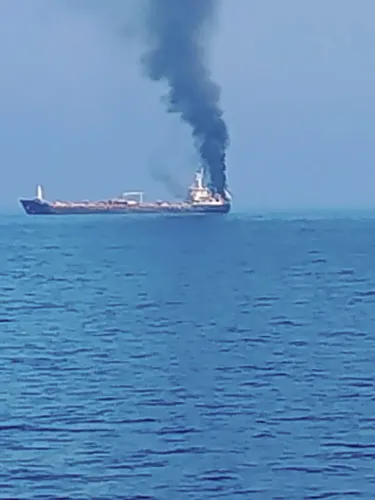
The Panama-flagged MT On Peace was struck by a projectile in the Strait of Hormuz on 6 October 2026 .
Of the 19 total crew , 17 are Indian nationals ; 11 Indians are among the 12 injured .
All injured crew have been evacuated to Khasab, Oman for medical treatment, with assistance from Omani authorities .
The MEA condemned the attack and called for an immediate end to targeting of commercial shipping and civilian maritime infrastructure.
Just three days earlier , on 3 October 2026 , five Indian nationals were rescued from the Kuwait-flagged MT Kazimah III , also hit by a projectile in the same strait.
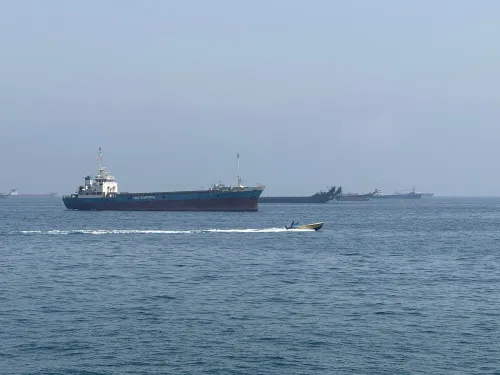
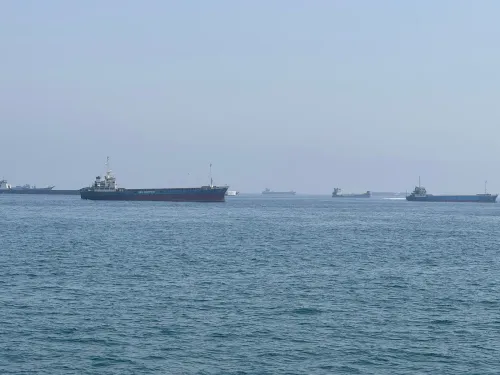
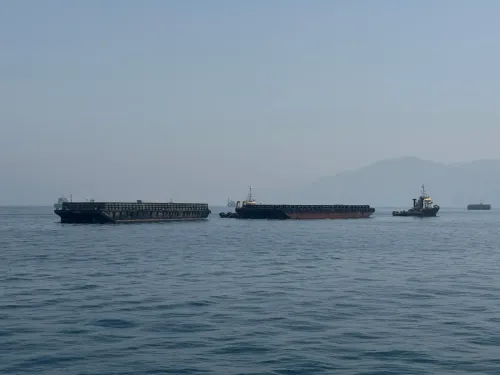
The Strait of Hormuz is a critical global energy corridor for oil and LNG exports from the Persian Gulf.
India on Tuesday, 6 October 2026 condemned the projectile attack on the Panama-flagged commercial vessel MT On Peace (IMO 9893204) while it was transiting the Strait of Hormuz off the coast of Oman, with 11 of the 17 Indian nationals on board among the 12 crew members injured. The Ministry of External Affairs (MEA) issued a strong statement calling for an immediate end to such attacks in the interests of regional peace and stability.
What Happened
The vessel, carrying a total crew of 19, was struck by a projectile while navigating the Strait of Hormuz — one of the world's most strategically critical energy corridors. Of the total crew, 17 are Indian nationals. With the assistance of Omani authorities, all injured crew members were evacuated and are currently receiving medical treatment in Khasab, Oman.
'We condemn the attack earlier today on a Panama-flagged commercial vessel MT On Peace off the coast of Oman, where it was struck by a projectile while transiting the Strait of Hormuz,' the MEA said, adding that India thanks the Omani authorities for their 'valuable support.'
India's Official Response
The MEA described the continuing pattern of attacks on shipping in the region as a 'cause of deep concern for India.' New Delhi reiterated its demand that the targeting of commercial shipping, seafarers, and civilian infrastructure must end immediately, and that free navigation through international waterways be restored at the earliest.
'The targeting of commercial shipping, seafarers and civilian infrastructure in the region must end, and navigation and commerce through international waterways must be restored at the earliest,' the MEA statement said.
A Pattern of Escalating Incidents
This attack follows a strikingly similar incident just days earlier. On 3 October 2026, the MEA confirmed that five Indian nationals aboard the Kuwait-flagged tanker MT Kazimah III were successfully rescued after that vessel was also struck by a projectile in the Strait of Hormuz. The Indian Embassy in Oman coordinated that rescue, confirming all five nationals were shifted ashore safely. Taken together, the two incidents within three days mark a troubling escalation for Indian seafarers operating in the region.
The Strait of Hormuz links the Persian Gulf with the Gulf of Oman and the Arabian Sea, serving as the primary export route for oil and Liquefied Natural Gas (LNG) from major Gulf producers. Any sustained disruption to shipping here carries significant implications for global energy markets and India's own energy security, given New Delhi's heavy reliance on Gulf crude imports.
Broader Implications for Indian Seafarers
India is one of the world's largest suppliers of maritime crew, with hundreds of thousands of Indian nationals working aboard commercial vessels globally. The clustering of attacks in the Strait of Hormuz puts a spotlight on the risks faced by Indian seafarers in a region that has seen heightened military tensions. New Delhi's repeated calls for cessation of hostilities — and its diplomatic engagement with Omani authorities — signal an increasingly active consular posture, though critics argue that stronger multilateral action through forums like the United Nations may be needed to deter future incidents.
As geopolitical tensions in the Gulf region show no sign of immediate resolution, further incidents involving Indian crew members remain a live concern for the government.
Point of View
And with its energy import dependency concentrated in Gulf crude, the cost of continued inaction is both human and strategic. New Delhi needs to move beyond bilateral thanks to Oman and push for a credible multilateral deterrence framework — whether through the UN Security Council, the Indian Ocean Naval Symposium, or direct pressure on the parties responsible.
NationPress
6 Oct 2026
Frequently Asked Questions
What happened to the MT On Peace in the Strait of Hormuz?
The Panama-flagged commercial vessel MT On Peace was struck by a projectile while transiting the Strait of Hormuz off the coast of Oman on 6 October 2026. Of its 19-member crew, 17 are Indian nationals, and 11 Indians are among the 12 crew members injured in the attack.
Where are the injured Indian crew members being treated?
All 12 injured crew members, including 11 Indian nationals, have been evacuated with the assistance of Omani authorities and are receiving medical treatment in Khasab, Oman. India's MEA thanked Oman for its 'valuable support' in the rescue operation.
Has India seen similar attacks on its seafarers recently?
Yes. Just three days before the MT On Peace attack, on 3 October 2026, five Indian nationals aboard the Kuwait-flagged tanker MT Kazimah III were rescued after that vessel was also struck by a projectile in the Strait of Hormuz. The Indian Embassy in Oman coordinated that evacuation.
Why is the Strait of Hormuz strategically significant?
The Strait of Hormuz links the Persian Gulf with the Gulf of Oman and the Arabian Sea, making it the primary export route for oil and LNG from major Gulf producers to global markets. Any sustained disruption to shipping there has significant consequences for global energy supply and India's own energy security.
What has India officially demanded in response to these attacks?
The MEA called for an immediate cessation of attacks on commercial shipping, seafarers, and civilian infrastructure, and demanded that free navigation and commerce through international waterways be restored at the earliest. India described the recurring attacks as a 'cause of deep concern.'