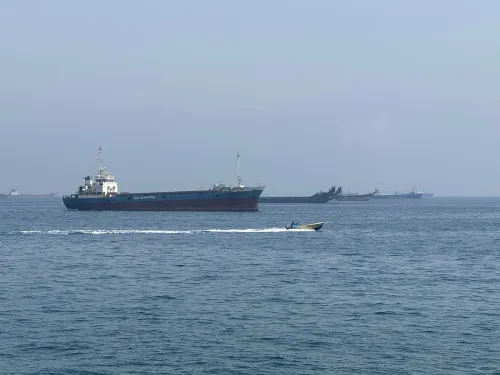
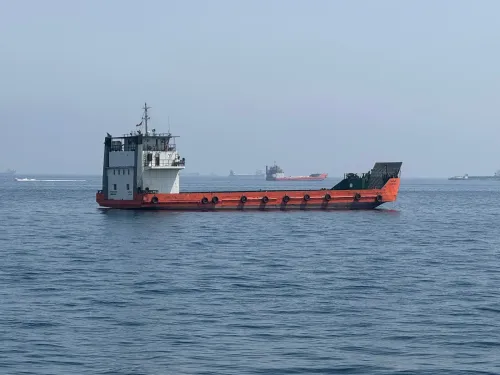
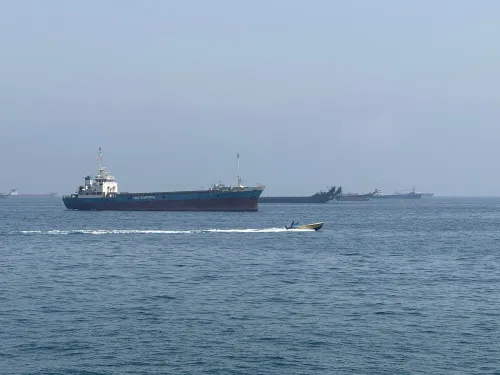
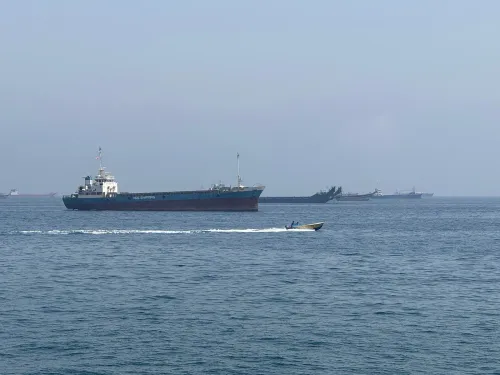
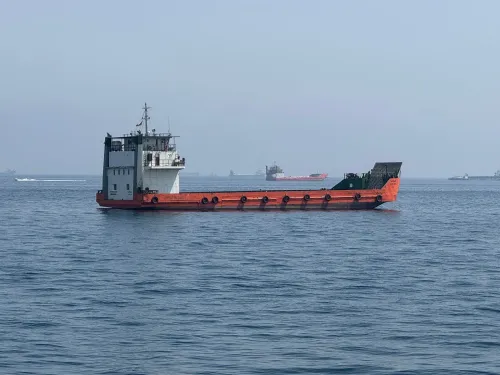
Strait of Hormuz attacks: 1 Indian seafarer dead, 11 injured on MT Al Bahiyah, MT Mombasa
Synopsis
One Indian seafarer is dead and 11 others injured after coordinated attacks on two vessels — MT Al Bahiyah and MT Mombasa — in the Strait of Hormuz. India has summoned Iran's envoy, lodged a formal protest, and called for an immediate end to hostilities in West Asia. Thirty Indian nationals were aboard the two ships combined.
Key Takeaways
MT Al Bahiyah and MT Mombasa were attacked while transiting the Strait of Hormuz on 14 July .
30 Indian seafarers were aboard the two vessels out of a combined crew of 46 .
One Indian national aboard MT Al Bahiyah has been killed; another is injured.
9 Indian nationals on MT Mombasa sustained injuries, including 2 in serious condition.
India summoned the Deputy Chief of Mission of Iran's Embassy in New Delhi and lodged a strong protest.
The MEA called for an immediate cessation of violence and a return to diplomacy in the West Asian region.
India on Tuesday, 14 July strongly condemned coordinated attacks on two commercial vessels — MT Al Bahiyah and MT Mombasa — during their transit through the Strait of Hormuz, in which one Indian seafarer was killed and at least 11 others were injured. The two ships together carried 30 Indian nationals among a combined crew of 46.
What Happened to the Two Vessels
The Ministry of External Affairs (MEA) confirmed that MT Al Bahiyah had 12 Indian nationals aboard, one of whom has lost his life and another has been injured. On board MT Mombasa were 18 Indian nationals, of whom 9 sustained injuries — including 2 reported to be in serious condition.
The MEA said India's Mission and Post in the UAE are closely monitoring the situation and are in active contact with UAE authorities to ensure all possible assistance is extended to the affected seafarers.
India Summons Iran's Envoy
In a significant diplomatic escalation, the Deputy Chief of Mission of the Embassy of Iran in New Delhi was summoned by the Ministry on Tuesday morning, and a strong protest against the attacks was lodged with him. The move signals India's intent to hold accountable those responsible for endangering Indian lives in international waters.
'We strongly condemn these attacks and acts of violence targeting seafarers and disrupting free and safe navigation through international waterways like the Strait of Hormuz,' the MEA said in its official statement.
India's Broader Concern on West Asia Escalation
Beyond the immediate incident, the MEA reiterated India's deep concern over the resumption of attacks and the escalation of hostilities across the West Asian region. New Delhi called for an immediate cessation of violence and a return to dialogue and diplomacy, invoking the principles of peace, security, and regional stability.
The ministry stressed that targeting commercial shipping and civilian infrastructure must stop, so that free and unimpeded navigation through international waterways — in keeping with international law — can be restored at the earliest.
Why This Matters for India
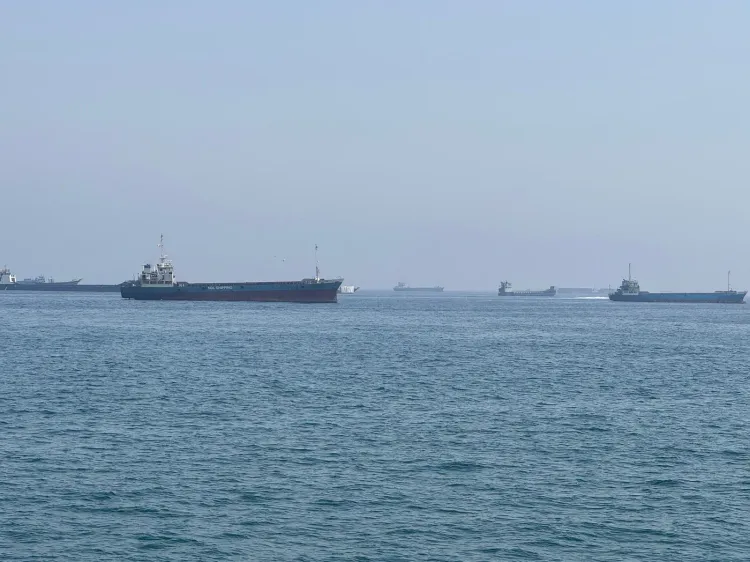
The Strait of Hormuz is one of the world's most critical maritime chokepoints, through which a significant share of India's energy imports transits. Indian seafarers constitute one of the largest national groups in global commercial shipping, making the safety of this corridor a matter of both strategic and humanitarian concern for New Delhi. This is not the first time Indian crew members have been caught in the crossfire of West Asian hostilities — the region's instability has repeatedly put Indian maritime workers at risk over the past year.
Condolences and Next Steps
The MEA extended its deepest condolences to the family of the deceased Indian national and wished a speedy recovery to all those injured. Diplomatic channels remain active, with Indian officials in the UAE coordinating directly with local authorities. Further updates on the condition of the seriously injured seafarers are awaited.
Point of View
While sharp, stops well short of naming a perpetrator, reflecting New Delhi's characteristic caution in the West Asia theatre where it has energy, diaspora, and diplomatic equities on multiple sides. With Indian seafarers repeatedly caught in the line of fire as West Asian hostilities escalate, the government faces growing pressure to move beyond condemnation toward a credible protection framework for its maritime workers. The real gap in India's response is structural: there is no standing bilateral safety protocol with Gulf states for Indian crew in active conflict zones.
NationPress
12 Oct 2026
Frequently Asked Questions
What happened to MT Al Bahiyah and MT Mombasa in the Strait of Hormuz?
Both vessels were attacked while transiting the Strait of Hormuz on 14 July. MT Al Bahiyah had 12 Indian nationals aboard — one of whom was killed and another injured — while MT Mombasa had 18 Indian nationals, of whom 9 were injured, including 2 seriously.
How many Indian seafarers were affected in the Strait of Hormuz attack?
A total of 30 Indian seafarers were aboard the two attacked vessels. One has died, and at least 11 others have been injured, with 2 reported to be in serious condition.
What diplomatic action has India taken following the Strait of Hormuz attack?
India summoned the Deputy Chief of Mission of the Embassy of Iran in New Delhi on Tuesday morning and lodged a strong formal protest. The MEA also issued a public statement condemning the attacks and calling for an end to hostilities in the West Asian region.
Why is the Strait of Hormuz significant for India?
The Strait of Hormuz is a critical global maritime chokepoint through which a major share of India's energy imports passes. India also has one of the world's largest populations of seafarers working on commercial vessels, making safety in the strait a key strategic and humanitarian concern.
What has the Indian government said about the broader West Asia conflict?
The MEA reiterated India's deep concern over the resumption of attacks and escalating hostilities in the West Asian region, calling for an immediate cessation of violence and a return to dialogue and diplomacy in the interest of regional peace and stability.