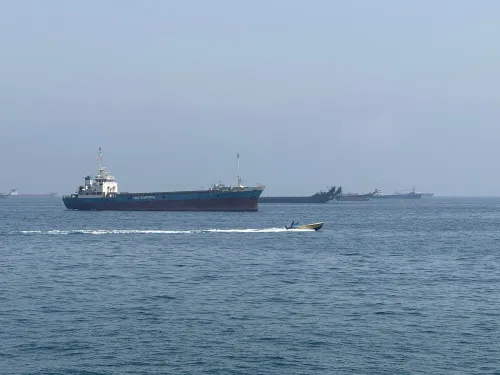
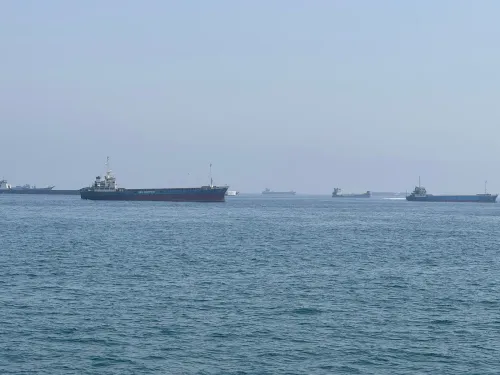
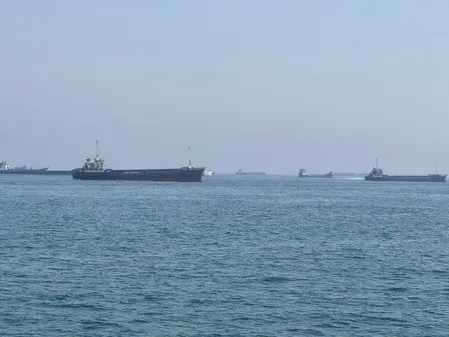
11 Indian ships exit Strait of Hormuz; 13 remain as MEA pushes Iran talks
Synopsis
Eleven Indian ships have cleared the Strait of Hormuz after sustained MEA diplomacy with Tehran, but 13 remain stranded in the Persian Gulf. With the US pausing its blockade and Iran's IRGC signalling passage, a resolution is within reach — though Trump's threat to resume bombing at greater intensity keeps the situation on a knife's edge.
Key Takeaways
MEA spokesperson Randhir Jaiswal confirmed on 7 May that 11 Indian ships have exited the Strait of Hormuz following diplomatic engagement with Iran.
13 Indian vessels remain in the Persian Gulf ; India continues talks with Iranian authorities for their safe passage.
Iran blocked the Strait on 28 February after Israel and the US began a bombing campaign; roughly 20% of global oil and gas transits the waterway.
US President Donald Trump paused the blockade on Tuesday ; Iran's IRGC said on Wednesday it would allow ships to pass.
Trump simultaneously threatened to resume bombing "at a much higher level and intensity" if Iran did not comply, keeping the situation volatile.
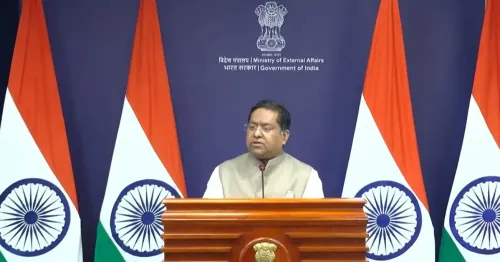
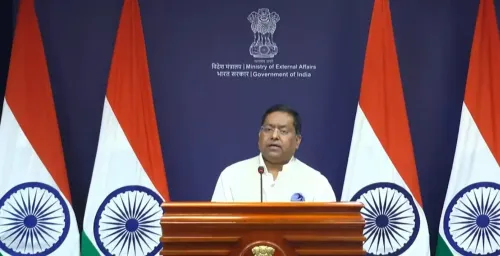
The Ministry of External Affairs (MEA) on Thursday, 7 May confirmed that 11 Indian ships have successfully exited the Strait of Hormuz following sustained diplomatic engagement with Iran, while 13 vessels remain in the Persian Gulf awaiting clearance. The announcement came at a weekly media briefing in New Delhi, signalling a cautious but tangible breakthrough in a crisis that has rattled Indian shipping interests for months.
What MEA Spokesperson Said
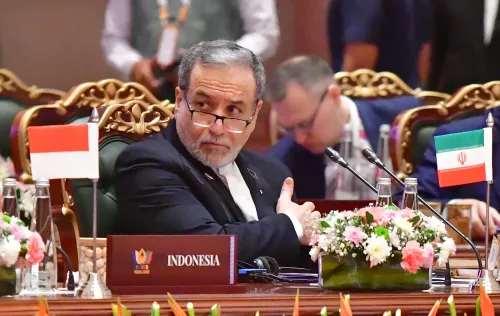
MEA spokesperson Randhir Jaiswal told reporters that forward movement was visible in India's diplomatic conversations with Tehran. "We have seen forward movement and, as a result of forward movement, diplomatic engagement and conversations with the Iranian side, so far 11 Indian ships have exited the Strait of Hormuz. Thirteen ships continue to be there in the Persian Gulf, and we continue to be in touch with the Iranian authorities, so that to ensure that the remaining ships can also cross the Strait of Hormuz and come to India, which is their destination," Jaiswal said.
How the Strait of Hormuz Crisis Unfolded
Iran blocked the Strait of Hormuz on 28 February, after Israel and the United States launched a bombing campaign against it. The waterway is critical to the global economy — roughly 20 per cent of the world's oil and gas passes through it. The crisis deepened on 13 April when the US imposed its own blockade of Iranian ports after negotiations between the two countries collapsed.
US-Iran Signals Shift the Equation
A potential resolution began taking shape this week. US President Donald Trump announced on Tuesday evening that he was pausing the blockade to assess whether a deal with Iran could be reached. Following that signal, Iran's Islamic Revolutionary Guard Corps (IRGC) declared on Wednesday that it would allow ships to pass through the Strait, claiming that US threats had been "neutralised." However, Trump also warned on Wednesday morning that he would resume bombing "at a much higher level and intensity than it was before" if Iran did not lift the blockade — underscoring the fragility of the current pause.
Impact on Indian Shipping and Trade
India's exposure to the crisis has been significant, with a total of 24 Indian ships caught in the standoff at its peak. The exit of 11 vessels marks a meaningful reduction in risk, but the 13 still stranded in the Persian Gulf represent continued vulnerability for Indian maritime commerce. The MEA has indicated it remains in active contact with Iranian authorities to facilitate the safe passage of the remaining ships back to India. This is not the first time Indian shipping interests have been caught in the crossfire of US-Iran tensions in the region, but the scale of this episode — spanning over two months — is among the most disruptive in recent memory.
What Happens Next
The trajectory of the situation depends heavily on whether US-Iran negotiations translate into a durable agreement. The MEA has not specified a timeline for the clearance of the remaining 13 ships, but officials have signalled continued diplomatic pressure on Tehran. Any resumption of hostilities or a breakdown in talks could once again jeopardise the passage of Indian vessels through one of the world's most strategically vital chokepoints.
Point of View
But the situation exposes a structural vulnerability: Indian shipping remains hostage to geopolitical flashpoints it has no direct role in creating. With 13 vessels still in the Persian Gulf, the MEA's cautious optimism is warranted but premature. What is also missing from the official narrative is any reckoning with the longer-term question — how India insulates its maritime trade routes from the next US-Iran rupture, which, given the pattern of collapsing negotiations, is a question of when, not if.
NationPress
23 Sept 2026
Frequently Asked Questions
How many Indian ships are stuck in the Strait of Hormuz?
As of 7 May 2025, 11 Indian ships have exited the Strait of Hormuz following diplomatic engagement with Iran, while 13 vessels remain in the Persian Gulf. The MEA says it is in active contact with Iranian authorities to secure the remaining ships' passage.
Why was the Strait of Hormuz blocked?
Iran blocked the Strait of Hormuz on 28 February after Israel and the United States launched a bombing campaign against it. The US later imposed its own blockade of Iranian ports on 13 April when bilateral negotiations collapsed. About 20 per cent of global oil and gas passes through the waterway.
What is India doing to help the stranded ships?
The Ministry of External Affairs has been engaged in sustained diplomatic conversations with Iranian authorities in Tehran. MEA spokesperson Randhir Jaiswal confirmed on 7 May that this engagement has already resulted in 11 ships clearing the Strait, and efforts continue for the remaining 13.
Is the Strait of Hormuz open now?
The situation is partially resolved. Iran's IRGC announced on Wednesday that it would allow ships to pass after US President Trump paused the US blockade. However, Trump also threatened to resume bombing at a higher intensity if Iran did not comply, making the opening fragile and conditional.
Why does the Strait of Hormuz matter to India?
The Strait of Hormuz is a critical chokepoint for global energy trade, with roughly 20 per cent of the world's oil and gas transiting through it. India, as a major oil importer and maritime trading nation, is directly exposed to any disruption in the waterway, both in terms of energy costs and shipping safety.