India summons US diplomat again over death of three Indian seafarers near Oman

Synopsis
India summoned the US Chargé d'Affaires for the second time in days over attacks near the Strait of Hormuz that killed three Indian seafarers — and Washington's 'direct contact' assurance wasn't enough. With OFAC-sanctioned ships in the mix, New Delhi faces a delicate diplomatic tight-rope: pressing a key partner while navigating the murky status of the targeted vessels.
Key Takeaways
India's MEA summoned US Chargé d'Affaires Jason Meeks a second time on 12 June over attacks on commercial vessels off the coast of Oman .
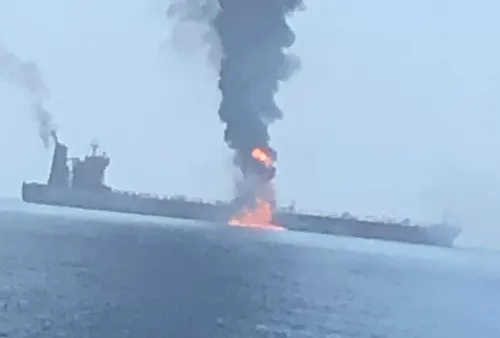
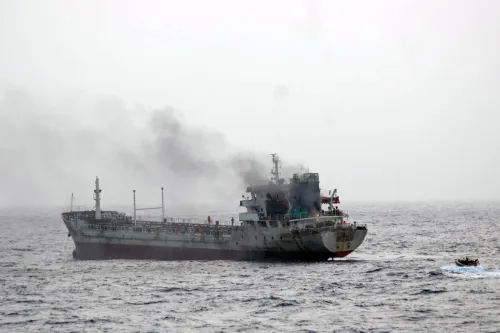
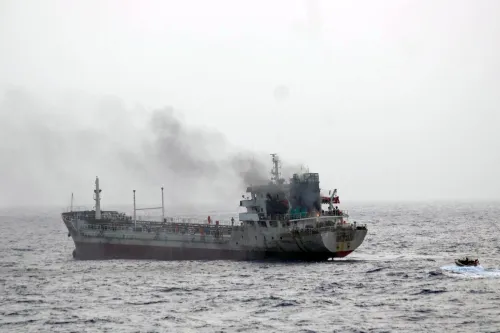
Three Indian seafarers were killed in the attack on the commercial ship Settebello near the Strait of Hormuz .
All three attacked vessels are foreign-flagged — two Palau-flagged , one Guinea-flagged — and none are Indian-owned.
Two of the ships are reportedly OFAC-sanctioned ; one is classified as a non-compliant vessel.
The US State Department said it is in 'direct contact' with India but offered no specific commitment.
India has stressed the importance of keeping the Strait of Hormuz open to international shipping.
India's Ministry of External Affairs (MEA) on Friday, 12 June summoned US Chargé d'Affaires Jason Meeks for a second time to register New Delhi's strong protest over continuing attacks on commercial vessels off the coast of Oman, following the deaths of three Indian seafarers in one such strike. The repeated diplomatic summons signals mounting frustration in New Delhi over the string of maritime incidents near the Strait of Hormuz.
Background to the Summons
India had on Wednesday already lodged a 'strong protest' over recent attacks on vessels operating near the Strait of Hormuz, including the commercial ship Settebello, where three Indian nationals lost their lives. The second summons on Friday underscores that New Delhi considers the US response so far inadequate.
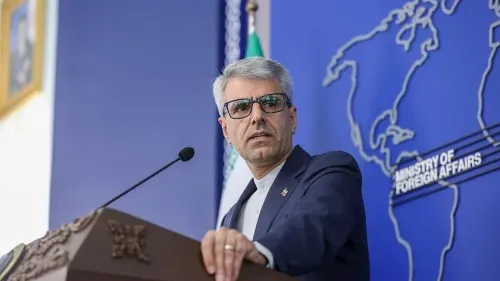
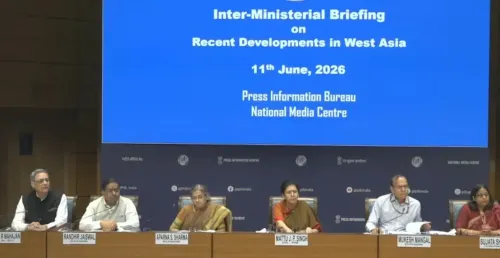
MEA spokesperson Randhir Jaiswal, speaking at a media briefing on Thursday, said: 'We had summoned the US CdA to register our protest on the attack that happened on this commercial vessel off the coast of Oman Settebello. Three Indian nationals have died in that incident. We conveyed our deepest concerns on these incidents and the string of attacks that are happening. And we hope and expect that these would end, these would come to an immediate halt. Also our deep concerns regarding targeting of commercial ships, of marine personnel, as also civilian infrastructure. So, we conveyed our concerns to the American side, to the US side on these attacks.'
Washington's Response
The United States said on Thursday that it is in 'direct contact' with India on the issue. A US State Department official said Washington remains engaged with the Indian government on the matter, stating: 'The Department of State is in direct contact with the Indian government regarding this matter.' The response, however, stopped short of any concrete commitment, which reportedly prompted New Delhi's second diplomatic demarche.
Status of the Attacked Vessels
The MEA clarified that all three ships involved in the recent incidents were foreign-flagged, not Indian-owned. Spokesperson Jaiswal noted that two of the vessels are Palau-flagged and the third — which came under attack most recently — is Guinea-flagged. He added that two of the ships are OFAC-sanctioned and one falls under the category of a non-compliant vessel, adding a layer of complexity to India's diplomatic position.
Why the Strait of Hormuz Matters to India
The Strait of Hormuz is one of the world's most critical energy transit corridors, carrying a substantial share of global oil and gas exports. India, which has one of the world's largest seafaring workforces — with thousands of nationals serving aboard merchant vessels in the Gulf — has consistently raised maritime security concerns whenever regional tensions threaten commercial shipping lanes. New Delhi has repeatedly stressed the importance of keeping the waterway open to international navigation.
What Comes Next
India is expected to continue pressing the US and other stakeholders for concrete action to halt the attacks. The involvement of OFAC-sanctioned ships complicates the diplomatic picture, and New Delhi will likely have to navigate that dimension carefully in future representations. With Indian lives at stake and energy transit routes under pressure, the MEA's posture is expected to remain firm.
Point of View
But it will shape how far Washington is willing to go. The deeper issue is structural: India's vast seafaring workforce is routinely exposed to geopolitical flashpoints, yet New Delhi lacks the naval reach to independently secure distant chokepoints. Diplomatic protests are the only instrument available — and their diminishing returns are becoming visible.
NationPress
19 Sept 2026
Frequently Asked Questions
Why did India summon the US Chargé d'Affaires again on 12 June?
India summoned US Chargé d'Affaires Jason Meeks for the second time to protest the continuing attacks on commercial vessels near the Strait of Hormuz, following the deaths of three Indian seafarers aboard the Settebello off the coast of Oman. New Delhi conveyed that it expects the attacks to come to an 'immediate halt.'
Who were the three Indian seafarers killed near Oman?
Three Indian nationals were killed in the attack on the commercial vessel Settebello off the coast of Oman. The MEA has not publicly named the individuals, but confirmed their deaths and described the incident as a matter of grave concern.
What was the US response to India's diplomatic protest?
The US State Department said it is in 'direct contact' with the Indian government regarding the matter. Washington confirmed engagement but stopped short of announcing specific measures to prevent further attacks.
Were the attacked ships Indian-owned?
No. The MEA clarified that all three vessels involved in the recent incidents are foreign-flagged — two are Palau-flagged and one is Guinea-flagged. None of them are Indian-owned ships. Two are reportedly OFAC-sanctioned, and one is classified as a non-compliant vessel.
Why is the Strait of Hormuz significant for India?
The Strait of Hormuz is one of the world's most important energy transit routes, carrying a large share of global oil and gas exports. India, which has one of the world's largest seafaring workforces, has consistently advocated for keeping the waterway open to ensure safe passage for commercial shipping and its own nationals at sea.