India lodges strong protest with US over ship attacks killing 3 Indian seafarers in West Asia
Synopsis
India's diplomatic response to the killing of three Indian seafarers in West Asia just escalated sharply — New Delhi summoned the US Charge d'Affaires and lodged a formal protest over attacks on commercial vessels, demanding both an end to strikes and free passage through the Strait of Hormuz. With three incidents in under a week and a third vessel hit near Oman's Shinas port on Thursday, the human cost to India's seafaring community is mounting fast.
Key Takeaways
India lodged a strong protest with the US on 11 June over attacks on commercial vessels carrying Indian seafarers in West Asia .
Three Indian nationals were killed aboard the vessel Settebello off the coast of Oman ; 21 of 24 crew members were rescued.
The US Charge d'Affaires in New Delhi was summoned on Wednesday to receive India's formal objections.
A third incident was reported near Oman's Shinas port on Thursday, confirmed by the Indian Embassy in Oman .
All three vessels are foreign-flagged (two Palau, one Guinea) and not Indian-owned; two are reportedly OFAC-sanctioned .
India has demanded free passage through the Strait of Hormuz and called for dialogue and diplomacy to restore regional stability.
India on Thursday, 11 June formally lodged a 'strong protest' with the United States after a series of attacks on commercial vessels carrying Indian seafarers in West Asia, with the Ministry of External Affairs (MEA) describing the incidents as 'deeply worrisome' and calling for an immediate cessation of hostilities at sea. The diplomatic escalation follows the deaths of three Indian nationals aboard the vessel Settebello off the coast of Oman.
India Summons US Charge d'Affaires
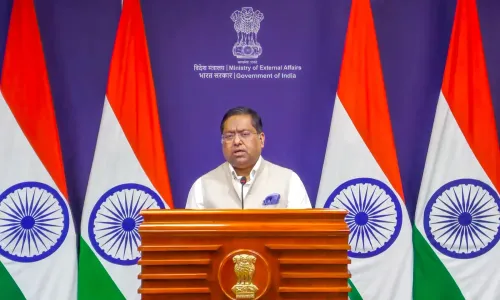
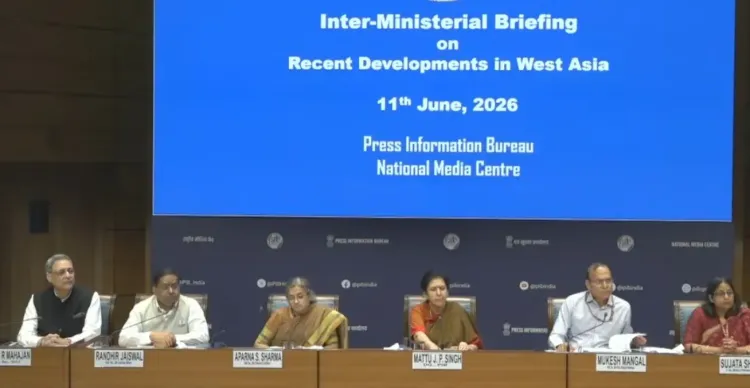
The US Charge d'Affaires (CDA) in New Delhi was summoned on Wednesday to receive India's formal objections. MEA spokesperson Randhir Jaiswal, addressing an inter-ministerial briefing in New Delhi, stated that India conveyed its 'deepest concerns' over the continuing attacks and demanded unimpeded passage through the Strait of Hormuz in accordance with international law.
'We had summoned the US CDA here to register a strong protest. The continuing incidents of attacks on shipping in the region are deeply worrisome and a direct result of the ongoing conflict in the region. These attacks must cease and end. We also call for dialogue and diplomacy so that we can have an early return to peace and stability in the region,' Jaiswal said.
Three Incidents in Days, Three Indians Dead
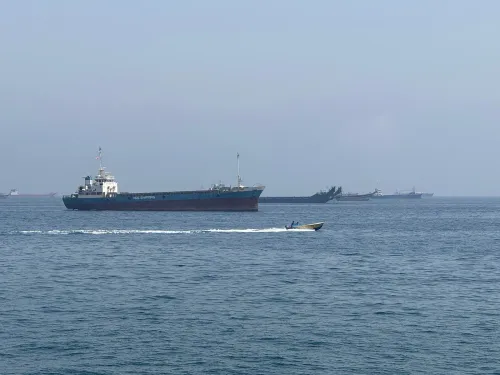
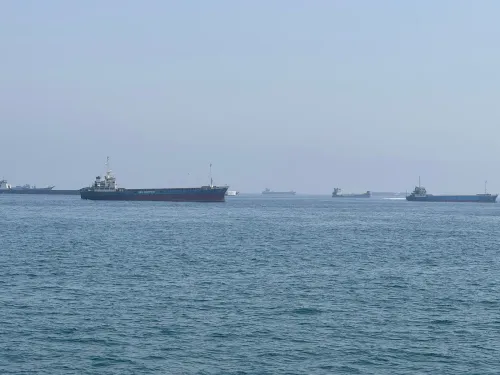
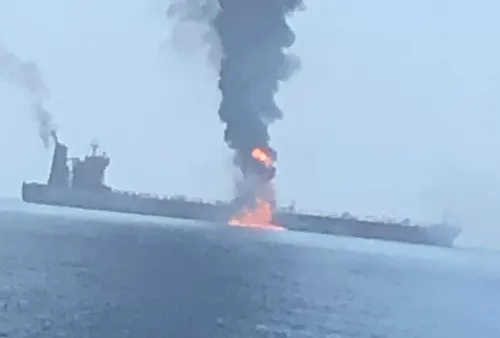
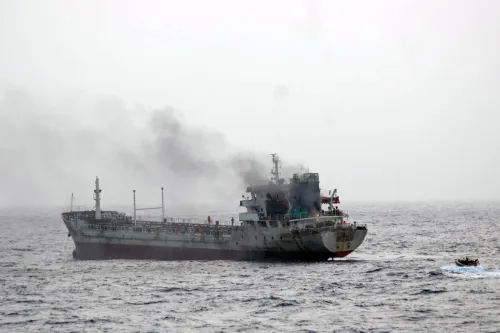
The attacks unfolded in rapid succession. The first incident involved MT Marivex on 8 June, when a fire broke out aboard the vessel — carrying 24 Indian seafarers — south of the Strait of Hormuz. The second and deadliest strike hit the commercial vessel Settebello off the coast of Oman on Wednesday, killing three of the 24 Indian crew members aboard; 21 were rescued. A third incident was reported on Thursday near Oman's Shinas port, confirmed by the Indian Embassy in Oman.
Jaiswal confirmed that all three vessels are foreign-flagged — two are Palau-flagged and one is Guinea-flagged — and none are Indian-owned. He noted that two of the ships are reportedly on the OFAC sanctions list, and one is classified as a non-compliant vessel.
What India Has Demanded
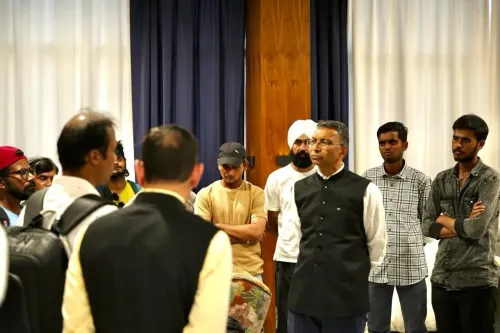
India's position, as articulated by Jaiswal, rests on three pillars: an immediate end to attacks on shipping in the region; the pursuit of dialogue and diplomacy as the path to conflict resolution; and guaranteed freedom of navigation through the Strait of Hormuz under international law. The MEA also underscored India's large seafaring community in the Persian Gulf region and confirmed that the Ministry of Shipping and Indian embassies are in active contact with seafarers to monitor their welfare.
Context: Indian Seafarers at Risk
India has one of the world's largest seafaring workforces, with a significant concentration in the Persian Gulf and broader West Asia corridor. This is not the first time Indian nationals have been caught in the crossfire of regional conflict at sea — but the loss of three lives within a single incident marks a sharp escalation in the direct human cost to India. This comes amid heightened maritime tensions in the region linked to the ongoing conflict, with commercial shipping lanes increasingly drawn into the theatre of hostilities.
The government has stopped short of publicly naming a specific actor responsible for the attacks beyond attributing them to the 'US Navy stationed there,' as stated by Jaiswal, though the broader context of regional conflict remains the framing used by officials. All eyes will now be on whether Washington responds to New Delhi's protest with concrete assurances or operational changes.
Point of View
Not a routine consular matter. The fact that the vessels are foreign-flagged and two are OFAC-sanctioned complicates India's moral position, but does not diminish the core demand: Indian lives must not be collateral damage in a conflict India has no stake in. What is conspicuously absent from MEA's language is any direct attribution of blame by name — the phrase 'attacks came from the US Navy' was used, but hedged in context. India's balancing act between its strategic partnership with Washington and the welfare of its two-million-strong global seafaring workforce is being tested in real time, and the government's next move — whether it escalates diplomatically or accepts US assurances quietly — will define the limits of that balancing act.
NationPress
26 Oct 2026
Frequently Asked Questions
Why did India lodge a protest with the US over the West Asia ship attacks?
India lodged a strong protest with the US after three Indian seafarers were killed in an attack on the commercial vessel Settebello off Oman's coast, with MEA spokesperson Randhir Jaiswal attributing the attacks to the US Navy stationed in the region. The US Charge d'Affaires in New Delhi was summoned to receive India's formal objections and demands for an immediate end to such strikes.
How many Indian seafarers have been affected in the West Asia attacks?
Three Indian nationals were killed aboard the vessel Settebello, while 21 of the 24 Indian crew members onboard were rescued. A separate incident on 8 June involved MT Marivex, which carried 24 Indian seafarers and caught fire south of the Strait of Hormuz. A third incident was reported near Oman's Shinas port on 11 June.
Are the attacked ships Indian-owned?
No. All three vessels involved in the incidents are foreign-flagged and not Indian-owned. Two are Palau-flagged and one is Guinea-flagged. MEA spokesperson Randhir Jaiswal noted that two of the ships are reportedly on the OFAC sanctions list and one is classified as a non-compliant vessel.
What has India demanded from the US?
India has demanded an immediate end to attacks on commercial shipping in the region, the pursuit of dialogue and diplomacy for conflict resolution, and unimpeded freedom of navigation through the Strait of Hormuz in accordance with international law. These demands were conveyed directly to the US Charge d'Affaires when he was summoned to New Delhi.
How significant is India's seafaring community in West Asia?
India has one of the world's largest seafaring workforces, with a large number of seafarers employed in the Persian Gulf and broader West Asia region. The MEA has confirmed that Indian embassies and the Ministry of Shipping are in active contact with seafarers in the region to monitor and ensure their welfare and safety.