India summons US envoy over Gulf ship attacks; Washington responds
Synopsis
India's summoning of the US Charge d'Affaires over Gulf shipping attacks — with three Indian nationals killed aboard the Settebello off Oman — marks one of New Delhi's sharpest public rebukes of a close strategic partner over the West Asia conflict. Washington's response was measured: 'direct contact', no concrete commitment. With another incident reported off Oman's Shinas port the same day, the pressure on India's diplomatic bandwidth is only mounting.
Key Takeaways
India summoned US Charge d'Affaires Jason Meeks to register a 'strong protest' over attacks on commercial vessels carrying Indian seafarers in West Asia .
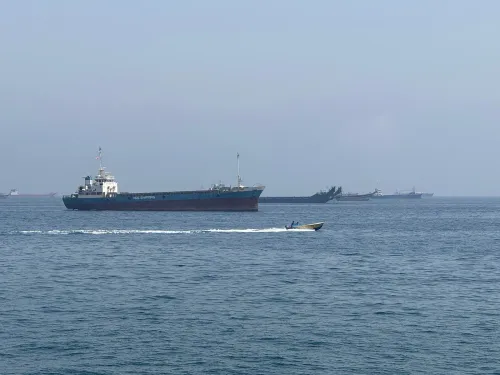
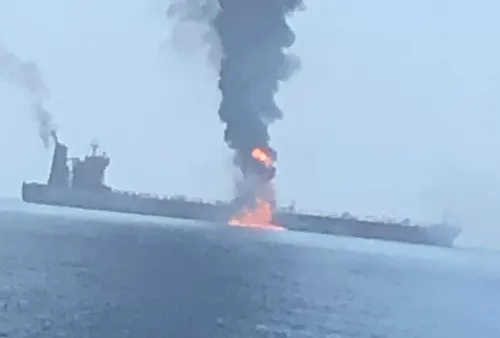
Three Indian nationals were killed in an attack on the commercial ship Settebello off the coast of Oman .
The US State Department confirmed it is 'in direct contact with the Indian government' on the matter.
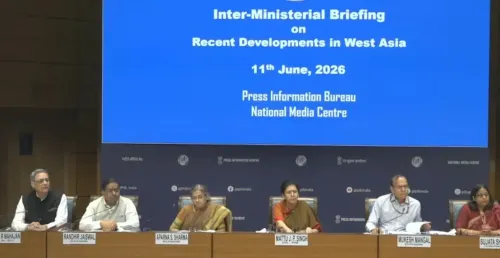
MEA spokesperson Randhir Jaiswal called for an immediate end to attacks and urged free passage through the Strait of Hormuz under international law.
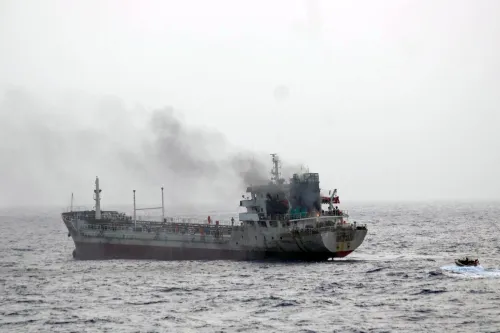
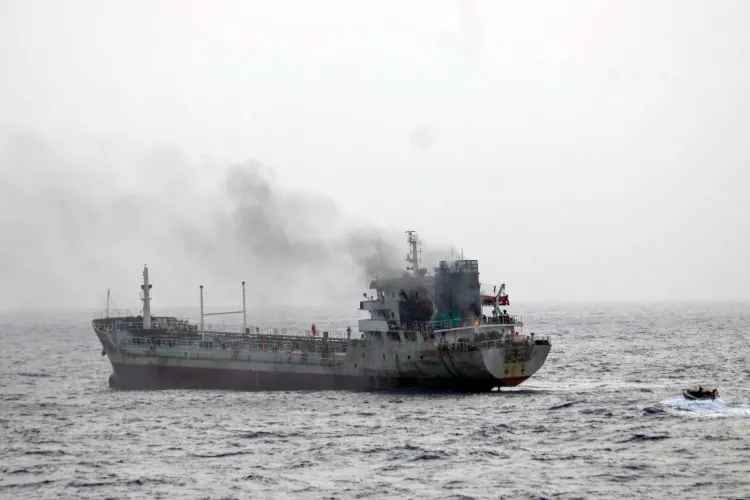
All three vessels involved were foreign-flagged — two under Palau , one under Guinea — and none were Indian-owned; two are reportedly OFAC-sanctioned .
A fresh vessel incident was reported off Oman's Shinas port on 11 June , adding to the series of maritime security concerns.
The United States confirmed on Thursday, 11 June that it is in direct contact with India after New Delhi summoned US Charge d'Affaires Jason Meeks to lodge a formal protest over a series of attacks on commercial vessels carrying Indian seafarers in West Asia. The diplomatic escalation follows the killing of three Indian nationals aboard the commercial ship Settebello off the coast of Oman.
US Response to India's Diplomatic Demarche
A US State Department official confirmed Washington's engagement in a brief statement: 'The Department of State is in direct contact with the Indian government regarding this matter.' The response came a day after India's summoning of the senior American diplomat — a step New Delhi described as registering a 'strong protest' over recent attacks near the Strait of Hormuz.
India's Position: Welfare, Dialogue, and Free Passage
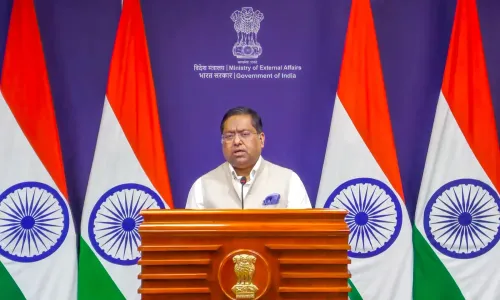
India's Ministry of External Affairs (MEA) made its stance unambiguous on multiple fronts. MEA spokesperson Randhir Jaiswal said India had conveyed its 'deepest concerns' to the American side over ongoing shipping attacks and demanded they stop immediately. 'We conveyed that the welfare of our seafaring community is very important and the attacks that are happening must stop,' Jaiswal said.
India also called for unimpeded access through the Strait of Hormuz in line with international law, and urged dialogue and diplomacy as the path to restoring peace and stability in the region. 'We also conveyed that dialogue and diplomacy is the way forward for peaceful resolution of the conflict,' Jaiswal added.
The Vessels Involved: Foreign-Flagged, Some Sanctioned
The MEA clarified that all three ships caught up in recent incidents were foreign-flagged — two registered under Palau and one under Guinea. Jaiswal noted that none were Indian-owned, and that two of the vessels are reportedly on the OFAC sanctions list, with one classified as a non-compliant ship. This detail adds complexity to India's diplomatic posture, as the ships' sanctioned status could complicate attribution and accountability.
Fresh Incident off Oman's Shinas Port
On the same day, the Indian Embassy in Oman reported yet another vessel incident off Oman's Shinas port, compounding anxieties over the safety of commercial shipping in the Gulf. The Strait of Hormuz — one of the world's most critical energy transit corridors — has grown increasingly volatile as regional military tensions have intensified.
Why This Matters for India
India has one of the world's largest seafaring workforces, with thousands of its nationals serving aboard merchant vessels in the Gulf and beyond. New Delhi has consistently raised maritime security concerns whenever regional conflict threatens commercial shipping lanes. This latest diplomatic protest marks one of India's sharpest public rebukes directed at a close strategic partner over the ongoing West Asia conflict, and signals that the human cost to Indian nationals is now driving foreign policy pressure at the highest level. Whether Washington's confirmation of 'direct contact' translates into concrete action on the ground remains to be seen.
Point of View
The gap between India's stated urgency and the US's measured engagement is one that New Delhi will find increasingly difficult to explain to its own seafaring community.
NationPress
26 Oct 2026
Frequently Asked Questions
Why did India summon the US Charge d'Affaires over Gulf shipping attacks?
India summoned US Charge d'Affaires Jason Meeks to formally protest a series of attacks on commercial vessels carrying Indian seafarers in West Asia, including an attack on the ship Settebello off Oman's coast in which three Indian nationals were killed. New Delhi described the summons as registering a 'strong protest' and called for an immediate end to such attacks.
What happened to the ship Settebello?
The Settebello, a commercial vessel, was attacked off the coast of Oman, resulting in the deaths of three Indian nationals aboard. The incident was among several recent attacks on commercial shipping near the Strait of Hormuz that prompted India's diplomatic escalation.
How did the United States respond to India's protest?
The US State Department confirmed it is 'in direct contact with the Indian government regarding this matter.' The response did not include specific commitments but acknowledged engagement with New Delhi following the diplomatic demarche.
Were the attacked ships Indian-owned?
No. India's MEA clarified that all three vessels involved in recent incidents were foreign-flagged — two registered under Palau and one under Guinea — and none were Indian-owned. Two of the ships are reportedly on the OFAC sanctions list, and one is classified as a non-compliant vessel.
What is India's position on the Strait of Hormuz and the West Asia conflict?
India has called for unimpeded access through the Strait of Hormuz in accordance with international law, and urged dialogue and diplomacy as the path to peaceful resolution of the regional conflict. The MEA described the attacks on commercial shipping as a 'direct result of the ongoing conflict in the region' and demanded they cease immediately.