Iranian missiles hit UAE tankers in Hormuz, one Indian crew member killed
Synopsis
An Iranian cruise missile attack on two UAE tankers in the Strait of Hormuz has killed one Indian national and left eight others injured — four of them seriously. With the UAE reserving the right to respond and Iranian strikes also reportedly hitting US military facilities across the Gulf, the region is in the middle of its most dangerous escalation in years.
Key Takeaways
Two UAE tankers — Mombasa and Al Bahiyah — were struck by Iranian cruise missiles in the Strait of Hormuz on 14 July .
One Indian crew member aboard the Mombasa was killed; eight others — six Indians and two Ukrainians — were injured, four of them seriously.
Fires broke out on both tankers but have since been brought under control, according to the UAE Ministry of Defence .
The UAE condemned the attack as a violation of international law and reserved the right to respond.
Separately, Iranian strikes reportedly hit US military facilities in Kuwait , Bahrain , and the Al Udeid airbase in Qatar .
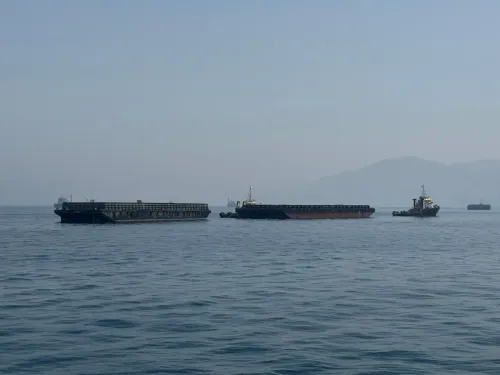
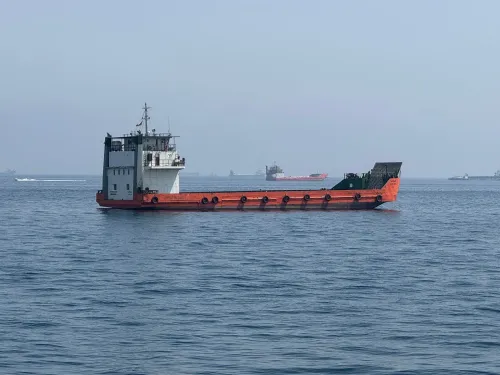
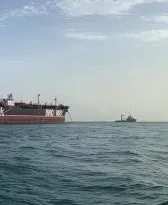
Two United Arab Emirates (UAE) oil tankers were struck by Iranian cruise missiles in the Strait of Hormuz within Omani territorial waters on 14 July, killing one Indian crew member and injuring eight others, according to the UAE Ministry of Defence. The attack targeted the tankers while they were transiting the southern passage of the strategically critical waterway.
The Vessels Struck and Casualties
The two tankers — Mombasa and Al Bahiyah — were hit by separate missiles, triggering fires on both vessels. The blazes have since been brought under control, according to the ministry. The fatality was an Indian national aboard the Mombasa. Among the eight injured, four are seriously wounded; the injured comprise six Indian nationals and two Ukrainian nationals, according to reports.
UAE Condemns Attack, Reserves Right to Respond
The UAE Ministry of Defence strongly condemned the strike, describing it as a serious violation of international law that threatens regional security and stability. The ministry stated that the UAE reserves the full right to respond to the escalation and will take all necessary measures to protect its territory, people, residents, national interests, and strategic assets. A separate condemnation was also issued by the UAE Ministry of Foreign Affairs.
Authorities urged the public to rely solely on official sources for information and to refrain from spreading unverified reports.
Broader Escalation in the Region
The tanker strikes are part of a rapidly widening confrontation. Earlier on Sunday, the UAE Defence Ministry had reported that its air defence systems were engaging missile and drone threats. Bahrain's Interior Ministry simultaneously urged residents to remain calm and move to the nearest safe location.
According to separate reports, US targets hit in recent Iranian strikes included a Patriot air defence system, an ammunition depot, and a US military radar facility in Kuwait. Iran also reportedly targeted a US military communications facility and a radar facility in Bahrain, and launched a ballistic missile strike against the US airbase of Al Udeid in Qatar in response to US attacks. These reports have not been independently verified.
Strategic Significance of the Strait of Hormuz
The Strait of Hormuz is the world's most critical oil chokepoint, through which roughly 20% of global petroleum trade passes. Any sustained disruption to tanker transit in the strait carries immediate consequences for global energy markets. This is not the first time the waterway has been the scene of tanker attacks — a series of incidents in 2019 similarly raised fears of a broader conflict, though hostilities stopped short of direct confrontation at that scale.
What Comes Next
The UAE has signalled it will respond, though the form and timeline of any action remain unclear. With Indian nationals among the dead and injured, New Delhi is expected to seek consular information and may issue a formal statement. The incident adds acute pressure to already strained diplomatic channels between Iran, the US, and Gulf states. Energy markets and global shipping insurers will be watching developments in the strait closely in the hours ahead.
Point of View
Deep energy dependence on the region, and a foreign policy posture of studied non-alignment. New Delhi will face pressure to respond diplomatically without being drawn into a confrontation it has no interest in joining. The broader pattern — tanker strikes, missile exchanges, US bases hit across multiple Gulf states — suggests this has moved well beyond a limited skirmish. How quickly the UAE acts on its stated right to respond will determine whether this is a flashpoint or the opening of a sustained conflict.
NationPress
12 Oct 2026
Frequently Asked Questions
Which UAE tankers were hit in the Strait of Hormuz missile attack?
The two tankers struck were the Mombasa and the Al Bahiyah , both UAE-flagged vessels transiting the southern passage of the Strait of Hormuz in Omani territorial waters on 14 July. Both vessels suffered fires and material damage as a result of the strikes.
How many Indians were killed or injured in the Hormuz tanker attack?
One Indian crew member was killed aboard the Mombasa , and six other Indian nationals were among the eight injured. Four of the injured are reported to be seriously wounded; the remaining two injured crew members are Ukrainian nationals.
What did the UAE government say about the missile attack?
The UAE Ministry of Defence condemned the attack as a serious violation of international law threatening regional security. It stated that the UAE reserves the full right to respond and will take all necessary measures to protect its territory, people, and strategic assets. The UAE Ministry of Foreign Affairs issued a separate condemnation.
What other Iranian strikes have been reported in the Gulf region?
According to reports, Iranian strikes have also targeted a Patriot air defence system, an ammunition depot, and a radar facility in Kuwait , as well as a communications facility and radar in Bahrain . A ballistic missile was also reportedly launched at the US Al Udeid airbase in Qatar . These reports have not been independently verified.
Why is the Strait of Hormuz strategically important?
The Strait of Hormuz is the world's most critical oil chokepoint, through which approximately 20% of global petroleum trade passes. Any sustained disruption to tanker traffic there has immediate consequences for global energy prices and supply chains.