Iran attacks UAE: Saudi Arabia, Jordan, Egypt, GCC condemn escalation

Synopsis
Iran's drone and missile strikes on the UAE — including a hit on an ADNOC tanker in the Strait of Hormuz and an oil facility in Fujairah — have triggered a rare, unified Arab condemnation. With the GCC, Arab League, Saudi Arabia, Jordan, Qatar, and Egypt all denouncing Tehran, the crisis is rapidly internationalising and putting the world's most critical oil shipping lane in the crosshairs.
Key Takeaways
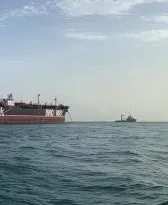
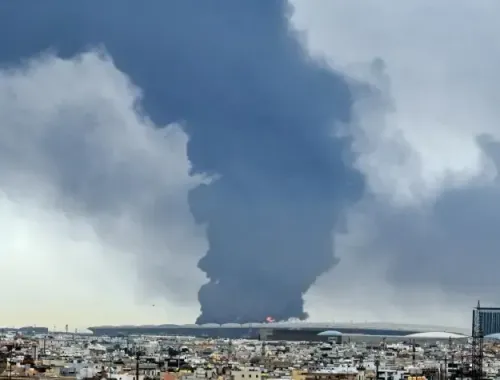
Iran launched drone and missile attacks on the UAE on 5 May , targeting an ADNOC oil tanker in the Strait of Hormuz and an oil facility in Fujairah .
The tanker was struck by two drones , in what Qatar described as a breach of UN Security Council Resolution 2817 .
Saudi Crown Prince Mohammed bin Salman phoned UAE President Sheikh Mohamed bin Zayed Al Nahyan to express condemnation and reaffirm support.
The Arab League , GCC , Jordan , Qatar , and Egypt all issued formal condemnations, calling Iran fully responsible.
GCC Secretary-General Albudaiwi called on the international community to halt what he termed repeated Iranian acts of aggression.
Qatar warned that continued closure of the Strait of Hormuz risks jeopardising the vital interests of countries across the region.
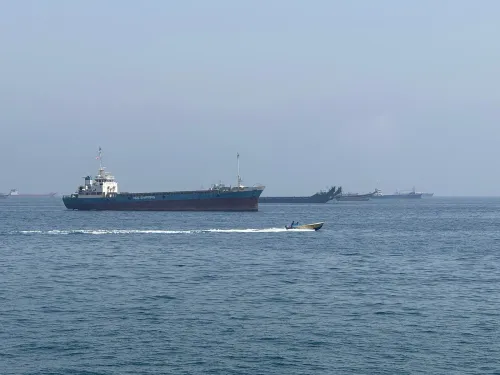
Multiple Middle Eastern nations and regional blocs on Monday, 5 May issued sweeping condemnations of Iran's attacks on the United Arab Emirates (UAE), describing the strikes as a dangerous escalation that threatens regional security, sovereignty, and freedom of maritime navigation. The attacks reportedly included drone and missile strikes on UAE territory as well as the targeting of an Emirati oil tanker operated by Abu Dhabi National Oil Company (ADNOC) while transiting the Strait of Hormuz.
Saudi Arabia Backs UAE, Crown Prince Calls Sheikh Mohamed
Saudi Crown Prince and Prime Minister Mohammed bin Salman spoke by phone with UAE President Sheikh Mohamed bin Zayed Al Nahyan, expressing the kingdom's strong condemnation of what he termed unjustified Iranian attacks, according to the Saudi Press Agency (SPA), as reported by Xinhua. The call also covered broader regional developments and efforts to enhance collective security. Saudi Arabia reaffirmed its full support for the UAE in safeguarding its security and stability.
Jordan, Qatar, and Egypt Voice Solidarity
Jordan's Foreign Ministry described the attacks as a blatant violation of the UAE's sovereignty and a dangerous escalation threatening its territorial integrity. Jordanian Deputy Prime Minister and Foreign Minister Ayman Safadi called his UAE counterpart, Sheikh Abdullah bin Zayed Al Nahyan, reiterating Jordan's unwavering solidarity with the UAE.
Qatar's Ministry of Foreign Affairs strongly condemned the Iranian drone strike on the Emirati oil tanker in the Strait of Hormuz, stating the vessel was struck by two drones. Doha described the incident as a blatant violation of international law and the principle of freedom of maritime navigation, and a flagrant breach of United Nations Security Council Resolution 2817. Qatar warned that the continued closure of the strait would jeopardise the vital interests of regional nations, calling for its unconditional reopening.
Egypt's Ministry of Foreign Affairs expressed categorical rejection of any practices aimed at terrorising civilians or destabilising the Arabian Gulf region, affirming full solidarity with the UAE. Cairo warned that the attacks represent a dangerous escalation that hinders efforts for calm and de-escalation, while constituting a flagrant violation of international law and the UN Charter.
Arab League and GCC Issue Formal Condemnations
Ahmed Aboul Gheit, Secretary-General of the League of Arab States, condemned in the strongest terms the renewed Iranian attacks against the UAE, specifically citing the use of combat drones and missiles, the tanker strike in the Strait of Hormuz, and a drone attack on an oil facility in Fujairah. He held Iran fully responsible for its actions, calling for an immediate end to all acts of aggression targeting the UAE or freedom of navigation.
Jasem Mohamed Albudaiwi, Secretary-General of the Cooperation Council for the Arab States of the Gulf (GCC), condemned the attacks as a flagrant violation of the sovereignty of a GCC member state. He called on the international community to assume its responsibilities to halt what he described as repeated Iranian attacks, warning that such actions undermine regional and international peace and security.
What Happened: The Attacks in Focus
The Iranian strikes reportedly involved combat drones and missiles targeting UAE territory, in addition to a separate drone strike on an ADNOC-operated oil tanker passing through the Strait of Hormuz and a drone attack on an oil facility in Fujairah. Iran had not publicly responded to the wave of regional condemnations at the time of reporting. With the Strait of Hormuz at the centre of the crisis, the incident raises the stakes considerably for global energy markets and regional stability. All eyes are now on whether the United Nations Security Council will convene an emergency session and whether Iran will respond to the mounting international pressure.
Point of View
Jordan, Qatar, Egypt, the Arab League, and the GCC simultaneously — signals a rare moment of Arab consensus, but consensus alone rarely deters escalation. The real test is whether this diplomatic chorus translates into coordinated pressure at the UN Security Council, where Iran's allies could still block binding action. Targeting the Strait of Hormuz is a calculated provocation: a significant share of the world's oil passes through it, and any sustained disruption would be felt far beyond the Gulf. What mainstream coverage risks underplaying is that the strikes on an ADNOC tanker and a Fujairah oil facility represent a direct hit on the UAE's commercial infrastructure — not just its sovereignty — raising the threshold for what the UAE may consider an adequate response.
NationPress
27 Sept 2026
Frequently Asked Questions
Why did Iran attack the UAE?
Iran's stated motivations were not detailed in available reports. The attacks reportedly targeted an ADNOC-operated oil tanker in the Strait of Hormuz with two drones and struck an oil facility in Fujairah. Regional governments have described the attacks as unjustified and a violation of international law.
What was struck in the Iranian attacks on the UAE?
According to regional government statements, Iran targeted an Emirati oil tanker operated by Abu Dhabi National Oil Company (ADNOC) with two combat drones while it transited the Strait of Hormuz, and also conducted a drone attack on an oil facility in Fujairah. Missiles were also reportedly used in the broader assault.
What is UN Security Council Resolution 2817?
Qatar cited UN Security Council Resolution 2817 in its condemnation, describing Iran's drone strike on the ADNOC tanker as a flagrant breach of the resolution. The resolution pertains to freedom of maritime navigation and international maritime security norms.
How did Saudi Arabia respond to the Iran-UAE crisis?
Saudi Crown Prince Mohammed bin Salman called UAE President Sheikh Mohamed bin Zayed Al Nahyan to express strong condemnation of the Iranian attacks and reaffirm Saudi Arabia's full support for the UAE's security and stability. The two also discussed broader regional developments.
Why is the Strait of Hormuz significant in this crisis?
The Strait of Hormuz is one of the world's most critical oil shipping chokepoints. Qatar warned that its continued closure would jeopardise the vital interests of regional nations, and the GCC called on the international community to ensure freedom of navigation remains uncompromised.