Who Were Convicted for the Murder of Hargobindo and Chandan Das in Murshidabad Riots?
Synopsis
A district court in Murshidabad has convicted 13 individuals for the brutal murders of Hargobindo and Chandan Das during a communal riot. The court's sentencing is set for tomorrow, nearly nine months post-incident. This case highlights the ongoing struggles against communal violence in India.
Key Takeaways
13 individuals convicted for the murder of Hargobindo and Chandan Das.
Sentencing scheduled for Tuesday .
The murders occurred during protests against the Waqf (Amendment) Act .
Investigation revealed the attack was pre-planned .
Victims' family accepted compensation from the Leader of the Opposition .
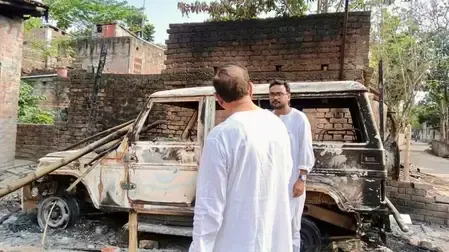
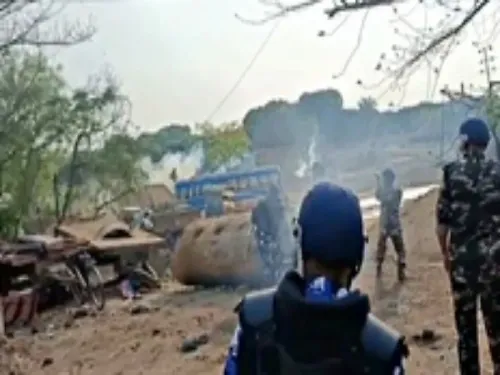
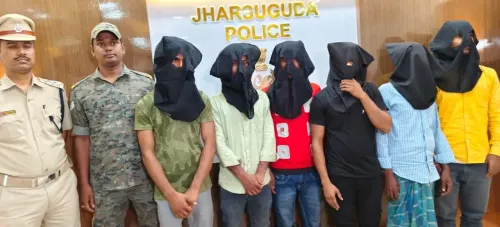
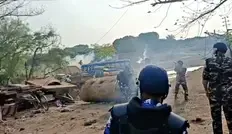
Kolkata, Dec 22 (NationPress) A district court in Murshidabad, West Bengal has found 13 individuals guilty for the murders of Hargobindo Das and his son Chandan Das during a turbulent communal riot in April, which was sparked by protests against the Waqf (Amendment) Act.
The court in Jangipur will announce the sentencing for these convicts on Tuesday.
This sentencing follows nearly nine months after the tragic events on April 12.
The Special Investigation Team (SIT) of the state police apprehended the 13 convicts in succession.
This year, the SIT presented a comprehensive 900-page charge sheet regarding the case.
According to the charge sheet, the father and son were murdered while they attempted to avert violence in their village.
The SIT characterized the assault as “pre-planned”.
The bereaved family turned down the compensation offer from the state government led by the Trinamool Congress, but accepted the aid provided by Suvendu Adhikari, the Leader of the Opposition.
Earlier in April, the Calcutta High Court directed the establishment of the SIT for investigating the Murshidabad riots and mandated the deployment of Central Armed Police Forces (CAPF).
A division bench, comprising Justice Soumen Sen and Justice Raja Basu Chowdhury, indicated that the measures taken by the West Bengal government to manage communal unrest were insufficient, asserting that earlier deployment of CAPF could have prevented the situation from becoming so “grave” and “volatile”.
Furthermore, it recommended that, in addition to compensating families affected by violence, the state should ensure that educational institutions in sensitive areas remain operational.
Point of View
It is our duty to present the facts of this disturbing case without bias. The conviction of 13 individuals highlights the urgent need for effective law enforcement in preventing communal violence. While the judicial system has acted, we must also consider the broader societal implications and the importance of fostering peace within our communities.
NationPress
24 Oct 2026
Frequently Asked Questions
What were the charges against the convicted individuals?
The 13 individuals were charged with the murder of Hargobindo Das and his son Chandan Das during a communal riot.
When will the sentencing take place?
The sentencing for the convicted individuals is scheduled for Tuesday.
What role did the Special Investigation Team (SIT) play?
The SIT conducted the investigation and submitted a detailed 900-page charge sheet regarding the case.
What was the stance of the victims' family regarding compensation?
The family of the deceased rejected the compensation offered by the state government but accepted aid from the Leader of the Opposition.
What measures were recommended by the Calcutta High Court?
The court recommended deploying Central Armed Police Forces to maintain order and ensuring schools in sensitive areas remain operational.