Is the US Navy the Backbone of Global Peace?
Synopsis
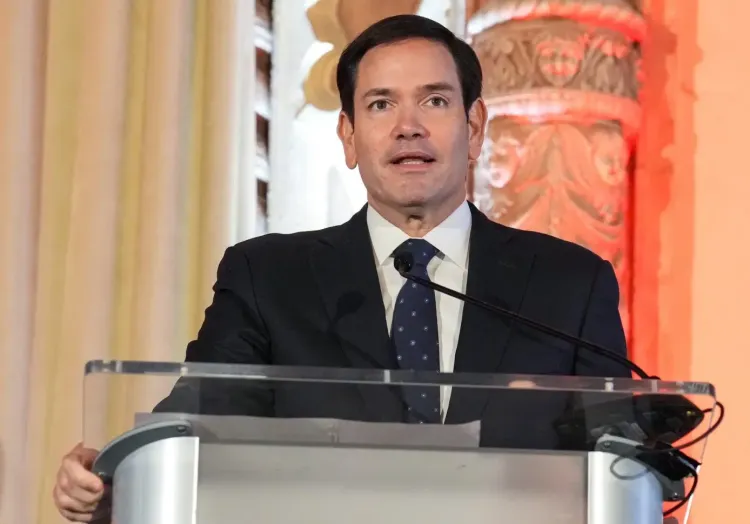
In a significant statement, US Secretary of State Marco Rubio claims that the US Navy is crucial for global peace and stability. He emphasizes the Navy's role in protecting freedom of navigation and maintaining the international order while linking maritime power to American industrial strength.
Key Takeaways
US Navy is seen as a vital force for global peace and stability.
Maritime power is essential for freedom of navigation.
Shipbuilding initiatives reflect America's industrial resurgence.
Naval strength serves to deter conflicts and reassure allies.
Linking military power with economic strength is crucial.
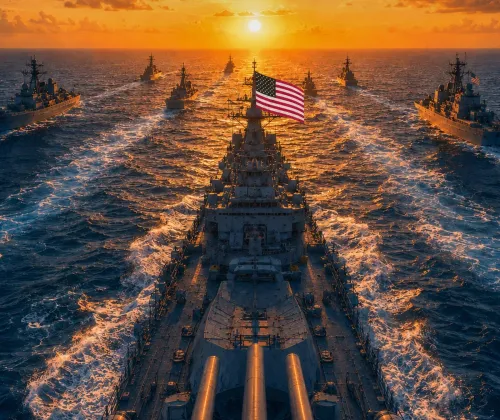
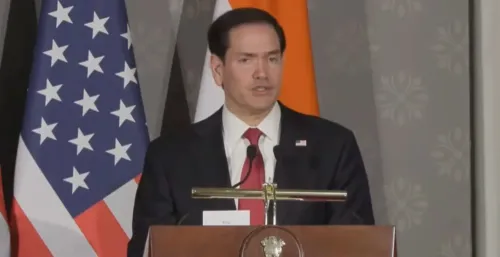
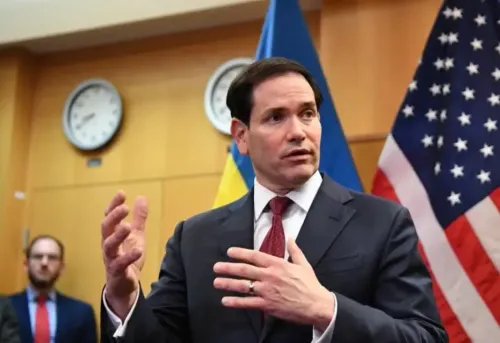
Washington, Dec 23 (NationPress) US Secretary of State Marco Rubio asserted that American naval supremacy serves as a vital foundation for global peace and stability. He emphasized that the strength of the US Navy is essential for safeguarding freedom of navigation, preventing conflicts, and maintaining the international order.
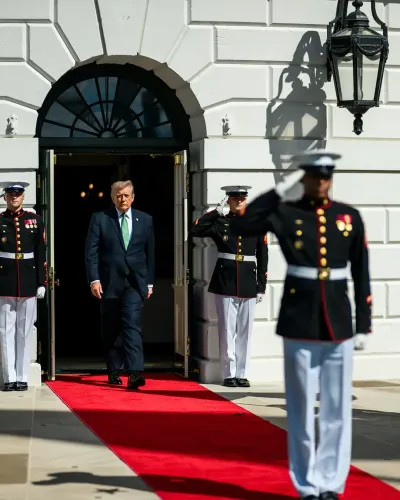
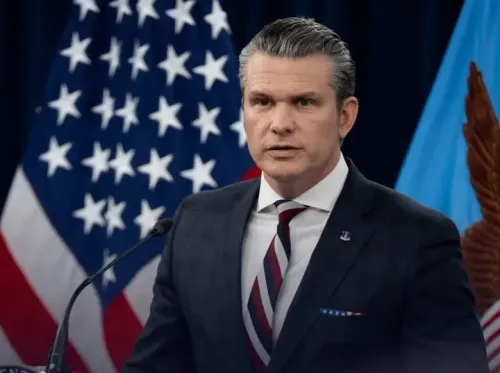
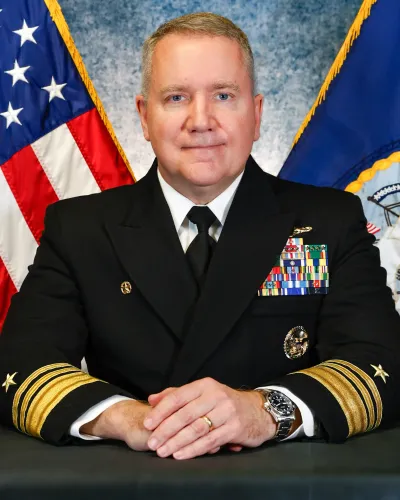
During a news conference at Mar-a-Lago with President Donald Trump, Secretary of War Pete Hegseth, and Navy Secretary John Phelan, Rubio stated that the administration's increased emphasis on shipbuilding and maritime power is not merely a military strategy but a significant indication of America’s global role.
“The US Navy is the largest contributor to worldwide peace,” Rubio noted, defining American sea power as the cornerstone of global stability.
He highlighted the Navy’s extensive reach, which enables the United States to secure sea routes, reassure allies, and deter adversaries, all while bolstering American industrial capabilities domestically. Rubio characterized the administration's shipbuilding initiative as a clear representation of national capability.
“This is the resurgence of American industrial power,” Rubio remarked. “This signifies our ability to produce goods right here in the USA.”
He explained that enhancing US shipbuilding capacity sends a strong international message that the United States plans to remain a maritime power capable of projecting strength across oceans and ensuring open access to global commons.
“The capacity to manufacture again in our nation has been critical to the president’s agenda,” Rubio stated, referring to the announcement as a reminder of America’s lasting industrial and military foundation.
Rubio argued that naval power is intrinsically linked to diplomacy, asserting that US forces provide the physical assurance necessary for international trade and alliances to thrive. He maintained that American sea power has historically mitigated conflicts rather than incited them.
“The US Navy grants us a global presence,” he said, noting that generations of Americans have reaped the benefits of the stability afforded by US maritime dominance.
He described the shipbuilding initiative as “transformative over generations,” stating it enhances America’s capacity to secure the seas while also fortifying domestic industry and creating jobs.
“This is transformative over generations,” Rubio added, associating the enhancement of naval capabilities with long-term strategic vision rather than immediate military requirements.
Rubio also commended the President’s focus on revitalizing US manufacturing alongside military strength, emphasizing the interdependence of the two in sustaining American influence abroad.
His comments highlighted the administration’s broader assertion that economic power, industrial capacity, and military strength form a unified strategic framework, with naval dominance at its center.
The emphasis on maritime strength aligns with enduring US strategic principles that maintaining control over sea lanes is crucial for global commerce and security.
The US Navy has traditionally upheld a forward presence across the Indo-Pacific, Atlantic, and Middle East, supporting allies and protecting trade.
For nations like India, which depend heavily on secure sea routes for energy and trade, US naval power has been pivotal in ensuring stability throughout the Indian Ocean and beyond.
Point of View
I recognize the significance of Secretary Rubio's assertions regarding the US Navy's pivotal role in global peace. The intertwining of military strength with economic capabilities is a strategic narrative that underscores America's commitment to maintaining a dominant position in international affairs. The emphasis on shipbuilding and industrial revitalization aligns with historical precedents where maritime power has been critical in shaping global stability. This narrative is not just about military might; it reflects a broader vision of America's role as a stabilizing force in a complex world.
NationPress
1 Oct 2026
Frequently Asked Questions
What is the significance of the US Navy according to Marco Rubio?
Marco Rubio states that the US Navy is a critical pillar of global peace, ensuring freedom of navigation and acting as a deterrent against conflict.
How does the US Navy contribute to international alliances?
The Navy provides physical assurance that supports the function of international trade and alliances, reinforcing global stability.
What is the administration's focus on shipbuilding?
The administration's push for shipbuilding is seen as a strategic statement about America's commitment to maritime power and industrial strength.
Why is American industrial power important for national security?
American industrial power is essential as it underpins military capability, ensuring that the country can produce necessary goods domestically.
What historical role has the US Navy played in conflict prevention?
Historically, the US Navy has acted to prevent conflicts rather than provoke them, providing stability to global maritime routes.