India's ISP debut: 14 of 19 services sub-sectors log double-digit growth in April 2026

Synopsis
India has, for the first time, a monthly barometer for its services sector — and the debut reading is strong. MoSPI's Trial ISP shows 14 of 19 sub-sectors in double-digit growth for April 2026, with Accommodation and Food surging 37.2%. The index, built on GST and administrative data, covers 60 per cent of services and marks a structural upgrade to India's economic statistics.
Key Takeaways
MoSPI released India's first sub-sectoral Trial Index of Services Production (ISP) on 14 July 2026 , with base year 2024-25 .
14 of 19 tracked sub-sectors recorded double-digit growth in April 2026 versus April 2025.
Top performers: Accommodation and Food (37.2%) , Retail Trade (30.8%) , Administrative and Support Services (28.7%) , Real Estate (27.7%) .
The 19 sub-sectors cover approximately 60 per cent of India's services sector; only formal-sector enterprises are included.
Data sources are GST filings and administrative records ; the index is published on an experimental basis pending stability assessment.
An overall ISP aggregating all services will follow after sub-sectoral indices prove stable and coverage improves.
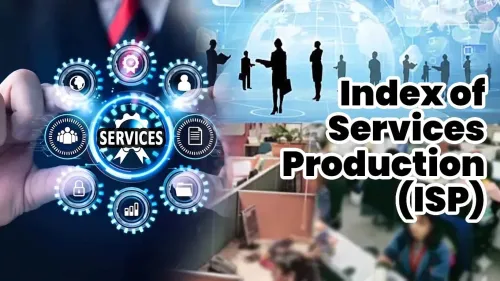
The Ministry of Statistics and Programme Implementation (MoSPI) on Tuesday, 14 July 2026 released India's first sub-sectoral Trial Index of Services Production (ISP), with base year 2024-25, revealing that 14 of 19 tracked sub-sectors posted double-digit growth in April 2026 compared to April 2025. Nearly all categories recorded positive growth, and the 19 sub-sectors together account for roughly 60 per cent of India's services sector.
Top-Performing Sub-Sectors
Accommodation and Food led the pack with a remarkable 37.2 per cent expansion, followed by Retail Trade at 30.8 per cent, Administrative and Support Services at 28.7 per cent, and Real Estate at 27.7 per cent. These figures reflect broad-based momentum across consumer-facing and enterprise services segments in the first month of the new financial year.
What the ISP Measures and How
The ISP tracks short-term movements in India's formal services sector on a monthly basis — a first for the country's statistical architecture. Data is sourced primarily from GST filings and administrative records. Administrative and secondary data feeds into sub-sectors such as Air Transport, Railway Transport, Water Transport (Freight), Banking, and Insurance, while GST data underpins the remaining sub-sectors including IT and computer-related services, Telecommunications, Professional and Scientific Services, and Arts, Entertainment and Recreation.
For price deflation, the index uses the Wholesale Price Index (WPI) for Wholesale Trade and sub-sector-specific or proxy Consumer Price Index (CPI) measures for others. Where no suitable mapping exists, CPI-Services has been applied as the deflator.
Why This Milestone Matters
India's services sector contributes more than half of the country's total economic activity, yet until now lacked a dedicated, high-frequency production index. The ISP fills a critical data gap, enabling policymakers, investors, and researchers to track services-sector momentum in near real time rather than relying solely on quarterly GDP estimates. Notably, this release follows the constitution of the Technical Advisory Committee on ISP (TAC-ISP) in May 2025, which provided conceptual and methodological guidance, drawing on expertise from academia, industry associations, and concerned ministries.
The index is currently being published on an experimental basis — a trial series designed to let MoSPI assess data quality, test resilience, and gather stakeholder feedback before a full rollout.
Scope, Limitations, and What Comes Next
Because the ISP relies on GST and administrative data, it covers only formal-sector enterprises. Sub-sectors dominated by core government activities, non-market activities, or the informal economy fall outside its current scope. MoSPI has indicated that an overall ISP — aggregating across all services — will be released only after the stability and resilience of the sub-sectoral indices have been established and overall coverage improved. The trial series will continue to evolve as feedback is incorporated and data quality benchmarks are met.
Point of View
Which drives more than half of GDP, has long been measured with a lag and at low frequency. The strong April print is encouraging, but the trial label matters: index construction choices, particularly the use of proxy CPI deflators and GST-only formal-sector coverage, will need rigorous validation before the data can anchor policy decisions. The exclusion of the informal economy — which accounts for a substantial share of services employment — also means the index, however well-constructed, tells only part of the story. Policymakers and markets should treat these early readings as directional signals, not settled fact.
NationPress
14 Jul 2026
Frequently Asked Questions
What is the Index of Services Production (ISP) released by MoSPI?
The ISP is India's first monthly index tracking short-term production movements in the formal services sector, released by MoSPI on 14 July 2026 with base year 2024-25. It covers 19 sub-sectors representing about 60 per cent of India's services economy and is currently published on an experimental basis.
Which services sub-sectors grew the fastest in April 2026?
Accommodation and Food recorded the highest growth at 37.2 per cent, followed by Retail Trade at 30.8 per cent, Administrative and Support Services at 28.7 per cent, and Real Estate at 27.7 per cent — all compared to April 2025.
Why is the ISP being released on a trial basis?
MoSPI is publishing the ISP as a trial series to assess data quality, test the resilience of the index methodology, and gather feedback from stakeholders and users. A full, consolidated overall ISP will be released only after the sub-sectoral indices demonstrate sufficient stability and coverage is improved.
What data sources does the ISP use?
The ISP draws on two principal sources: administrative and secondary data for sub-sectors such as Air Transport, Railway Transport, Banking, and Insurance; and GST data for the remaining sub-sectors including Retail Trade, IT Services, Telecommunications, and Real Estate, among others.
Does the ISP cover the informal services sector?
No. Because it relies on GST and administrative data, the ISP covers only formal-sector enterprises. Sub-sectors dominated by the informal economy, non-market activities, or core government functions are excluded from the current index.