Is a 233-year-old Ramayana now part of the Ayodhya museum?
Synopsis
In a momentous cultural exchange, a 233-year-old manuscript of the Valmiki Ramayana has been permanently donated to the Ayodhya museum, enhancing its status as a global center for Ramayana heritage. This significant addition will allow devotees and scholars access to this ancient work in the sacred city of Ayodhya.
Key Takeaways
The 233-year-old manuscript is a significant cultural artifact.
It has been permanently donated to the International Ram Katha Museum in Ayodhya.
The manuscript enhances the accessibility of Valmiki Ramayana teachings.
The museum aims to merge ancient heritage with modern technology.
It supports the preservation of Ramayana heritage for future generations.
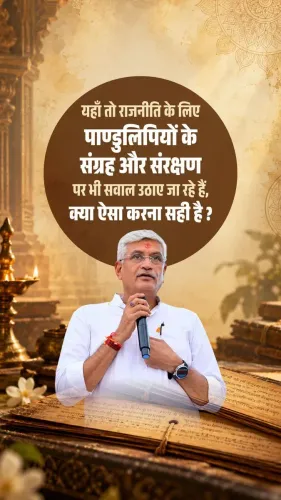
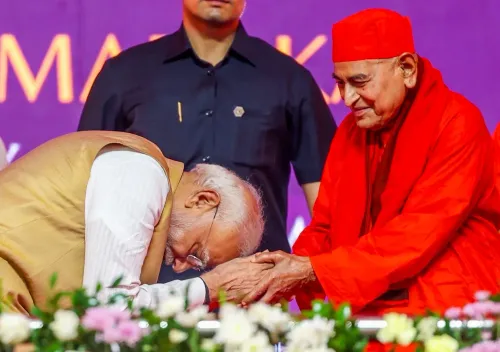
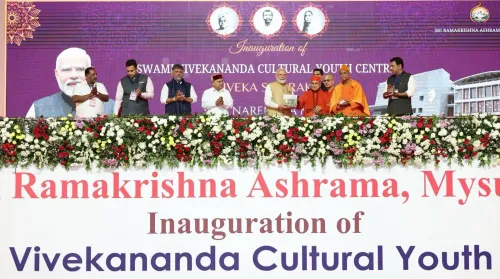
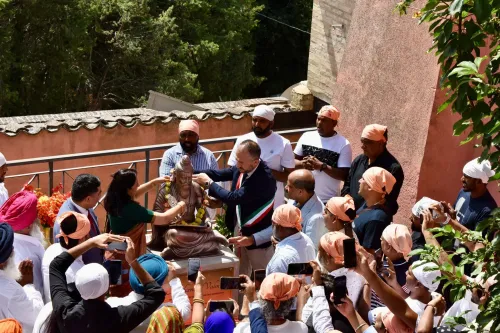
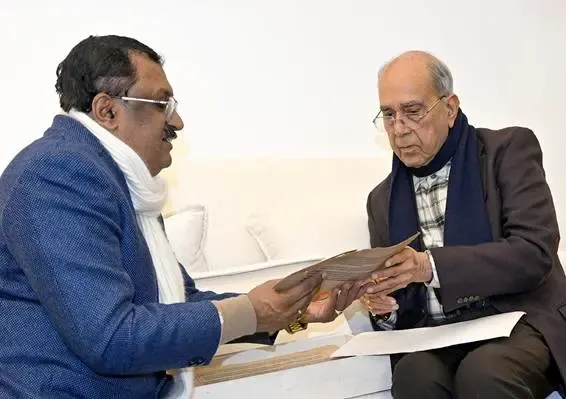
New Delhi, Jan 20 (NationPress) In a significant cultural transfer, the Central Sanskrit University on Tuesday formally handed over a rare 233-year-old Sanskrit manuscript of the Valmikiramayana (including the Tattvadipikaṭika) to Nripendra Misra, the Chairman of the Executive Council of the Prime Ministers’ Museum and Library located at Teen Murti, as stated by an official.
The manuscript, which was earlier on loan to Rashtrapati Bhavan, has now been permanently donated to the Antarrashtriya Ram Katha Sangrahalaya (International Ram Katha Museum) in Ayodhya, Uttar Pradesh.
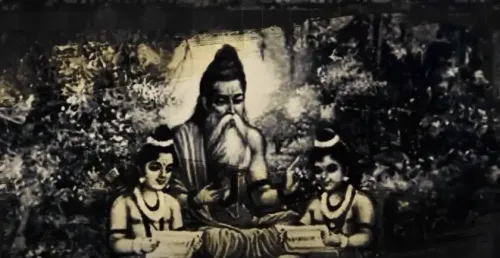
The manuscript was presented by University Vice Chancellor Shrinivasa Varakhedi and is authored by Adi Kavi Valmiki, featuring a classical commentary written by Maheshvara Tīrtha in Sanskrit (Devanagari script).
Misra remarked, “The donation of this rare manuscript of the Valmiki Ramayana to the Ram Katha Sangrahalaya at Ayodhya marks a momentous occasion for the followers of Ram and the temple complex in Ayodhya.”
As Chairman of the Ram Temple Construction Committee, Misra is leading the effort to develop Ayodhya's Ram Katha Sangrahalaya into a contemporary, immersive museum that fuses ancient heritage with modern technology to portray Lord Ram's life, the significance of Ayodhya, and the global resonance of the Ramayana.
This manuscript holds historical importance, dating back to Vikrama Samvat 1849 (1792 CE), and embodies a rare preserved textual tradition of the Rāmayaṇa, according to a statement.
The collection features the five main kaṇḍas of the epic: Balakaṇḍa, Araṇyakaṇḍa, Kiṣkindhakaṇḍa, Sundarakaṇḍa, and Yuddhakaṇḍa, illustrating the narrative and philosophical richness of the Itihasa, stated the release.
Varakhedi highlighted, “This donation immortalizes the profound teachings of the Valmiki Ramayana, making it accessible to scholars, devotees, and visitors from around the globe in the sacred city of Ayodhya.”
This important gesture aids in the museum’s evolution as a global hub for Ramayana heritage, guaranteeing broader public access and preservation, the statement noted.
The Ramkatha Museum was founded in 1988 at the Tulsi Smarak Bhavan in Ayodhya to gather and safeguard artifacts related to Ram Katha, comprising illustrated manuscripts, sculptures, Ram Leela, and other associated art forms.
The museum aspires to protect the archaeological remnants, rare cultural heritage, and showcase the artistic expressions of the Ayodhya region.
Currently, the museum has accumulated 971 artworks, with 170 of them exhibited in its galleries.
The showcased collection incorporates 61 stone sculptures, 40 clay artifacts, 3 ivory pieces, 3 wooden items, 30 metal objects, 9 textile materials, and 21 art pieces from Thailand. The museum also hosts 19 temporary exhibits from Thailand and 88 paintings from various art exhibitions. The artworks are displayed on showcases, pedestals, and display boards.
The museum has also created and showcased fiber replicas of ancient stone sculptures of Ram, Lava, and Kush, which were originally kept in the National Museum, New Delhi.
A reference library focusing on history, art, culture, and Ram Katha has been established in the museum for students, researchers, and art enthusiasts, containing around 750 reference books.
As part of its educational activities, a painting exhibition on Ram Katha was organized in April, along with an exhibition of Ram Katha paintings in July, as per the Uttar Pradesh government’s Culture Department.
Point of View
The donation of the 233-year-old Valmiki Ramayana manuscript is a pivotal development in preserving India's cultural heritage. It reinforces Ayodhya's position as a significant spiritual and historical site while ensuring that the teachings of the Ramayana are accessible to future generations.
NationPress
7 Oct 2026
Frequently Asked Questions
What is the significance of the 233-year-old manuscript?
The manuscript is a rare specimen of the Valmiki Ramayana, representing a preserved textual tradition that dates back to 1792 CE, thus holding immense cultural and historical importance.
Where has the manuscript been donated?
It has been permanently donated to the Antarrashtriya Ram Katha Sangrahalaya, also known as the International Ram Katha Museum, located in Ayodhya, Uttar Pradesh.
Who presented the manuscript?
The manuscript was presented by Shrinivasa Varakhedi, the Vice Chancellor of Central Sanskrit University.
What are the five principal kaṇḍas of the Ramayana included in the manuscript?
The manuscript includes the five principal kaṇḍas: Balakaṇḍa, Araṇyakaṇḍa, Kiṣkindhakaṇḍa, Sundarakaṇḍa, and Yuddhakaṇḍa.
How will the donation impact the museum?
The donation will bolster the museum's role as a global center for Ramayana heritage, making it easier for scholars and visitors to engage with this vital cultural resource.