Is the Sanatan Rashtra Shankhnaad Mahotsav a Historic Moment for Delhi?
Synopsis
Delhi's Minister Kapil Mishra calls the Sanatan Rashtra Shankhnaad Mahotsav a historic event in the capital. This two-day festival, backed by both the Indian and Delhi governments, serves as a platform for discussions on India's civilizational heritage and contemporary issues, emphasizing social harmony and cultural revival.
Key Takeaways
Historical Significance: The Mahotsav marks a pivotal moment for cultural discourse in India.
Government Support: Both the Indian and Delhi governments back the festival.
Focus on Heritage: Emphasizes discussions on India's rich civilizational legacy.
Unity and Harmony: Highlights the importance of social harmony and mutual responsibility.
Spiritual Engagement: The presence of divine figures transforms inner consciousness.
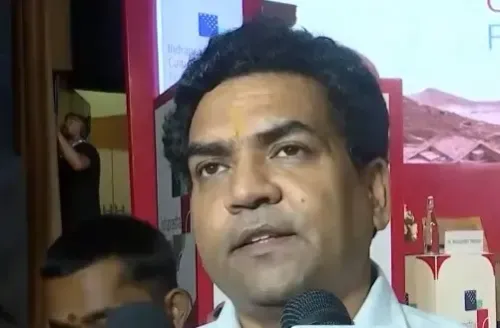
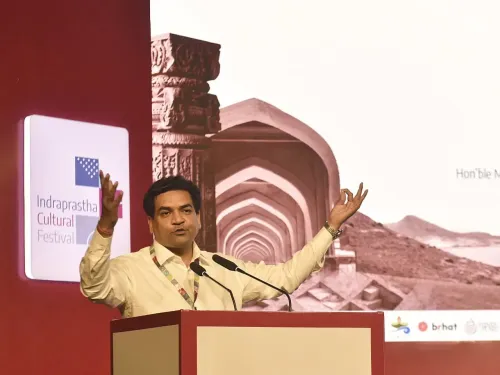
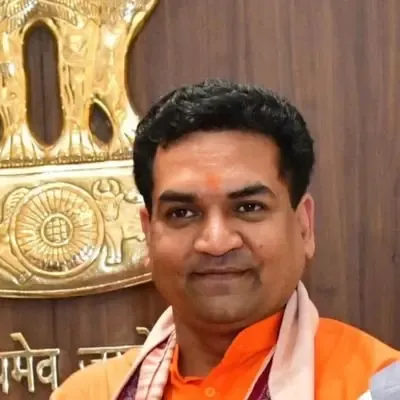
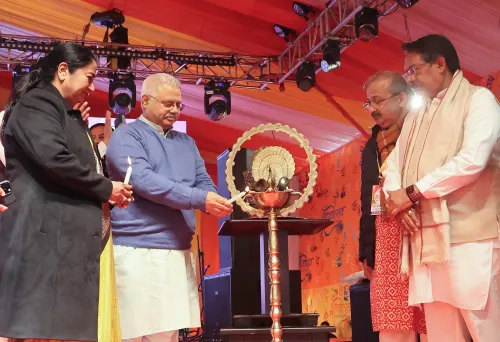
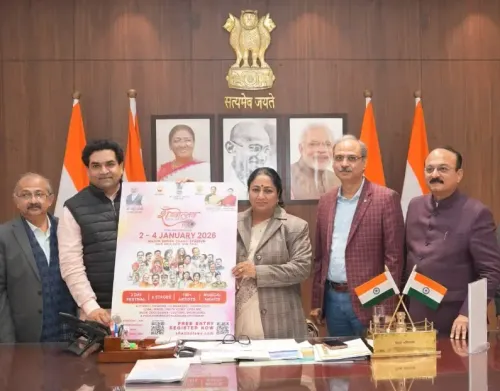
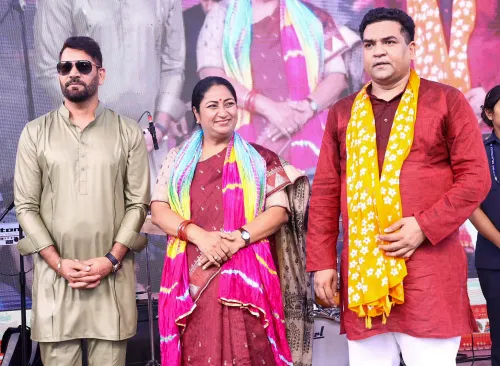
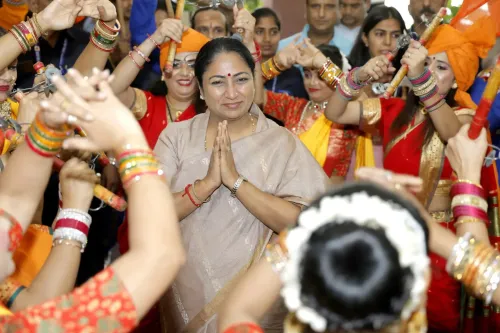
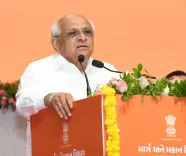
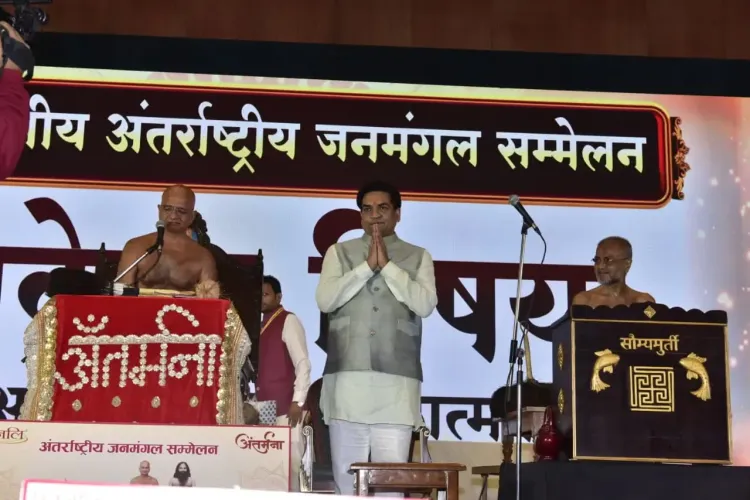
New Delhi, Dec 13 (NationPress) - On Saturday, Delhi's Art, Culture and Language Minister Kapil Mishra emphasized the significance of the Sanatan Rashtra Shankhnaad Mahotsav taking place in the national capital, describing it as a momentous occasion.
Speaking during the two-day event at Bharat Mandapam, Mishra remarked that a decade earlier, the notion of such open ideological discussions would have seemed far-fetched.
He pointed out that the festival, which enjoys the backing of both the Indian government and the Delhi government, serves as a platform for dialogues concerning India's civilizational legacy, Sanatan consciousness, cultural revival, and pressing national topics.
While addressing attendees, Mishra stated: "The echo of Jai Shri Ram itself signifies the shankhnaad — the declaration — of the Sanatan Nation."
Referencing the Ram Temple movement, the Somnath Jyotirlinga, and the progression of time, he asserted that the Sanatan tradition is future-focused and that time ultimately unveils its answers.
Mishra highlighted various cultural programs held at the Red Fort, emphasizing that fear is not ingrained in the DNA of Indian society.
He elaborated on the concept of Ram Rajya, stating that it is achieved not only through security but also through social unity, collective accountability, and a communal sense of dharma.
A special highlight of the festival was an exhibition featuring the weaponry tradition from the era of Chhatrapati Shivaji Maharaj, regarded as a living testament to India's martial legacy and courage.
In conjunction, the International Janmangal Conference was held at Bharat Mandapam on December 12-13, gathering saints, ascetics, yoga practitioners, intellectuals, and female spiritual leaders from both India and abroad.
The conference aimed to reinforce public welfare values and nation-building through fasting, yoga, meditation, self-discipline, and spiritual practices.
On this occasion, Mishra remarked: "The moment one sits in the presence of divine souls, profound inner consciousness starts to change."
He acknowledged that penance involving extensive fasting, sensory control, and spiritual commitment might seem daunting, yet the direct presence of such divine beings is a boon for the nation.
Mishra recognized the ascetic practices of Jain saints, female spiritual leaders, and yoga practitioners as the bedrock of society.
The conference featured notable figures such as Mahamandaleshwar Swami Shanti Gir Maharaj, Sadhguru Dr. Charudatt Pingale, Uday Mahurkar, Dr. Suresh Chavhanke, and Shakti Swaroopa Anjali Kangil, among others.
Mishra conveyed that if society commits to following the guidance of Yog Guru Swami Ramdev, many of the nation's and dharma's challenges would naturally resolve.
Point of View
Events like the Sanatan Rashtra Shankhnaad Mahotsav provide an essential platform for dialogue on cultural identity and social unity. The engagement of prominent leaders and thinkers underscores the importance of fostering a shared understanding of India's rich heritage while addressing contemporary challenges.
NationPress
8 Oct 2026
Frequently Asked Questions
What is the Sanatan Rashtra Shankhnaad Mahotsav?
The Sanatan Rashtra Shankhnaad Mahotsav is a cultural festival held in Delhi, aimed at promoting discussions on India's civilizational heritage and contemporary national issues.
Who organized the International Janmangal Conference?
The International Janmangal Conference was organized at Bharat Mandapam, featuring participation from saints, yoga practitioners, and spiritual leaders from India and abroad.
What themes were discussed at the Mahotsav?
The Mahotsav focused on themes like Sanatan consciousness, cultural renaissance, social harmony, and public welfare values.
What is the significance of the Ram Rajya concept?
Ram Rajya symbolizes not just security but also social harmony, mutual responsibility, and a collective sense of dharma among citizens.
Why is the weapons exhibition important?
The exhibition showcases the martial heritage of India, highlighting the valor and traditions dating back to the era of Chhatrapati Shivaji Maharaj.