Gadchiroli snakebite deaths: 3 tribal girls killed at Ashram School in Dhanora
Synopsis
Three tribal girls died from snakebites at a residential school in Gadchiroli on the very day the world marks Indigenous Peoples' rights — a grim coincidence that Shiv Sena (UBT) used to lay bare what it calls decades of state-sanctioned neglect: rampant mining pushing wildlife into school grounds, crumbling infrastructure, zero medical access, and a political narrative that, critics argue, cleared Naxals to clear the way for industry.
Key Takeaways
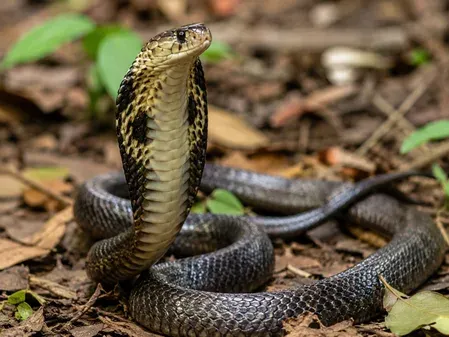
Six tribal schoolgirls were bitten by venomous snakes at an Ashram School in Japatlai, Dhanora taluka, Gadchiroli ; three died at the scene and two were left in critical condition.
The incident occurred on the International Day of the World's Indigenous Peoples .
Shiv Sena (UBT) condemned the Maharashtra government in its mouthpiece Saamana , citing systemic neglect of tribal communities.
The editorial alleged that mining operations have disrupted wildlife habitats, pushing snakes and leopards into residential and school areas.
More than 1,500 residents have reportedly been killed by speeding mining trucks, according to the Saamana editorial.
Gadchiroli's tribal belt reportedly lacks functional ambulances, forcing families to transport the sick and deceased on makeshift cloth stretchers.
Three tribal schoolgirls died and two were left in critical condition after six students at an aided residential tribal school in Japatlai, Dhanora taluka, Gadchiroli district, were bitten by venomous snakes — a tragedy that unfolded on the International Day of the World's Indigenous Peoples. The incident has drawn sharp political condemnation, with the Shiv Sena (Uddhav Balasaheb Thackeray) using its party mouthpiece 'Saamana' to accuse the Maharashtra state government of systemic neglect of tribal communities.
What Happened at the Japatlai Ashram School
The snakebite tragedy struck the government-aided residential school — commonly known as an Ashram School — in Gadchiroli's Dhanora taluka. According to reports, six girls were bitten by venomous snakes; three died at the scene, while two were hospitalised in critical condition. The incident coincided with the global observance marking the rights and welfare of indigenous peoples, lending it particular symbolic weight.
Saamana Editorial: A Pattern of Neglect
An editorial published in Saamana on Wednesday, 12 August framed the deaths not as an isolated accident but as the predictable outcome of entrenched state neglect. The editorial argued that rampant mining operations in the region have disrupted native wildlife habitats, pushing animals including leopards and snakes into residential hamlets and school premises. It further alleged that Ashram Schools in the district suffer from severe structural cracks, poor sanitation, a shortage of medical provisions, and a lack of basic furniture — conditions that reportedly force children to sleep on bare floors.
Mining, Displacement, and Contamination Allegations
The Shiv Sena (UBT) editorial levelled serious allegations against the state administration, accusing it of systematically displacing indigenous communities — described as the rightful custodians of the region's land, water, and forests — to make way for corporate entities and outside mining entrepreneurs. The editorial claimed that more than 1,500 residents have reportedly been killed by speeding mining trucks, with accident sites allegedly cleaned up rapidly by authorities. Industrial residue, it claimed, settles on cooked food inside tribal homes, leaving families exposed to polluted water and contaminated meals. Residents who protest these conditions are reportedly labelled as Naxalites or traitors and imprisoned, according to the editorial.
Medical Infrastructure Crisis in Gadchiroli
The editorial highlighted a severe absence of functional emergency transport across the district. Critically ill patients and pregnant women are reportedly carried over long distances on makeshift cloth stretchers due to the lack of government ambulances. In the most harrowing cases, grieving parents have been left with no option but to carry the bodies of deceased children on their shoulders, the editorial stated.
Political Reaction and the Anti-Naxal Narrative
The Thackeray camp sharply condemned the state government, suggesting — in a pointed rhetorical flourish — that tribal residents bring snakes and scorpions from their hamlets to the official residences of government ministers in Mumbai, so that officials may understand the constant danger faced by the community. The editorial also challenged the official narrative around anti-Naxal operations in Gadchiroli, arguing that the dismantling of Naxalism in the region was pursued not to improve living standards for indigenous people, but to secure the safety and profitability of commercial industrial ventures. This comes amid ongoing state and central government claims that Naxalite activity in Gadchiroli has significantly declined in recent years.
The deaths have reignited a long-running debate over whether development in India's mineral-rich tribal belts translates into genuine welfare for indigenous communities or primarily serves industrial and political interests. Whether the Maharashtra government responds with concrete infrastructure upgrades at Ashram Schools across Gadchiroli will be closely watched in the weeks ahead.
Point of View
Yet successive administrations have treated them as a welfare footnote rather than a governance priority. The Shiv Sena (UBT) critique lands hardest on the mining-displacement nexus — if the editorial's figures on truck fatalities and habitat disruption are even partially accurate, they point to a regulatory vacuum that no anti-Naxal success story can paper over. The real accountability question is not whether wildlife encroached on a school, but why the school had no snake-proofing, no antivenom, and no ambulance — in a district that the state simultaneously markets as an emerging Steel Hub.
NationPress
27 Sept 2026
Frequently Asked Questions
What happened at the Gadchiroli Ashram School in Dhanora?
Six tribal schoolgirls were bitten by venomous snakes at a government-aided residential school in Japatlai, Dhanora taluka, Gadchiroli. Three of the girls died at the scene and two were hospitalised in critical condition, according to reports cited by Shiv Sena (UBT) in its party mouthpiece Saamana.
Why does Shiv Sena (UBT) blame the state government for the deaths?
The party's editorial in Saamana argues that rampant mining operations have destroyed native animal habitats, driving wildlife including snakes into school and residential areas. It also points to crumbling Ashram School infrastructure — structural cracks, no medical provisions, no proper furniture — as evidence of systemic state neglect of tribal communities.
What allegations has Saamana made about mining in Gadchiroli?
The Saamana editorial alleged that over 1,500 tribal residents have reportedly been killed by speeding mining trucks, with accident sites quickly cleaned up by authorities. It also claimed industrial residue contaminates food and water inside tribal homes, and that residents who protest are reportedly labelled Naxalites and imprisoned.
What is the state of medical infrastructure in Gadchiroli's tribal belt?
According to the Saamana editorial, Gadchiroli lacks functional emergency transport and government ambulances. Critically ill patients and pregnant women are reportedly carried on makeshift cloth stretchers over long distances, and in some cases, families have had to carry deceased children on their shoulders.
What is the broader political context of the Gadchiroli snakebite incident?
The Shiv Sena (UBT) editorial challenged the official narrative that anti-Naxal operations in Gadchiroli were conducted to benefit indigenous communities, arguing instead that they primarily secured conditions for commercial industrial ventures. The incident has reignited debate over whether development in mineral-rich tribal belts delivers genuine welfare for indigenous people.