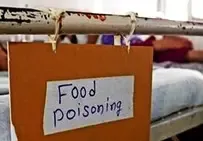
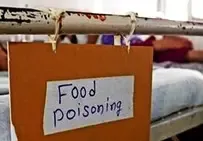
NCST Issues Notice to Odisha Over Tribal Student Death in Food Poisoning Case

Synopsis
A Class V tribal girl, Rupali Besra, died after a mass food poisoning incident at Kakabandha Ashram School in Odisha's Mayurbhanj district on April 12. Now, both the NCST and NHRC have sought urgent reports from the state government, raising serious questions about food safety in India's tribal residential schools.
Key Takeaways
The National Commission for Scheduled Tribes (NCST) issued a notice to Odisha authorities demanding an Action Taken Report within 7 days on the Mayurbhanj food poisoning case.
Rupali Besra , a Class V student at Kakabandha Ashram School , died on April 14 after consuming school food on April 12 , with hundreds of other students also falling ill.
The NCST invoked Article 338A of the Constitution to investigate, acting on a petition by BJD leader Priyabrata Majhi .
The Odisha government announced Rs 7 lakh compensation for the deceased student's family and suspended the school's headmaster .
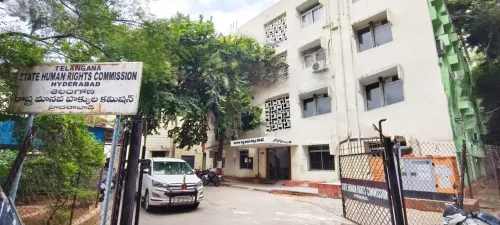
The National Human Rights Commission (NHRC) has also taken suo motu cognisance and sought a separate state report.
A Revenue Divisional Commissioner-level inquiry is currently underway into the incident.
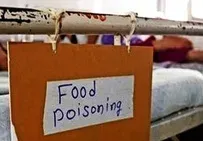
The National Commission for Scheduled Tribes (NCST) has issued a formal notice to the Odisha Commissioner-cum-Secretary of the Scheduled Tribes and Scheduled Castes Development, Minorities and Backward Classes Welfare Department, and to the Collector and Superintendent of Police of Mayurbhanj, demanding an Action Taken Report on the death of a tribal minor student and the mass illness of hundreds of students at an ashram school due to suspected food poisoning. The incident, which unfolded on April 12 at Kakabandha Ashram School in Mayurbhanj, Odisha, has triggered a multi-agency response including scrutiny from both the NCST and the National Human Rights Commission.
What Happened at Kakabandha Ashram School
On April 12, hundreds of students at Kakabandha Ashram School in Mayurbhanj district fell ill after consuming the school-prepared meal, which reportedly included pakhala, aloo masala, mango chutney, and leafy vegetables. The sudden mass illness sent shockwaves through the district's tribal welfare administration.
Rupali Besra, a Class V student, was admitted to the Intensive Care Unit of Pandit Raghunath Murmu Medical College and Hospital, Baripada, where she succumbed to her illness on April 14. Her death has intensified scrutiny over food safety standards in Odisha's tribal residential schools.
NCST Invokes Constitutional Powers to Investigate
Acting on a petition filed by Biju Janata Dal (BJD) leader Priyabrata Majhi and others on April 15, the NCST invoked its powers under Article 338A of the Constitution of India to investigate the matter. The commission has directed that facts, information, and action taken on the allegations be submitted within seven days of receipt of the notice — via post, in person, or through any other means of communication.
Authorities have been warned that failure to comply within the stipulated timeframe may result in a summons for personal appearance before the commission. This underlines the gravity with which the NCST is treating the case.
Odisha Government's Initial Response
Following the tragedy, the Government of Odisha announced financial assistance of Rs 7 lakh for the family of the deceased student Rupali Besra. The school's headmaster has been suspended, and a Revenue Divisional Commissioner (RDC)-level inquiry has been initiated to probe the circumstances of the food poisoning.
Notably, the National Human Rights Commission (NHRC) has also taken suo motu cognisance of the incident and sought a separate report from the state authorities. The dual scrutiny from both the NCST and NHRC signals that accountability at the state level is under serious pressure.
Broader Concerns Over Tribal Ashram School Safety
This incident is not an isolated case. Food safety and hygiene standards in tribal residential and ashram schools across India have repeatedly come under question, with several states facing similar controversies in recent years. Critics argue that chronically underfunded welfare schools serving Scheduled Tribe children remain vulnerable to administrative neglect, inadequate food quality checks, and poor infrastructure.
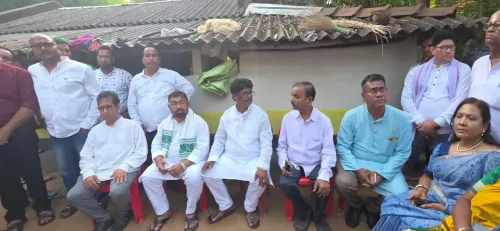
The opposition BJD has alleged that concerned officials and departments were slow to respond and has demanded urgent corrective action. This comes amid broader national debates on the welfare of tribal communities and the effectiveness of government-run residential schools in delivering safe, dignified education.
What Happens Next
All designated authorities — including the Commissioner of the ST and SC Development Department and district-level officials — are now required to submit detailed reports to the NCST within the stipulated timeframe. The RDC inquiry is ongoing, and further action, including potential legal consequences for negligent officials, cannot be ruled out.
With both the NCST and NHRC now closely monitoring the case, the Odisha government faces mounting pressure to demonstrate systemic reforms in the management of tribal welfare institutions — not just reactive measures after a tragedy.
Point of View
Where welfare budgets are announced but oversight is minimal and accountability is rare. The fact that both the NCST and NHRC had to intervene for the Odisha government to face real pressure reveals a troubling pattern: state action is reactive, not preventive. Mainstream coverage tends to treat such incidents as isolated accidents, but the recurring nature of food poisoning deaths in tribal residential schools demands a structural audit — not just a suspended headmaster and a compensation cheque.
NationPress
21 Oct 2026
Frequently Asked Questions
What happened at Kakabandha Ashram School in Mayurbhanj?
On April 12, 2025, hundreds of tribal students at Kakabandha Ashram School in Mayurbhanj, Odisha, fell ill after consuming school-prepared food including pakhala, aloo masala, mango chutney, and leafy vegetables. Class V student Rupali Besra died on April 14 while undergoing treatment at Pandit Raghunath Murmu Medical College and Hospital in Baripada.
Why did the NCST issue a notice to Odisha?
The National Commission for Scheduled Tribes issued a notice to Odisha authorities after receiving a petition from BJD leader Priyabrata Majhi on April 15, 2025. Invoking Article 338A of the Constitution, the NCST sought an Action Taken Report on the food poisoning death and mass illness within seven days.
What action has the Odisha government taken so far?
The Odisha government announced Rs 7 lakh financial assistance for the family of deceased student Rupali Besra and suspended the school's headmaster. A Revenue Divisional Commissioner-level inquiry has also been initiated to investigate the food poisoning incident.
Has the NHRC also taken up this case?
Yes, the National Human Rights Commission (NHRC) has taken suo motu cognisance of the Mayurbhanj food poisoning case and separately sought a report from the Odisha government, adding to the pressure on state authorities alongside the NCST notice.
What are the broader implications of this incident?
The Kakabandha Ashram School tragedy highlights persistent food safety and hygiene failures in tribal residential schools across India. Experts and rights bodies argue that systemic reforms — including regular food quality audits and stronger administrative oversight — are urgently needed to protect tribal students in government-run institutions.