Nagaland rainfall triggered Assam floods: CM Sarma, 31 dead in Charaideo, Sivasagar

Synopsis
Rainfall recorded at nearly five times the seasonal average — spanning both Assam and three Nagaland districts — has left 31 dead, seven missing, and nearly seven lakh people displaced in Charaideo and Sivasagar. A fifth of the affected zone remains unreachable, and a Central Inter-Ministerial Team lands Saturday to decide the scale of federal relief.
Key Takeaways
Assam CM Himanta Biswa Sarma confirmed that floods in Charaideo and Sivasagar were triggered by rainfall 435 to 490 per cent above normal in both Assam and Nagaland's Mon , Mokokchung , and Wokha districts.
31 people have died — 21 in Sivasagar and 10 in Charaideo — with 7 still missing.
Nearly seven lakh residents are affected; 20–25 per cent of the zone remains inaccessible due to damaged infrastructure.
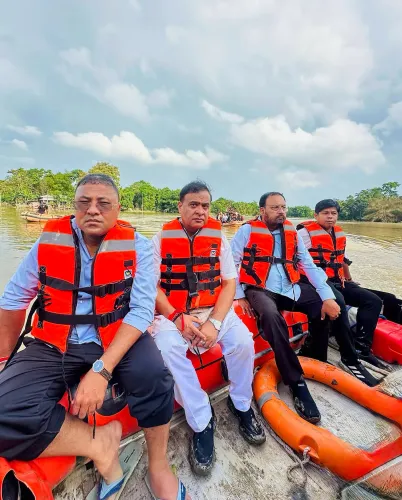
Army , IAF , NDRF , and SDRF teams are conducting rescue and relief operations, supervised by two state ministers on the ground.
Union Home Minister Amit Shah spoke with CM Sarma; a Central Inter-Ministerial Team arrives on Saturday to assess damage and relief needs.
Flood conditions have eased in Jorhat and Golaghat , but Charaideo and Sivasagar remain severely inundated.
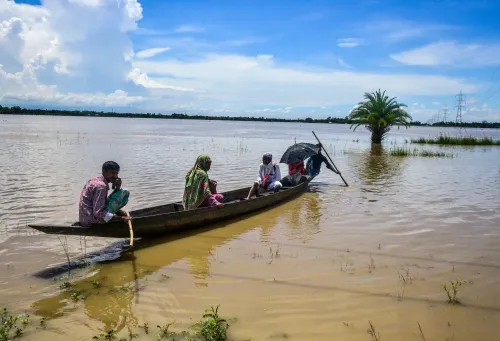
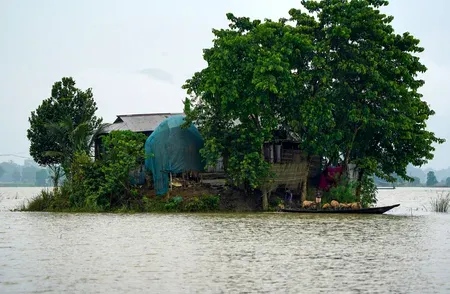
Assam Chief Minister Himanta Biswa Sarma on Friday, 25 July said the catastrophic floods that submerged large parts of Charaideo and Sivasagar districts were driven by rainfall 435 to 490 per cent above normal — not just within Assam but also from the Nagaland districts of Mon, Mokokchung, and Wokha, which sent a massive surge of water cascading into Upper Assam. At least 31 people have died and nearly seven lakh residents are affected, making this one of the worst flood events in the region in recent years.
What Triggered the Floods
'The devastating floods in Charaideo and Sivasagar were triggered by exceptionally heavy rainfall in the two Assam districts as well as in Mon, Mokokchung and Wokha districts of neighbouring Nagaland,' Chief Minister Sarma told reporters in Guwahati. He described the precipitation as an unprecedented weather event that overwhelmed rivers, streams, and drainage channels flowing from the Nagaland hills into Assam. The topography of Upper Assam, he noted, makes districts like Charaideo and Sivasagar particularly vulnerable to sudden hill-state runoff during intense rainfall spells.
Scale of the Crisis
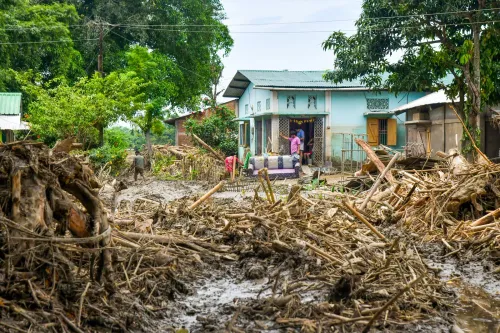
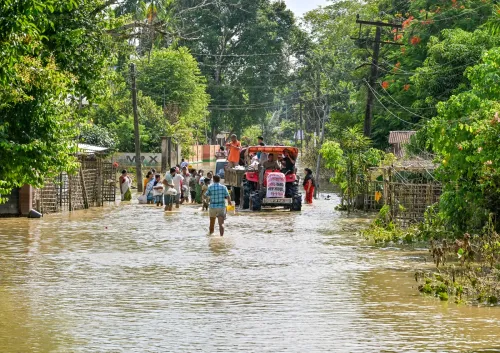
Of the 31 confirmed deaths, 21 have been recorded in Sivasagar and 10 in Charaideo. Seven people remain missing. Sarma said around 20 to 25 per cent of the affected areas remain inaccessible to the administration due to damaged roads and broken connectivity. 'The situation is extremely grim. Large parts of Charaideo and Sivasagar remain submerged,' he said. While conditions have improved in Jorhat and Golaghat districts, the two worst-hit districts continue to face severe inundation.
Relief and Rescue Operations
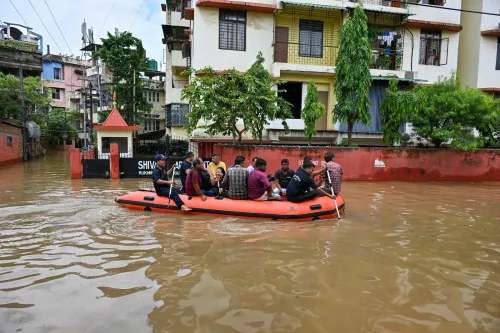
The state government has deployed a multi-agency response. Teams from the Indian Army, Indian Air Force, National Disaster Response Force (NDRF), State Disaster Response Force (SDRF), and district administrations are actively rescuing stranded residents and delivering essential supplies. Two state ministers have been stationed in the flood-affected zones to oversee the relief effort on the ground.
Centre Steps In
Union Home Minister Amit Shah spoke directly with Chief Minister Sarma to take stock of the flood situation. A Central Inter-Ministerial Team is scheduled to arrive in Assam on Saturday to assess the extent of damage and determine the quantum of relief and rehabilitation assistance required from the Centre. This intervention signals that the disaster has crossed the threshold for state-level response alone.
What Happens Next
With a fifth of the affected zone still cut off, the immediate priority remains restoring connectivity and ensuring relief reaches isolated communities. The Central team's assessment will be critical in unlocking additional federal funds. Meteorological patterns linking Nagaland hill rainfall to Assam flooding are not new, but the scale of this event — rainfall nearly five times the seasonal average — underscores the need for cross-state early-warning coordination that currently remains underdeveloped.
Point of View
Yet no such mechanism exists in any meaningful form. Rainfall at 490 per cent of normal is not an outlier to be managed after the fact; it is a signal that Upper Assam's flood infrastructure and early-warning systems are calibrated for a climate that no longer exists. The Centre's Inter-Ministerial Team will likely unlock funds, but the harder question — why Charaideo and Sivasagar, districts not traditionally prone to large-scale flooding, were caught so badly off-guard — will not appear in any damage assessment report.
NationPress
23 Oct 2026
Frequently Asked Questions
What caused the devastating floods in Assam's Charaideo and Sivasagar districts?
According to Assam Chief Minister Himanta Biswa Sarma, the floods were caused by rainfall recorded at 435 to 490 per cent above normal across both the affected Assam districts and the neighbouring Nagaland districts of Mon, Mokokchung, and Wokha. The resulting runoff overwhelmed rivers and drainage channels flowing from the Nagaland hills into Upper Assam.
How many people have died and how many are affected by the Assam floods?
At least 31 people have died — 21 in Sivasagar and 10 in Charaideo — with seven people still missing. Nearly seven lakh residents across the two districts have been affected by the flooding.
What relief operations are under way in the flood-hit districts?
Teams from the Indian Army, Indian Air Force, NDRF, and SDRF are conducting rescue and relief operations alongside district administrations. Two state ministers have been deployed to the affected areas to supervise the response on the ground.
Is the Centre involved in the Assam flood relief?
Yes. Union Home Minister Amit Shah spoke with CM Sarma about the situation, and a Central Inter-Ministerial Team is scheduled to arrive in Assam on Saturday to assess the damage and determine the relief and rehabilitation assistance required.
Which districts are worst affected and which have seen improvement?
Charaideo and Sivasagar remain the most severely affected, with large areas still submerged and 20 to 25 per cent of the zone inaccessible. Conditions have improved considerably in Jorhat and Golaghat districts, according to CM Sarma.