Four militants killed in Naga group gunfight in Manipur's Noney district
Synopsis
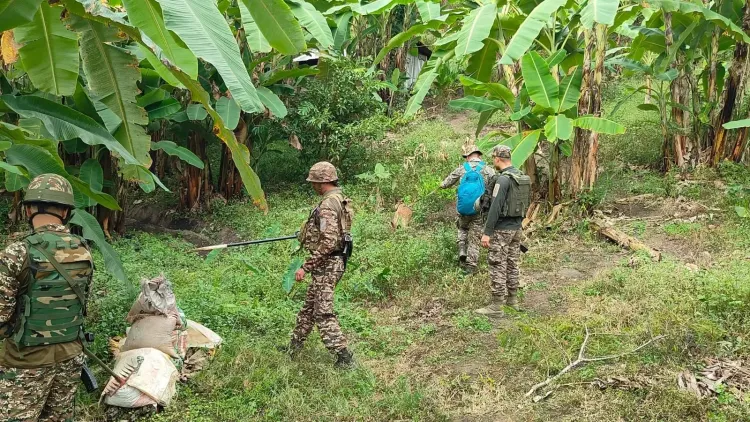
Four militants — three from ZUF-J and one from ZUF-K — were killed in a hours-long gunfight at Taodaijang village in Manipur's Noney district on Wednesday. Notably, local women deployed a public address system at the scene to plead for a ceasefire. The same day, Chief Minister Yumnam Khemchand Singh ordered security agencies to identify violent armed groups and warned of unlawful organisation declarations.
Key Takeaways
Four militants were killed — three ZUF-J and one ZUF-K cadre — in a gunfight at Taodaijang village , Noney district , on 4 November 2026 .
One militant was injured in the clash, which continued for several hours.
Local residents, including women, intervened using a public address system to appeal for a halt to firing.
Manipur Chief Minister Yumnam Khemchand Singh directed security agencies to identify active armed groups responsible for recent violence.
The CM warned the state Cabinet may declare such groups unlawful if their involvement in civilian violence is established.
Security agencies, including the Army and central paramilitary forces, have been asked for detailed reports at the earliest.
At least four militants were killed and one injured in a gunfight between rival Naga militant outfits in Manipur's Noney district on Wednesday, 4 November 2026, according to officials. The clash marks one of the most lethal inter-faction exchanges in the region in recent months.
How the Gunfight Unfolded
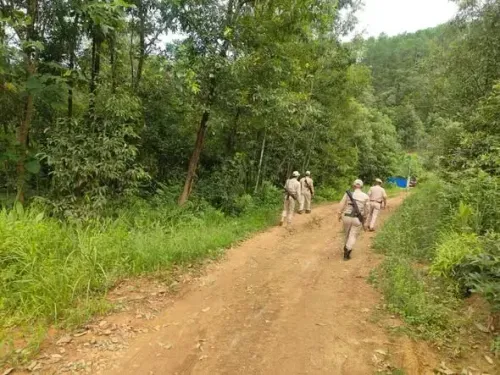
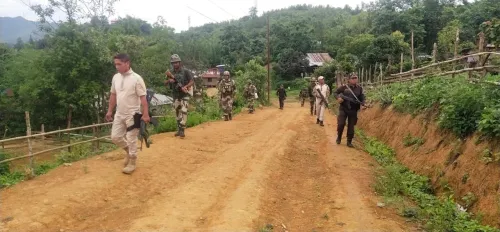
According to police, a heavy exchange of fire broke out early in the morning between cadres suspected to belong to two rival Naga militant factions — the Zeliangrong United Front-Jenchui (ZUF-J) and the Zeliangrong United Front-Kamson (ZUF-K) — at Taodaijang village in the Khoupum area of the Naga-majority district. The gunfight continued for several hours before subsiding.
According to initial reports, three cadres of the ZUF-J and one cadre of the ZUF-K were killed in the exchange. The bodies of the slain militants were recovered by local residents from the site of the clash.
Residents Step In to Prevent Further Violence
In an unusual display of civilian intervention, local residents — including women — went to the site of the gunfight in an attempt to prevent further hostilities between the rival groups. They deployed a public address system to appeal directly to the cadres to cease firing, officials said. The grassroots effort underscores the toll that inter-faction armed violence has taken on civilian life in the district.
Chief Minister Issues Security Directive
Meanwhile, Manipur Chief Minister Yumnam Khemchand Singh directed senior security officials to identify all active armed groups — excluding those engaged in peace talks with the state government — suspected to be involved in the recent spate of violence in the state.
A senior official of the Chief Minister's Office (CMO) said the directive was issued during a review meeting on the law and order situation held on Tuesday night. Khemchand Singh also instructed security agencies, including the Army and central paramilitary forces, to submit a detailed report on the involvement of these groups at the earliest.
The Chief Minister said that based on the findings of the report, the state Cabinet would be constrained to consider declaring such groups as unlawful if their involvement in violence against civilians is established. The CMO official added that Khemchand Singh made clear that necessary action would be initiated against any groups continuing to perpetrate violence against the civilian population.
Context: Factional Violence in Manipur
The ZUF-J and ZUF-K are splinter factions of the broader Zeliangrong United Front, a Naga armed group historically active in parts of Manipur, Nagaland, and Assam. Inter-factional rivalries among Naga militant outfits in Manipur have periodically erupted into deadly clashes, complicating both security operations and ongoing peace processes. This comes amid broader concerns about law and order in Manipur, which has seen prolonged ethnic tensions involving multiple communities and armed groups.
Further details on the incident are awaited from security agencies.
Point of View
But its credibility will depend on whether security agencies can produce actionable intelligence rather than broad classifications. The spontaneous civilian intervention with a public address system points to deep community exhaustion with armed violence — a social signal that security-only approaches consistently underweight. As long as splinter factions outside the peace-talks framework operate freely, every ceasefire agreement risks being undermined from the margins.
NationPress
4 Nov 2026
Frequently Asked Questions
What happened in Manipur's Noney district on 4 November 2026?
A gunfight between rival Naga militant factions — the ZUF-J and ZUF-K — at Taodaijang village in the Khoupum area left four militants dead and one injured. The clash lasted several hours and was eventually met with a civilian appeal for calm.
Who are the ZUF-J and ZUF-K?
The ZUF-J (Zeliangrong United Front-Jenchui) and ZUF-K (Zeliangrong United Front-Kamson) are rival splinter factions of the Zeliangrong United Front, a Naga armed group active across parts of Manipur, Nagaland, and Assam. Their inter-factional rivalry has led to periodic violent clashes.
What action is the Manipur government taking after the gunfight?
Manipur Chief Minister Yumnam Khemchand Singh has directed the Army, central paramilitary forces, and state security agencies to submit detailed reports identifying active armed groups — excluding those in peace talks — involved in recent violence. He warned that the state Cabinet may declare such groups unlawful if their role in civilian violence is confirmed.
How did local residents respond to the gunfight?
Local residents, including women, went to the site of the clash and used a public address system to appeal to the militant cadres to stop firing. Their intervention highlights growing civilian frustration with inter-faction violence in the region.
What is the broader context of violence in Manipur?
Manipur has faced prolonged ethnic and insurgency-related tensions involving multiple communities and armed groups. Inter-factional clashes among Naga outfits in Noney district add another layer of complexity to an already fragile security environment, complicating both peace negotiations and security operations.