46 KCP-PWG militants surrender in Manipur, deposit 28 weapons
Synopsis
For a faction that rarely surrendered more than a dozen cadres at a time, the simultaneous laying down of arms by 46 KCP-PWG militants — none of them covered by any prior peace deal — marks a qualitative shift in Manipur's security landscape. The deposit of 28 weapons, including an RPG launcher, signals not just numbers but the depth of the faction's operational collapse.
Key Takeaways
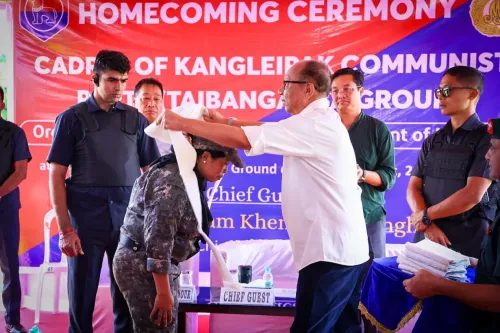
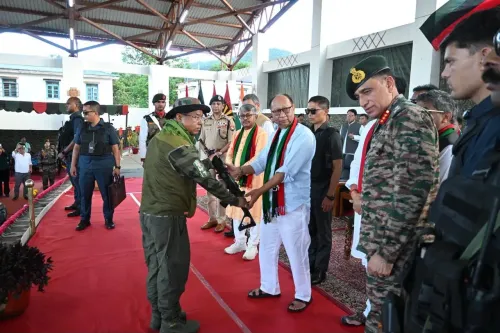
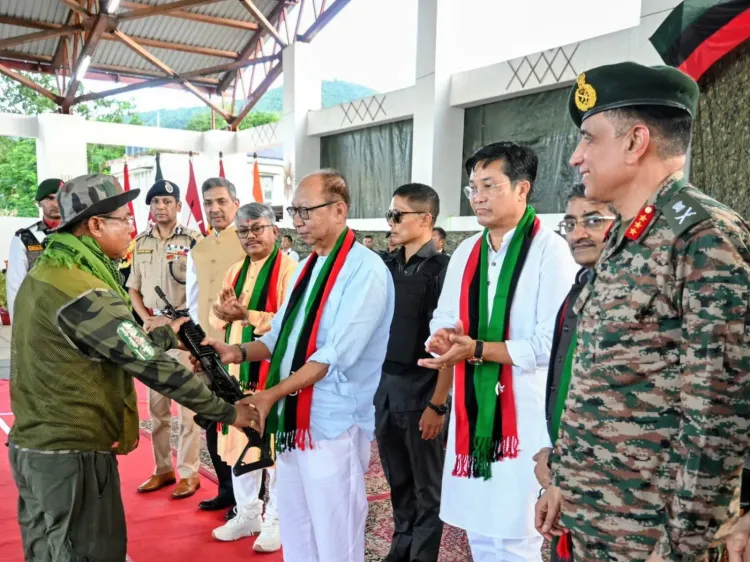
46 active KCP-PWG cadres surrendered before Chief Minister Yumnam Khemchand Singh on 21 July at Mantripukhri Garrison, Imphal East .
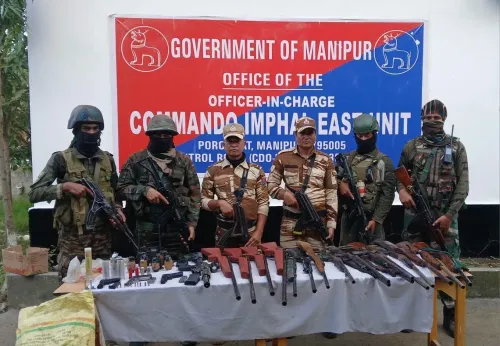
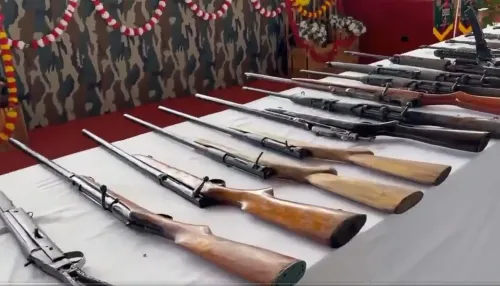
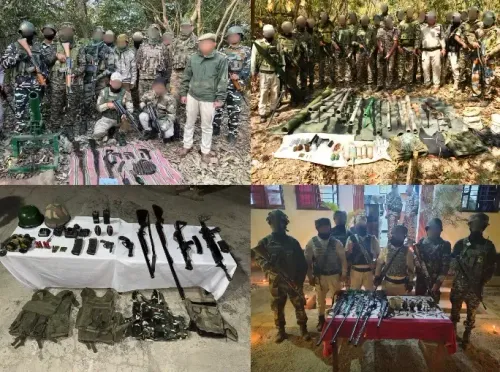
The cadres deposited 28 sophisticated weapons including AK series rifles, an INSAS rifle, Carbine Machine Guns, and an RPG launcher , along with ammunition and explosives.
None of the 46 surrendering cadres were covered under any prior peace agreement, making this transition especially significant.
Historical KCP-PWG surrenders involved groups of only five to twelve cadres ; a simultaneous surrender of 46 is unprecedented for this faction.
The KCP was founded on 14 April 1980 and the PWG splinter had severely impacted Imphal East , Imphal West , and Kakching districts.
Officials credited weeks of outreach by the Assam Rifles , Manipur Police , and allied agencies for the breakthrough.
In a significant boost to the ongoing peace process in Manipur, 46 active cadres of the proscribed Kangleipak Communist Party (People's War Group) (KCP-PWG) surrendered before Chief Minister Yumnam Khemchand Singh on Tuesday, 21 July, laying down a large cache of arms and ammunition at the Mantripukhri Garrison in Imphal East district. Officials described the event as an unprecedented operational blow to the faction.
The Surrender and Arms Deposited
The ceremony took place at the Headquarters of the Assam Rifles (South) in Imphal East. The surrendering cadres voluntarily deposited 28 sophisticated weapons, including AK series rifles, .303 rifles, pistols, double-barrel rifles, single-barrel rifles, an INSAS rifle, a Self Loading Rifle (SLR), Carbine Machine Guns, and a Rocket Propelled Grenade (RPG) launcher, along with a large quantity of magazines, ammunition, and explosives.
Defence spokesman Lt Col Amit Shukla called the development 'a major security breakthrough poised to usher in a stable, development-oriented era' for the state.
Why This Surrender Is Unprecedented
According to Lt Col Shukla, none of the 46 cadres had been party to any prior peace agreements, making their transition to mainstream civilian life especially significant. Historically, KCP-PWG surrenders have occurred in far smaller batches — typically groups of five to twelve cadres — making a simultaneous surrender of this scale unprecedented for the faction.
The KCP was founded on 14 April 1980 by communist ideologues Y. Ibohanbi and Ibopishak. Over subsequent decades, ideological fragmentation split the group into numerous splinter entities. The PWG faction emerged as a particularly disruptive unit, severely impacting valley districts including Imphal East, Imphal West, and Kakching through what officials termed anti-social and anti-national activities.
Operational Impact and Security Assessment
Lt Col Shukla cautioned that while it cannot be definitively stated that this marks the absolute dissolution of the PWG faction, it represents 'a severe operational degradation' that significantly dismantles the group's regional networks and territorial reach. The development directly addresses a legacy of militancy that has long stalled public infrastructure and development in the affected districts.
Officials attributed the breakthrough to weeks of sustained outreach by the Assam Rifles, Manipur Police, and allied agencies, backed by state government functionaries. Their 'restrained, civilian-first approach,' according to the defence spokesman, successfully motivated the cadres to abandon militancy.
Senior Officials Present at the Ceremony
The surrender ceremony was attended by Home Minister Konthoujam Govindas Singh and Art and Culture and Tourism Minister Khuraijam Loken Singh. Senior officials including Manipur Chief Secretary Puneet Kumar Goel, Security Advisor Kuldiep Singh, the General Officer Commanding Spear Corps, Director General of Police (DGP) Mukesh Singh, Inspector General, Assam Rifles (South), the Home Commissioner, DIG CRPF, several MLAs, and other state and security dignitaries were also present.
With the KCP-PWG's operational capacity now severely curtailed, authorities are expected to accelerate long-pending infrastructure projects in the affected valley districts — a tangible peace dividend that residents have awaited for years.
Point of View
None covered by prior agreements — is harder to dismiss than the incremental yields Manipur has seen in recent years. But the defence spokesman's own caveat is telling: this is 'severe operational degradation,' not dissolution. The KCP-PWG's ideological lineage has survived fragmentation before, and a weakened faction can reconstitute under a new banner. The more durable test will be whether the state converts this security window into visible development gains in Imphal East, Imphal West, and Kakching — the districts most scarred by the group's activities. Without that follow-through, the peace dividend risks remaining on paper.
NationPress
20 Oct 2026
Frequently Asked Questions
Who are the KCP-PWG and why were they banned?
The Kangleipak Communist Party (People's War Group) is a proscribed militant faction in Manipur, founded as part of the KCP on 14 April 1980 by communist ideologues Y. Ibohanbi and Ibopishak. The PWG emerged as a disruptive splinter unit after ideological fragmentation and has been designated a banned extremist group for anti-social and anti-national activities across valley districts including Imphal East, Imphal West, and Kakching.
What weapons did the 46 militants surrender?
The 46 cadres deposited 28 sophisticated weapons, including AK series rifles, .303 rifles, pistols, double-barrel rifles, single-barrel rifles, an INSAS rifle, a Self Loading Rifle (SLR), Carbine Machine Guns, and a Rocket Propelled Grenade (RPG) launcher, along with a large quantity of magazines, ammunition, and explosives.
Why is this surrender considered unprecedented?
Historically, KCP-PWG surrenders have occurred in small batches of five to twelve cadres. The simultaneous surrender of 46 active cadres — none of whom were part of any prior peace agreement — is the largest single-event capitulation recorded for this specific faction, according to defence officials.
Who attended the surrender ceremony in Imphal?
The ceremony was attended by Chief Minister Yumnam Khemchand Singh, Home Minister Konthoujam Govindas Singh, and Art and Culture and Tourism Minister Khuraijam Loken Singh, alongside senior officials including Chief Secretary Puneet Kumar Goel, Security Advisor Kuldiep Singh, DGP Mukesh Singh, the General Officer Commanding Spear Corps, and other state and security dignitaries.
What happens next after the KCP-PWG surrender?
Defence officials indicated that while the PWG faction has not been definitively dissolved, its operational capacity has been severely degraded. Authorities are expected to accelerate long-pending public infrastructure projects in the affected valley districts, with the Assam Rifles, Manipur Police, and allied agencies continuing their civilian-first outreach efforts.