Major Maoist Surrender: 47 CPI Cadres Give Up Arms in Telangana
Synopsis
In a landmark anti-Naxal breakthrough, 47 CPI (Maoist) cadres from Chhattisgarh — including senior DKSZC commander Hemla Iythu — surrendered before Telangana DGP with 32 weapons and 515 rounds of ammunition, effectively pushing the South Bastar Divisional Committee to the brink of collapse. Telangana has now seen 260 Maoist surrenders in 2026 alone.
Key Takeaways
47 CPI (Maoist) cadres from Chhattisgarh surrendered before Telangana DGP B.
Shivdhar Reddy on April 25, 2025 , in one of the largest single-day surrenders in recent memory.
Senior DKSZC leader Hemla Iythu alias Vijja , who joined the Maoist party in 2004 , was among the key surrendees, along with 12 Area Committee Members .
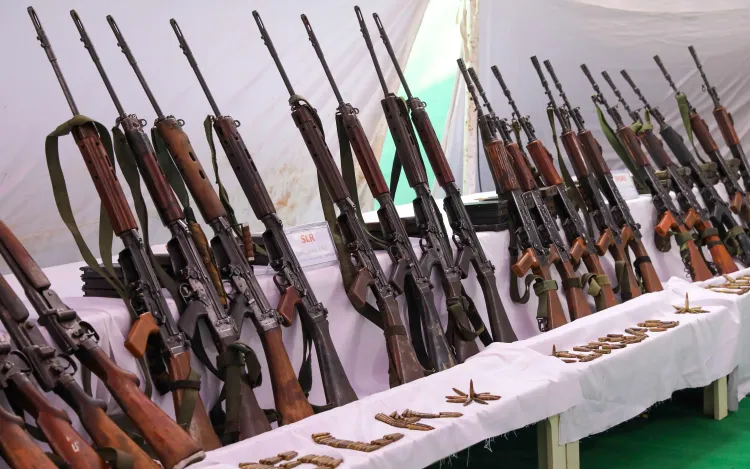
The group surrendered 32 firearms — including an LMG and four AK-47 rifles — and 515 rounds of live ammunition ; total reward payout stands at Rs 1.50 crore .
The South Bastar Divisional Committee is now on the brink of collapse following the neutralisation of almost all its key leaders and armed cadres.
Telangana has recorded 260 Maoist surrenders and recovered 238 firearms in 2026 alone , including two Central Committee Members .
Only four active cadres originally from Telangana remain in the field, all operating outside the state in Chhattisgarh and Jharkhand , two of whom are Central Committee Members .
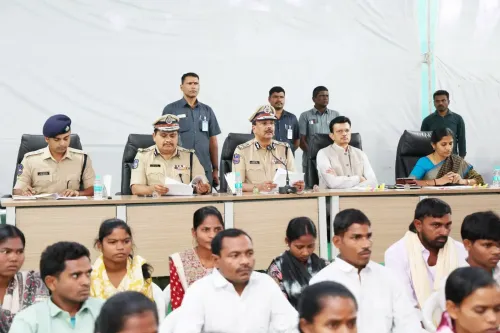
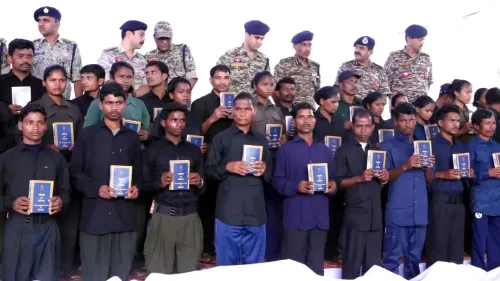
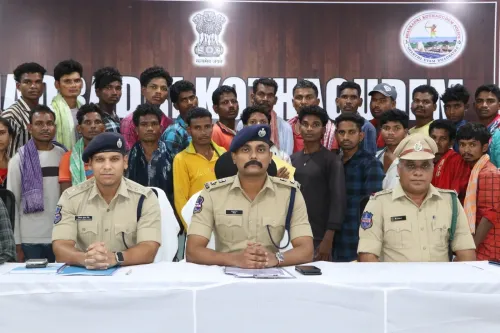
Hyderabad, April 25: In a major breakthrough against Left-Wing Extremism, 47 underground CPI (Maoist) cadres from Chhattisgarh surrendered before Telangana Director General of Police B. Shivdhar Reddy on Saturday, April 25, laying down 32 firearms including an LMG and four AK-47 rifles. The surrender, which included a senior Dandakaranya Special Zonal Committee (DKSZC) leader, marks one of the most significant capitulations of armed Maoist cadres in recent months and signals the near-total collapse of the South Bastar Divisional Committee.
Who Surrendered and What Arms Were Seized
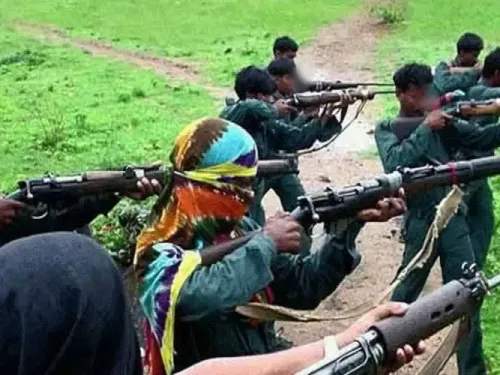
The surrendered group comprised four members of the People's Liberation Guerrilla Army (PLGA), 28 from the DKSZC, and 15 from the 9th and 30th platoons of the South Bastar Divisional Committee (DVC). Among the most prominent figures to give up arms was Hemla Iythu alias Vijja, a DKSZC member and in-charge of the South Bastar Divisional Committee, who had joined the banned outfit in 2004 and spent over two decades in the underground movement. Also surrendering was Podium Lachu alias Manoj, Divisional Committee Member (DVCM) and Commander of the 9th Platoon, South Bastar DVC, who joined the Maoist party in 2009. Twelve Area Committee Members (ACMs) were also part of the group.
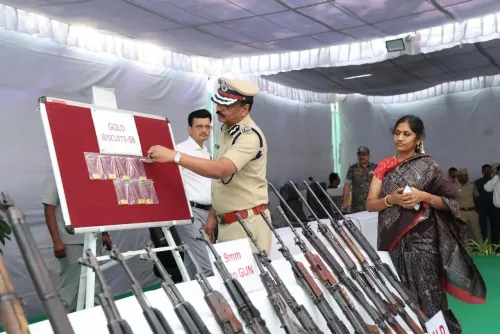
The surrendered cadres handed over an arsenal that included one Light Machine Gun (LMG), four AK-47 rifles, three SLR rifles, two INSAS rifles, two .410 musket rifles, one 8mm rifle, 12 single-shot guns, one 9mm pistol, one revolver, two BGL guns, two air guns, one SBBL gun, and 515 rounds of live ammunition of various calibres.
Telangana's Surrender Policy: The Pull Factor
DGP B. Shivdhar Reddy told reporters that the cadres were drawn to surrender primarily due to Telangana's rehabilitation and surrender policy, and the proactive, humane approach adopted by Telangana Police toward underground Maoist operatives. He credited the policy framework for creating conditions where armed cadres see a viable path back to mainstream society.
The total eligible reward for the 47 surrendered cadres stands at Rs 1.50 crore. Since all 47 individuals are natives of Chhattisgarh, an immediate interim relief of Rs 25,000 each has been disbursed. The remaining reward amount will follow once documentation is completed and bank accounts are opened. Chief Minister A. Revanth Reddy had previously assured that health cards for all cadres who surrendered between 2024 and 2026 in Telangana are being processed and will be issued shortly.
South Bastar DVC on the Brink of Collapse
The DGP stated that following the surrender of key leaders, almost all remaining underground commanders and armed cadres from the South Bastar DVC of DKSZC — including its secretary — have now been either neutralised or have surrendered, leaving the South Bastar DVC on the verge of complete disintegration. This is a structurally significant development: the South Bastar corridor has historically been one of the most active and strategically important zones for CPI (Maoist) operations.
This surrender comes amid a broader pattern of Maoist capitulations across central and south India, accelerated by coordinated security operations and state rehabilitation incentives. Notably, the Bastar region of Chhattisgarh has seen intensified anti-Maoist drives in 2025-26, pushing cadres toward surrender in neighbouring states like Telangana, which offers comparatively more accessible rehabilitation terms.
Telangana's 2026 Anti-Maoist Scorecard
The police chief revealed that 260 underground CPI (Maoist) cadres have surrendered in Telangana in 2026 alone. This includes two Central Committee Members (CCMs), 10 State Committee Members (SCMs), one Regional Committee Member (RCM), 23 Divisional Committee Secretaries/Members, 94 Area Committee Secretaries/Members, and 130 Party Members.
In addition, 238 firearms have been recovered in Telangana during 2026, representing a dramatic depletion of the group's armed capacity. The DGP further disclosed that only four active underground cadres originally from Telangana remain operational — all operating outside the state in Chhattisgarh and Jharkhand, two of whom are Central Committee Members of CPI (Maoist).
Broader Implications for India's Anti-Naxal Strategy
The scale and seniority of this surrender underscores a tipping point in India's decades-long battle against Left-Wing Extremism. The combination of sustained security pressure, targeted intelligence operations, and state-level rehabilitation incentives appears to be eroding the ideological and operational cohesion of CPI (Maoist) structures in the Dandakaranya belt.
Analysts note that the surrender of PLGA members — the armed wing — alongside political cadres signals not just individual disillusionment but an institutional breakdown within the organisation. With the South Bastar DVC effectively dismantled and the parent DKSZC losing key operational commanders, the coming months will be critical in determining whether the remaining Maoist leadership can reconstitute its presence or whether this marks the beginning of the end for organised Maoist insurgency in south-central India.
Security agencies are expected to intensify follow-up operations in Chhattisgarh's Bastar division and monitor cross-border Maoist movement between Chhattisgarh, Jharkhand, and Odisha in the weeks ahead.
Point of View
Not Chhattisgarh where these cadres operated, is the state attracting surrenders — a pointed commentary on how rehabilitation policy design can outperform brute force. With 260 surrenders and 238 weapons recovered in Telangana in 2026 alone, the data suggests a movement in terminal decline. The real test now is whether the Indian state can convert these surrenders into lasting peace through genuine rehabilitation, or whether unaddressed grievances will eventually refuel the next generation of insurgency.
NationPress
19 Sept 2026
Frequently Asked Questions
How many Maoists surrendered before Telangana DGP on April 25, 2025?
47 underground CPI (Maoist) cadres from Chhattisgarh surrendered before Telangana DGP B. Shivdhar Reddy on April 25, 2025 . The group included senior DKSZC leader Hemla Iythu alias Vijja and members of the PLGA armed wing.
Who is Hemla Iythu alias Vijja?
Hemla Iythu alias Vijja is a 45-year-old member of the Dandakaranya Special Zonal Committee (DKSZC) and was the in-charge of the South Bastar Divisional Committee . He joined CPI (Maoist) in 2004 and held multiple senior positions in the banned organisation before surrendering.
What weapons were surrendered by the 47 Maoist cadres in Telangana?
The surrendered cadres handed over 32 firearms , including one LMG, four AK-47 rifles, three SLR rifles, two INSAS rifles , and several other weapons, along with 515 rounds of live ammunition . The total eligible reward for the surrender is Rs 1.50 crore .
How many Maoists have surrendered in Telangana in 2026?
A total of 260 underground CPI (Maoist) cadres have surrendered in Telangana in 2026 so far, including two Central Committee Members and 10 State Committee Members . Additionally, 238 firearms have been recovered in the state during this period.
What rehabilitation benefits do surrendered Maoists get in Telangana?
Under Telangana's surrender and rehabilitation policy , cadres receive financial rewards, an immediate interim relief of Rs 25,000 , health cards, and additional benefits to help them reintegrate into mainstream society. Chief Minister A. Revanth Reddy has assured health cards for all cadres surrendering between 2024 and 2026 .