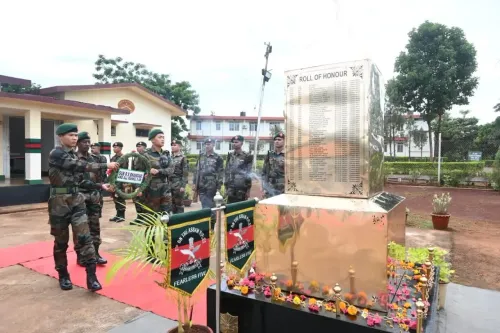
64th Walong Day: Wreath-laying ceremony honours 1962 Battle of Walong heroes
Synopsis
The 64th Walong Day Commemoration has begun in Arunachal Pradesh, recalling a 1962 battle where outnumbered Indian troops launched the war's only offensive against the PLA — fighting hand-to-hand when their ammunition ran out. The annual observance, culminating on 14 November, keeps alive a chapter of Indian military history that rarely makes national headlines.
Key Takeaways
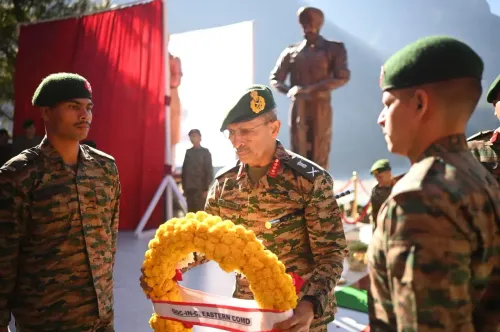
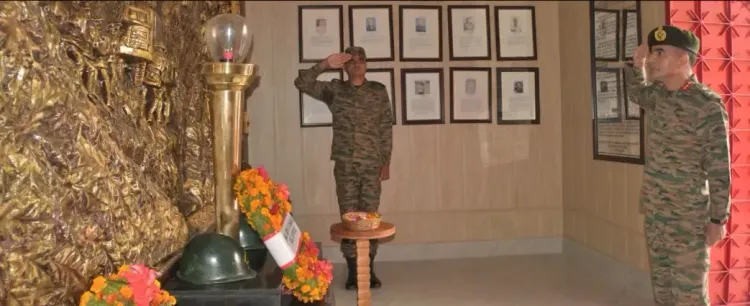
The 64th Walong Day Commemoration commenced on 3 November 2026 in Arunachal Pradesh with a wreath-laying ceremony.
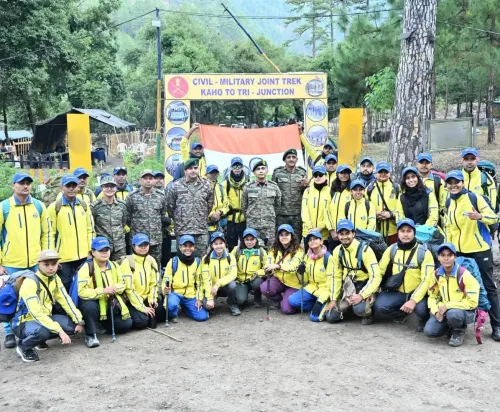
Battlefield Treks have been flagged off, running until 12 November 2026 , ahead of the main Walong Day on 14 November .
The Battle of Walong (October–November 1962 ) saw two Indian platoons face nearly 3,000 PLA soldiers at Kibithu Post .
The 6 Kumaon's assault was the only offensive operation by Indian troops during the entire 1962 Sino-Indian War .
Bikram Singh Rathore's Delta Company held the West Ridge past their ordered deadline, fighting hand-to-hand when ammunition was exhausted.
The Walong Half Marathon 2026 , themed 'Run for the Bravehearts – Remember Walong', was held at Lohit Valley on 27 October 2026 .
The 64th Walong Day Commemoration commenced in Arunachal Pradesh on 3 November 2026 with a solemn wreath-laying ceremony honouring the fallen soldiers of the Battle of Walong, one of the most remarkable — and least-recalled — chapters of the 1962 Sino-Indian War. The event, anchored at Walong in the remote Lohit Valley, brings together veterans, serving personnel, and civilians to remember Indian troops who held back a vastly superior Chinese force for nearly a month.
Opening Ceremonies and Cultural Showcase
The commemorations opened with traditional welcomes and vibrant performances by the Mishmi and Meyor tribes, highlighting the deep cultural heritage of Arunachal Pradesh. The event also saw the flag-off of Battlefield Treks — a multi-day journey for participants from across India that continues until 12 November 2026 — ahead of the main Walong Day observance on 14 November.
The Lt. Bikram Singh Football Tournament was also inaugurated as part of the celebrations, named after the officer whose daring stand during the battle has since become the stuff of military legend. Additionally, the formation had earlier conducted the Walong Half Marathon 2026, themed 'Run for the Bravehearts – Remember Walong', at Lohit Valley on 27 October 2026, drawing participants in tribute to the battle's heroes.
The Battle of Walong: A Stand Against the Odds
The Battle of Walong began on 21 October 1962, when the Chinese People's Liberation Army (PLA) launched an assault on the Kibithu Post, located approximately 40 km from Walong. Just two platoons of Indian troops faced nearly 3,000 PLA soldiers armed with AK-47s and backed by artillery.
Recognising that Kibithu could no longer be held, the 6 Kumaon regiment was ordered to fall back to Walong on 22 October. The very next day, the Delta Company of 6 Kumaon, under Lt. Bikram Singh Rathore, ambushed Chinese forces at a hanging bridge across the Namti Nullah, roughly 5 km from Walong — inflicting an estimated 200 casualties and injuries on the Chinese side.
India's Only Offensive Action of the War
Following that ambush, the unit moved to the West Ridge, overlooking the Walong Landing Ground. The Chinese reinforced heavily, dispatching an entire infantry division toward Walong. On 14 October, the 6 Kumaon launched a fierce assault, capturing several Chinese defensive positions — notably, the only operation during the entire 1962 war in which Indian troops went on the offensive rather than defending ground.
The Indian advance continued until 15 November, with troops pushing back the PLA despite receiving no artillery or aerial support. On 16 November, a large PLA contingent descended on approximately 100 men of the Delta Company under Lt. Rathore, who had been instructed to hold the post until 11 am. The soldiers fought well past that deadline — and, when ammunition ran out, resorted to hand-to-hand combat against a force attacking from three sides, the fourth being a sheer cliff.
Ceasefire and Legacy
Indian forces were ultimately ordered to withdraw from the West Ridge, and the Chinese took control of Walong. However, the prolonged resistance had slowed the PLA's advance sufficiently to limit further Chinese territorial gains. A unilateral ceasefire declared by China on 21 November 1962 ended the fighting, and the PLA withdrew shortly thereafter.
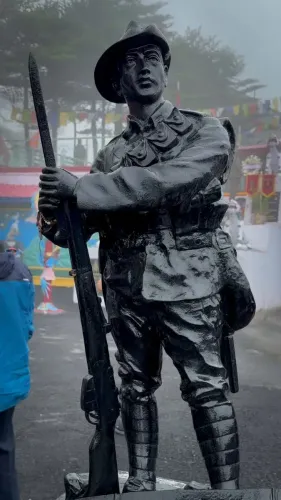
Today, Walong is home to several war memorials, the most prominent being the Walong War Memorial, the Helmet Top Post War Memorial, and the Kibithu Hut of Remembrance Memorial. The annual commemoration ensures that a battle fought far from the public eye remains part of the national consciousness. With Battlefield Treks still underway and the main observance scheduled for 14 November 2026, the remembrance of Walong's defenders is set to carry forward another year.
Point of View
Which tend to focus on Rezang La and the NEFA front broadly. The fact that this was India's only offensive action of the war — conducted by outnumbered, artillery-less soldiers who fought hand-to-hand — makes it militarily significant in a way that transcends commemoration. The annual observance serves a dual strategic purpose: keeping the memory of sacrifice alive domestically while asserting India's deep historical presence in a region whose sovereignty China has repeatedly contested. In that sense, Walong Day is not just remembrance — it is also a quiet geopolitical statement.
NationPress
4 Nov 2026
Frequently Asked Questions
What is the Battle of Walong?
The Battle of Walong was a fierce engagement during the 1962 Sino-Indian War in which outnumbered Indian troops of the 6 Kumaon regiment resisted a Chinese PLA advance into Arunachal Pradesh for nearly a month. It is historically notable as the only operation in which Indian forces launched an offensive attack on the Chinese, rather than defending territory.
When is Walong Day commemorated?
Walong Day is commemorated every year on 14 November, marking the battles fought in the Walong sector during the 1962 Sino-Indian War. The 2026 commemoration is the 64th edition, with events beginning on 3 November and Battlefield Treks running through 12 November.
Who was Lt. Bikram Singh Rathore?
Lt. Bikram Singh Rathore commanded the Delta Company of the 6 Kumaon regiment during the Battle of Walong in 1962. He led an ambush on Chinese forces at the Namti Nullah, inflicting an estimated 200 casualties, and later held the West Ridge past his ordered deadline with around 100 men, engaging in hand-to-hand combat when ammunition ran out.
What is the significance of the Walong commemoration for Arunachal Pradesh?
The commemoration honours both the military sacrifice of the 1962 veterans and the cultural identity of Arunachal Pradesh, whose tribal communities — including the Mishmi and Meyor — participate in the observances. Given China's continued claims over the region, the annual event also carries geopolitical resonance as a reaffirmation of India's historical and administrative presence in the area.
What events are part of the 2026 Walong Day Commemoration?
The 2026 commemoration includes a wreath-laying ceremony, traditional cultural performances by the Mishmi and Meyor tribes, Battlefield Treks running until 12 November, and the inauguration of the Lt. Bikram Singh Football Tournament. The Walong Half Marathon 2026, themed 'Run for the Bravehearts – Remember Walong', was held at Lohit Valley on 27 October 2026.