CM Himanta: Over 8 Lakh Hit by Assam Floods, Aid Underway
Synopsis
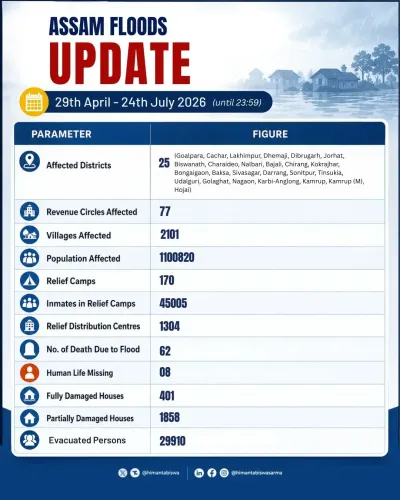
Assam CM Himanta Biswa Sarma announced on 22 July 2026 that over 8 lakh people are affected by floods in the state. The government has pledged to reach every affected individual and provide all possible assistance amid the ongoing monsoon crisis.
Key Takeaways
Assam CM Himanta Biswa Sarma confirmed more than 8 lakh people are flood-affected as of 22 July 2026 .
The state government has committed to reaching every affected individual with relief and support.
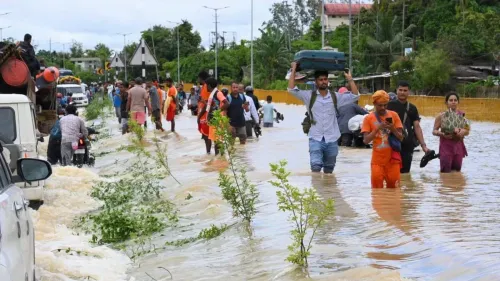
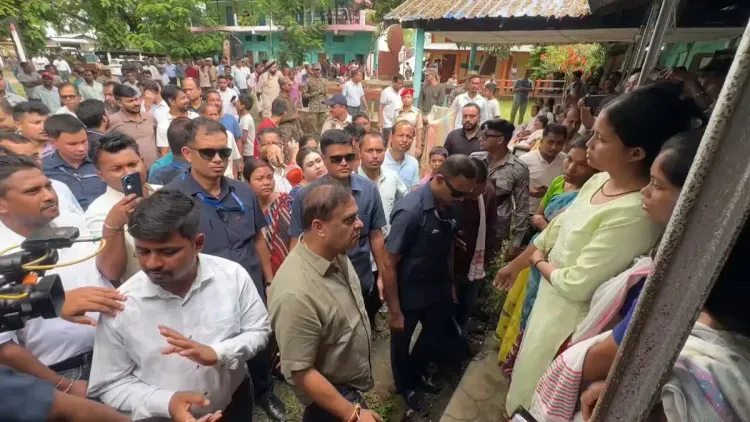
A video shared alongside the post indicates active on-ground relief operations.
Assam faces annual flooding driven by the Brahmaputra river and its tributaries during the monsoon season.
Remote riverine communities and small farmers are among the most vulnerable groups in the current crisis.
A formal damage assessment and request for central funds is expected as the situation develops.
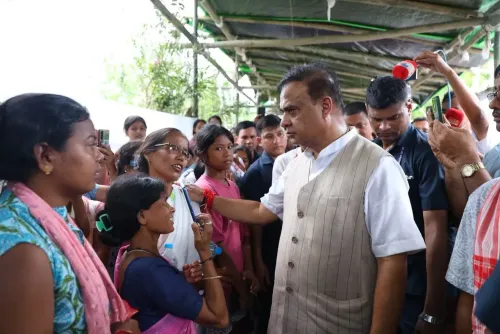
Assam Chief Minister Himanta Biswa Sarma on Wednesday, 22 July 2026, stated that more than 8 lakh people have been affected by floods across Assam, and that the state government is working to reach every affected person and provide all possible relief.
Context
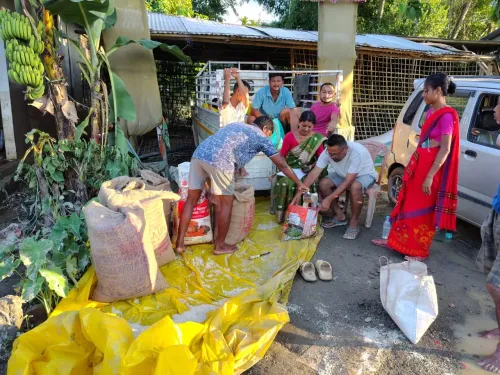
Posting in Hindi on X, CM Sarma wrote: '8 lakh se adhik log Assam mein baadh se prabhavit hain' ('More than 8 lakh people are affected by floods in Assam'). He added that the government is making every effort to reach each individual and reduce their suffering. The post was accompanied by a video, indicating on-ground relief activity.
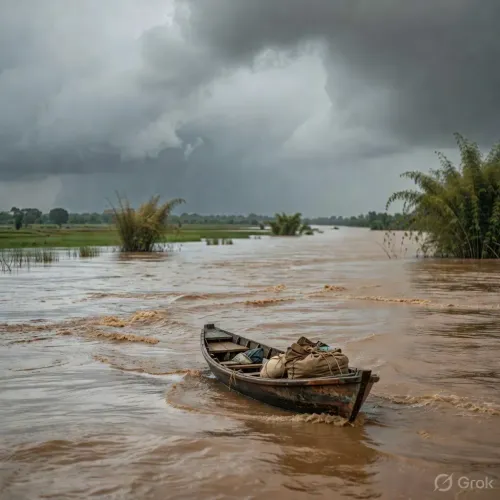
Assam is among India's most flood-prone states, with the Brahmaputra river and its tributaries inundating large swathes of the state annually during the monsoon season, typically between June and September.
Policy Backdrop
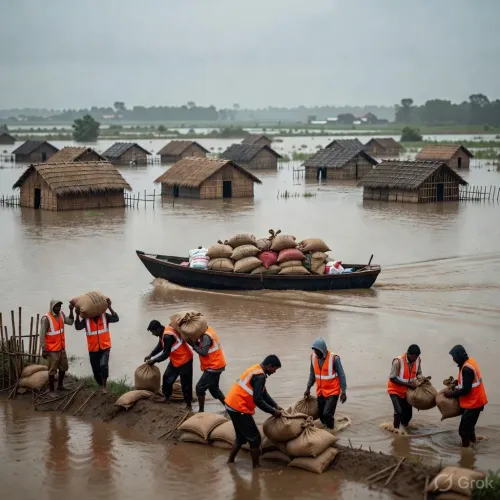
Flood management in Assam has long been a combination of state disaster response through the Assam State Disaster Management Authority (ASDMA) and central support via the National Disaster Response Force (NDRF) and funds from the National Disaster Relief Fund (NDRF). The state regularly deploys relief camps, boats, and emergency ration kits in affected districts.
In recent years, the Assam government has emphasised real-time monitoring and faster last-mile delivery of relief, including coordination with district administrations and civil society organisations. Flood-affected populations typically include farming communities in low-lying areas, with displacement, crop loss, and livestock deaths among the primary impacts.
Stakeholders and Impact
With over 8 lakh residents affected, the scale of the current flooding places significant pressure on district administrations, relief logistics, and emergency health services. Vulnerable groups — including daily-wage workers, small farmers, and residents of riverine villages — are among the hardest hit.
The state's commitment to reaching 'every single person,' as stated by CM Sarma, signals an intent to ensure that relief is not limited to accessible urban or semi-urban pockets but extends to remote and island villages (chars) along the Brahmaputra. Livestock loss and damage to standing crops in the kharif season also carry long-term economic consequences for rural households.
What's Next
As the monsoon season is far from over, flood levels across Assam are expected to fluctuate in the coming weeks, with the risk of fresh waves of inundation remaining high. The state government is likely to continue coordinating with the Central Water Commission for river-level forecasts and with the NDRF for search and rescue operations.
The effectiveness of the current relief operation will be closely watched, particularly whether assistance reaches the most remote affected communities. A formal damage assessment and request for central assistance typically follows large-scale flood events of this magnitude in Assam.
Point of View
And it positions the BJP-led government as proactively responsive ahead of what could be a prolonged flood season. The emphasis on reaching 'every single person' echoes a governance narrative the ruling party has consistently projected in Assam. However, with over 8 lakh affected and the monsoon far from its peak, the real test will be whether institutional capacity — ASDMA, NDRF, and district machinery — can match the political commitment. Flood relief performance in Assam has historically shaped voter sentiment in rural constituencies, making this both a humanitarian and a political inflection point.
NationPress
21 Oct 2026
Frequently Asked Questions
How many people are affected by Assam floods in 2026?
According to Assam Chief Minister Himanta Biswa Sarma, more than 8 lakh people have been affected by floods in Assam as of 22 July 2026.
What is the Assam government doing for flood relief?
CM Himanta Biswa Sarma stated that the government is making every effort to reach each flood-affected individual and provide all possible assistance, with on-ground relief operations underway.
Which river causes floods in Assam every year?
The Brahmaputra river and its numerous tributaries are the primary cause of annual flooding in Assam, typically during the monsoon months of June to September.
Which agency handles flood disaster relief in Assam?
The Assam State Disaster Management Authority (ASDMA) leads state-level flood response, supported by the National Disaster Response Force (NDRF) and central government funds during major flood events.
Is Assam prone to floods every year?
Yes, Assam is one of India's most flood-prone states. The Brahmaputra river basin experiences significant annual flooding, displacing lakhs of people and causing extensive damage to crops, livestock, and infrastructure.