8.2 lakh at 768 de-addiction centres: India's drug demand fight grows

Synopsis
India's de-addiction network has nearly quadrupled its reach in five years — from 2.08 lakh beneficiaries in 2020 to over 8.20 lakh in 2025 across 768 centres. With 7 crore Indians estimated to be affected by substance use disorder, including 1.2 crore children, the scale of the problem makes this 294% surge in uptake significant — but also a reminder of how much ground remains.
Key Takeaways
More than 8.20 lakh people are currently receiving treatment at 768 de-addiction centres run under the Ministry of Social Justice and Empowerment .
Beneficiary numbers have risen 294% — from 2.08 lakh in 2020 to 8.20 lakh in 2025.
India's 2019 substance use survey found over 7 crore individuals affected, including 1.2 crore children and 58 lakh women .
The toll-free helpline 14446 has received 4.69 lakh calls since launch.
The Nasha Mukt Bharat Saptah in June 2025 drew participation from more than 1.31 crore citizens .
The NMBA App 2.0 now enables real-time tracking of field activities by states, districts, and community organisations.
More than 8.20 lakh people are currently availing treatment and rehabilitation services at 768 de-addiction centres across India under the Ministry of Social Justice and Empowerment, an official statement said on Saturday, 4 July 2025. The figure marks a 294 per cent rise from 2.08 lakh beneficiaries recorded in 2020, reflecting growing public trust in government-run de-addiction infrastructure.
Scale of the Crisis
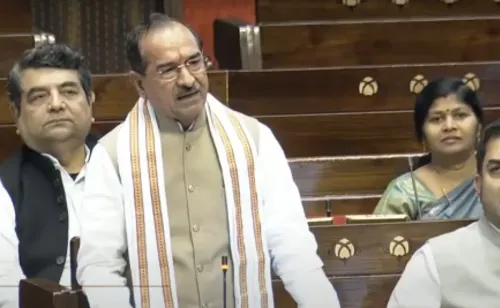
The backdrop to this expansion is stark. India's first nationwide 'Magnitude of Substance Use' survey, conducted in 2019, estimated that more than 7 crore individuals were affected by substance use disorder — including nearly 1.2 crore children and 58 lakh women. Union Minister for Social Justice and Empowerment Virendra Kumar cited these findings to underscore the urgency of a coordinated national response involving state governments, Union Territories, line ministries, and civil society.
Key Government Initiatives
The Ministry of Social Justice and Empowerment (MoSJE), designated as the nodal ministry for drug demand reduction, launched the National Action Plan for Drug Demand Reduction (NAPDDR) — a comprehensive framework covering prevention, awareness, capacity building, treatment, rehabilitation, and social reintegration. Building on this, the Nasha Mukt Bharat Abhiyaan (NMBA) was rolled out in 2020 in line with Prime Minister Narendra Modi's vision of a drug-free India.
The toll-free de-addiction helpline 14446 has so far received 4.69 lakh calls, functioning as the first point of contact for individuals and families in distress. The NMBA App 2.0 has also been launched, enabling states, districts, and spiritual organisations to upload field-based activity data in real time, along with several citizen-centric features.
Recent Outreach
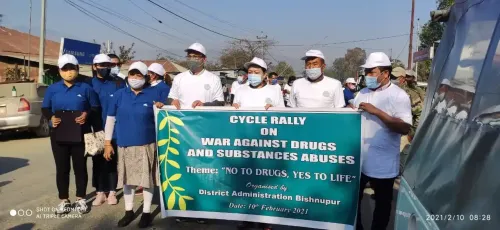
Last month, the Nasha Mukt Bharat Saptah — observed from 17 to 26 June at Dev Sanskriti Vishwavidyalaya (DSVV) in Haridwar, Uttarakhand — recorded participation from more than 1.31 crore citizens, signalling broad grassroots engagement with the campaign.
What Officials Said
Secretary Sudhansh Pant said the Ministry has steadily expanded its treatment network over the past few years and called upon citizens, youth organisations, educational institutions, and community stakeholders to continue participating in the national movement. Minister Virendra Kumar emphasised that the fight against substance abuse must be driven by 'awareness, people-centric interventions, inter-sectoral convergence, empathy and shared responsibility.'
With the network now spanning 768 centres and beneficiary numbers nearly quadrupling in five years, the Centre's next challenge is sustaining quality of care and ensuring equitable access in underserved districts.
Point of View
But also the depth of a crisis that a 2019 survey placed at 7 crore affected individuals. The Centre's whole-of-government framing is sound in principle, but the real accountability gap lies in outcomes: how many of the 8.20 lakh complete treatment, achieve sustained recovery, and reintegrate? Beneficiary counts are an input metric, not an outcome metric. Until MoSJE publishes recovery and relapse data alongside footfall numbers, the programme's true impact remains difficult to assess independently.
NationPress
3 Oct 2026
Frequently Asked Questions
How many people are using government de-addiction centres in India in 2025?
More than 8.20 lakh people are currently availing treatment and rehabilitation services at 768 de-addiction centres run under the Ministry of Social Justice and Empowerment as of 2025. This is a 294% increase from 2.08 lakh users recorded in 2020.
What is the Nasha Mukt Bharat Abhiyaan?
The Nasha Mukt Bharat Abhiyaan (NMBA) is a national campaign launched in 2020 under Prime Minister Narendra Modi's vision of a drug-free India. It is implemented by the Ministry of Social Justice and Empowerment and focuses on awareness, prevention, treatment, and community mobilisation against substance abuse.
How widespread is substance use disorder in India?
According to India's first nationwide 'Magnitude of Substance Use' survey conducted in 2019, more than 7 crore individuals were affected by substance use disorder. The affected population includes nearly 1.2 crore children and 58 lakh women.
What is the de-addiction helpline number in India?
The government operates a toll-free de-addiction helpline at 14446, which has received 4.69 lakh calls to date. It serves as the first point of contact for individuals and families seeking assistance with substance use issues.
What is the NMBA App 2.0?
NMBA App 2.0 is a digital platform launched by the Ministry of Social Justice and Empowerment that allows states, districts, spiritual organisations, and other stakeholders to upload field-based activity data under the Nasha Mukt Bharat Abhiyaan with real-time visibility. It also includes several citizen-centric features for broader public engagement.