9.11 lakh in treatment at district de-addiction centres, says Ministry
Synopsis
India's Nasha Mukt Bharat Abhiyaan has grown from reaching 1.4 crore people in 2021 to over 35.88 crore today — and with 9.11 lakh now in active treatment across 198 de-addiction centres, the Ministry of Social Justice is framing the numbers as proof that a government scheme has genuinely scaled into a mass movement. The 2018 baseline of 7 crore affected individuals puts both the progress and the remaining challenge into sharp relief.
Key Takeaways
Over 9.11 lakh people are currently undergoing treatment across 198 district de-addiction centres in India.
The Nasha Mukt Bharat Abhiyaan (NMBA) , launched on 15 August 2020 , has reached over 35.88 crore people , up from about 1.4 crore in 2021 .
More than 14.35 crore youth and 11.33 crore women have been contacted under the campaign.
Over 2 lakh citizens have enrolled as Nasha Mukti Mitr community volunteers.
The programme now covers all districts of India, expanded from an initial 272 high-risk districts .
India's 2018 National Survey found over 7 crore people affected by substance use disorders, including 1.2 crore children and 58 lakh women .
The Ministry of Social Justice and Empowerment on Thursday, 12 November 2026, disclosed that over 9.11 lakh people are currently receiving treatment across 198 district de-addiction centres spread across India. The figures underscore the scale of the country's substance abuse challenge and the expanding institutional response mounted under the government's flagship anti-drug programme.
Nasha Mukt Bharat Abhiyaan: Scope and Reach
The Nasha Mukt Bharat Abhiyaan (NMBA), launched by the Ministry on 15 August 2020, has grown from a targeted institutional initiative into what officials describe as a nationwide people's movement against substance abuse. According to the Ministry, the campaign has so far reached over 35.88 crore people — a dramatic rise from approximately 1.4 crore people reached in 2021.
Among those contacted, more than 14.35 crore are youth and over 11.33 crore are women, reflecting a deliberate focus on demographic groups considered most vulnerable to substance dependence. More than 2 lakh citizens have additionally enrolled as Nasha Mukti Mitr — community volunteers who strengthen grassroots participation in the drug-free mission.
Geographic Expansion of the Programme
A senior Ministry official noted that NMBA was initially rolled out across 272 districts identified as particularly high-risk for substance use. The programme was subsequently widened to 372 districts in August 2022 and extended to all districts in the country effective 15 August 2023. This phased geographic rollout reflects a recognition that drug dependency is not confined to traditionally identified hotspots.
Awareness Activities in Educational Institutions
The official said more than 34.07 lakh awareness activities have been conducted specifically within educational institutions, engaging students and young people in evidence-based conversations about the consequences of substance use. These sessions aim to foster informed decision-making, promote healthier lifestyles, and build long-term prevention awareness among the younger generation.
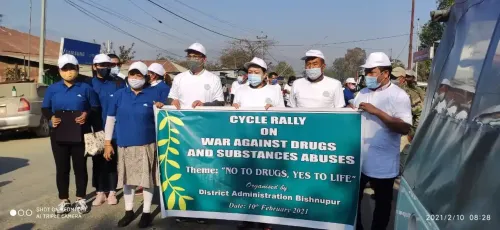
Notably, over the past six years, the campaign has transitioned from being primarily government-driven to a community-led movement, with states, districts, civil society organisations, and local stakeholders actively co-implementing it.
The Scale of India's Drug Challenge
The Ministry traced the urgency of these efforts to the first National Survey on the Extent and Pattern of Substance Use in India, conducted in 2018. That survey found that more than 7 crore people across the country were affected by substance use disorders — including nearly 1.2 crore children and 58 lakh women. The survey informed the launch of the National Action Plan for Drug Demand Reduction (NAPDDR), under which NMBA operates as the flagship awareness strand, complemented by treatment and rehabilitation infrastructure.
The Ministry said it has also strengthened the treatment and counselling ecosystem under NAPDDR alongside awareness generation. With over 9 lakh people already in active treatment and the outreach numbers continuing to climb, officials say the structural foundations for a sustained response are gradually taking shape.
Point of View
But it must be read against the 2018 benchmark of 7 crore affected by substance use disorders — meaning active treatment covers barely over 1% of the estimated affected population. The outreach numbers are genuinely impressive in scale, but awareness campaigns and treatment throughput are very different metrics; conflating them overstates the programme's therapeutic impact. The expansion to all districts is a structural win, yet the quality and staffing of 198 centres for a nation this size remains an open question that official statements do not address. India's drug crisis is concentrated, regional, and deepening in states like Punjab, Manipur, and urban centres — a nationwide aggregate masks whether interventions are reaching the highest-burden pockets.
NationPress
12 Nov 2026
Frequently Asked Questions
How many people are receiving treatment at district de-addiction centres in India?
Over 9.11 lakh people are currently receiving treatment across 198 district de-addiction centres in India, according to the Ministry of Social Justice and Empowerment as of 12 November 2026. These centres operate under the National Action Plan for Drug Demand Reduction (NAPDDR).
What is the Nasha Mukt Bharat Abhiyaan (NMBA)?
The Nasha Mukt Bharat Abhiyaan is a flagship government campaign launched on 15 August 2020 by the Ministry of Social Justice and Empowerment to combat substance abuse across India. It operates as the awareness arm of the NAPDDR and has since expanded from 272 high-risk districts to all districts of the country.
How many people has the NMBA campaign reached so far?
The NMBA has reached over 35.88 crore people as of November 2026, up from approximately 1.4 crore in 2021. The outreach includes more than 14.35 crore youth and 11.33 crore women.
What did India's 2018 National Survey on substance use find?
The 2018 National Survey on the Extent and Pattern of Substance Use in India found that more than 7 crore people were affected by substance use disorders, including nearly 1.2 crore children and 58 lakh women. The survey's findings directly informed the launch of the NMBA and NAPDDR.
Who are the Nasha Mukti Mitr volunteers?
Nasha Mukti Mitr are community volunteers who have enrolled under the NMBA to strengthen grassroots participation in India's drug-free mission. More than 2 lakh citizens have signed up in this capacity, according to the Ministry of Social Justice and Empowerment.