Why is the Lack of Significant Snowfall Concerning for J&K?
Click to start listening
Synopsis
The current winter season in Jammu and Kashmir is raising alarms due to the absence of significant snowfall, with temperatures dropping below freezing. Experts warn that without heavy snowfall, vital water resources could be severely affected, posing challenges for the upcoming summer.
Key Takeaways
- Lack of snowfall raises concerns for water supply.
- Chillai Kalan is a critical winter period.
- Health warnings issued for vulnerable populations.
- Temperatures remain well below freezing.
- Dry weather forecasted until January 20.
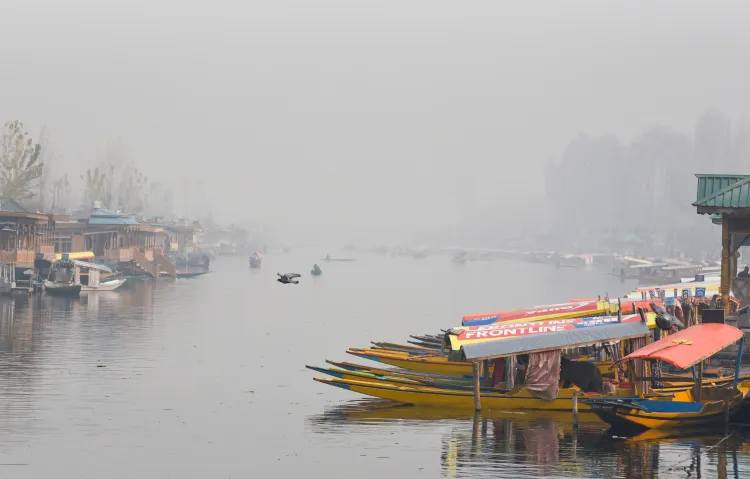
Srinagar, Jan 4 (NationPress) The minimum temperature has dipped several degrees below freezing in the Valley as the cold wave continues to intensify its hold on Jammu and Kashmir.
On account of a partially clear night sky, night-time temperatures across the Valley have remained below zero, while the plains continue to experience dry, cold conditions, with snowfall yet to make an appearance.
Srinagar's minimum temperature was recorded at minus 3.2 degrees Celsius, while Gulmarg saw minus 6.5 degrees Celsius and Pahalgam minus 4 degrees Celsius.
In contrast, Jammu city experienced a minimum temperature of 10 degrees Celsius, Katra town recorded 7 degrees Celsius, Batote 1.9 degrees Celsius, Banihal minus 0.9 degrees Celsius, and Bhaderwah minus 1.6 degrees Celsius.
The absence of substantial snowfall in Jammu and Kashmir, particularly the first snowfall of the season in the Valley's plains, has raised significant concerns. The 40-day period known as the 'Chillai Kalan,' which began on December 21, has yet to yield any major snowfall.
This period will conclude on January 30, and the Meteorological Department predicts generally dry weather for Jammu and Kashmir until January 20.
If substantial snowfall does not occur during the Chillai Kalan, Jammu and Kashmir could face serious challenges during the upcoming hot summer months.
The lack of heavy winter snowfall poses risks not only to irrigation but also threatens the vital human need for potable water.
All of Jammu and Kashmir's rivers, streams, springs, wells, and lakes rely on perennial water reserves located in the mountains.
These reserves are replenished through significant snowfall during winter.
A harsh and dry cold has also raised alarms for individuals with heart and lung issues. Medical professionals urge these individuals to remain indoors until after 10 a.m., ensuring they are bundled up in layers of woolen clothing, scarves, and caps.
Point of View
It is essential to highlight the growing concern regarding the lack of snowfall in Jammu and Kashmir. This situation not only poses environmental risks but also threatens the basic needs of the population. The nation's well-being hinges on our ability to address these challenges effectively.
NationPress
05/01/2026
Frequently Asked Questions
What is Chillai Kalan?
Chillai Kalan is a 40-day period of intense winter cold in Kashmir, lasting from December 21 to January 30.
Why is snowfall important?
Snowfall is crucial as it replenishes water reserves, vital for irrigation and drinking water during the summer months.
What are the health risks associated with cold weather?
Cold weather can exacerbate health issues, particularly for those with heart and lung problems, necessitating precautions.
How have temperatures changed in the Valley?
Temperatures have fallen well below freezing, with Srinagar reaching minus 3.2 degrees Celsius, indicating a significant cold wave.
What is the forecast for Jammu and Kashmir?
The Meteorological Department forecasts generally dry weather in Jammu and Kashmir until January 20.