Will S. Korean Corporate Earnings See a Boost in 2026 While Industry Discrepancies Widen?
Synopsis
South Korean corporate earnings are projected to rise in 2026, but significant disparities between industries are expected to grow, particularly as the semiconductor sector thrives amidst U.S.-China tensions. This article explores the implications for various sectors, especially automotive, and the overall impact on the stock market.
Key Takeaways
Projected increase in South Korean corporate earnings for 2026.
Growing discrepancies among industries, particularly between semiconductors and automotive.
Positive performance in the KOSPI driven by technology stocks.
External pressures from U.S.-China relations affecting local markets.
Investment opportunities in thriving sectors like semiconductors.
Seoul, Jan 5 (NationPress) The financial performance of significant South Korean corporations is anticipated to enhance this year, although the gaps between various industries are projected to increase, according to a local credit rating agency's report released on Monday.
The 'NICE Sales Index', derived from the sales forecasts of 78 companies for 2026, registered a score of 163.3 this year, reflecting a 5.6 percent increase compared to last year's results, as reported by NICE Investors Service Co. and cited by the Yonhap news agency.
The NICE Industry Operating Profit Index, which utilizes earnings before interest and tax (EBIT) estimates, reached 10 percent, marking a rise of 7.8 percent from the previous year.
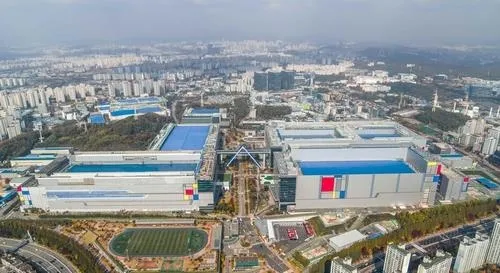
The credit rating firm indicated that the strong growth of local semiconductor manufacturers, power suppliers, and electronics producers is likely to drive overall progress, particularly in light of the United States' efforts to limit China's involvement in its artificial intelligence supply chain.
Conversely, sectors critical to the U.S. economy, such as automobiles, may experience downward pressure, the report noted.
The agency stated, "Industries like automobiles could face declining demand in the U.S., coupled with intensifying competition due to rising trade barriers and diminishing impacts from pre-tax demands."
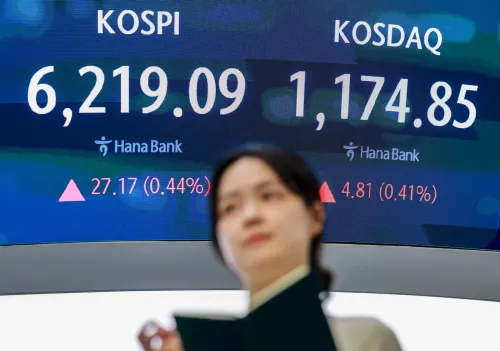
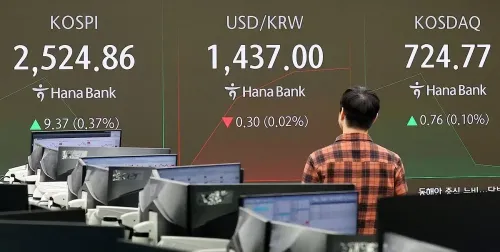
Meanwhile, South Korean stocks continued to gain momentum late Monday morning, buoyed by a rally in semiconductor and other technology stocks.
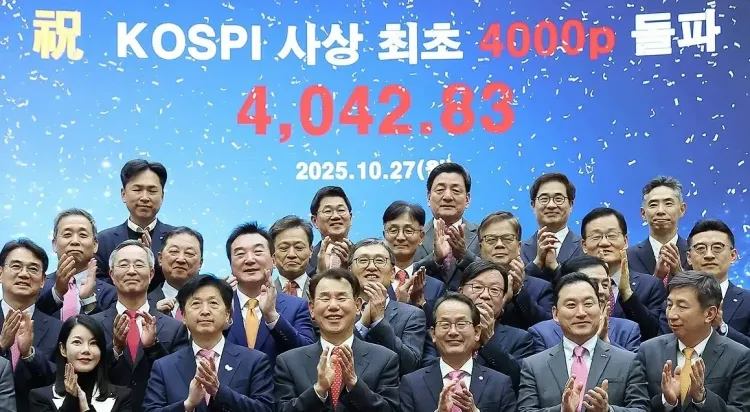
The benchmark Korea Composite Stock Price Index (KOSPI) climbed by 112 points, or 2.6 percent, reaching 4,421.63 as of 11:20 a.m.
The KOSPI opened on a positive note, trading above 4,400 for the first time, despite a mixed close on Wall Street.
On Friday (U.S. time), the Dow Jones Industrial Average increased by 0.66 percent to 48,382.39 points, while the tech-heavy Nasdaq Composite saw a slight decline of 0.03 percent to 23,235.63.
Foreign investors purchased a net total of 872 billion won (approximately US$602 million) worth of local stocks, counterbalancing the selling pressure from institutions and individuals, which amounted to 318.16 billion won and 550.9 billion won, respectively.
Point of View
It is crucial to recognize the potential growth within the South Korean corporate landscape while acknowledging the widening gaps among sectors. As a national editor-in-chief, I emphasize the importance of understanding these trends as they will have significant implications for investors and policymakers alike in navigating the evolving market.
NationPress
21 Sept 2026
Frequently Asked Questions
What is the NICE Sales Index?
The NICE Sales Index is a metric calculated from the sales estimates of 78 companies, providing insights into expected financial performance.
Why are industry discrepancies widening?
Discrepancies are widening primarily due to varying growth rates among sectors, particularly strong growth in semiconductors compared to challenges in automotive.
How did the KOSPI perform recently?
The KOSPI increased by 112 points, or 2.6 percent, reaching 4,421.63, buoyed by gains in technology and semiconductor stocks.
What external factors are influencing South Korean corporate earnings?
Key influences include U.S.-China relations and trade barriers that are reshaping demand across various industries.
What is the outlook for the automotive sector?
The automotive sector may face challenges due to weakening demand and increased competition resulting from rising trade barriers.