How Did Acharya Prashant Blend Spirituality and Philosophy in His Mahashivratri Theatre Event?

Synopsis
Discover how Acharya Prashant's theatrical performance for Mahashivratri created a unique fusion of spirituality and philosophy. This captivating event not only showcased deep insights but also resonated with the youth's quest for truth and self-awareness.
Key Takeaways
Acharya Prashant's performance creatively merged spirituality and art.
Youth engagement was a focal point, encouraging self-reflection.
The event attracted 2,000 participants dedicated to learning.
The Bhagavad Gita's timeless relevance was emphasized.
Numerous themes were explored, connecting with contemporary issues.
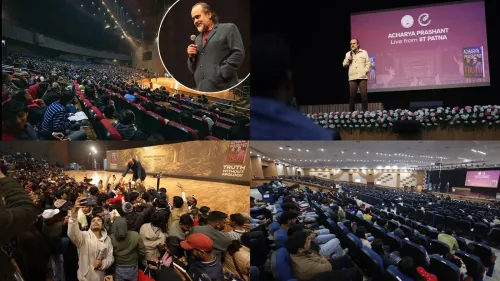
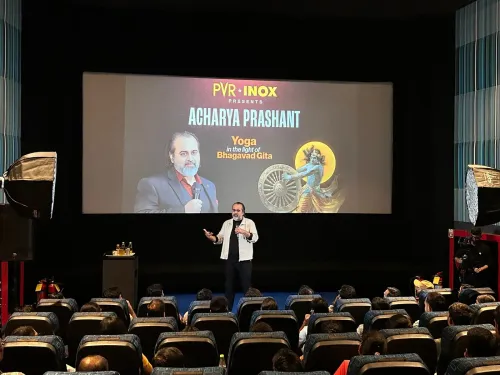
Greater Noida, Feb 15 (NationPress) In celebration of Mahashivratri, philosopher and writer Acharya Prashant delivered a remarkable theatrical performance that seamlessly intertwined profound insights, artistic creativity, and spiritual depth.
This event provided a distinctive and emotional experience, reflecting Acharya's dedication to both art and knowledge. Through this performance, he illustrated the powerful ability of theatre to express intricate spiritual truths in a relatable and captivating manner.
For his students and followers, it was a sincere and affectionate gift. Renowned for simplifying even the most complex spiritual ideas, Acharya Prashant garnered significant attention for this Mahashivratri occasion.
While thousands sought to participate, only approximately 2,000 individuals were selected based on their sincerity and commitment to authentic self-education.
The program also included a special exhibition showcasing key highlights from Acharya Prashant's extensive 18-city tour over the preceding six months.
This exhibition featured snapshots of his interactions at some of India's top educational institutions, including 13 IITs, several IIMs, and other leading centers of learning.
Throughout the tour, he conducted over 200 sessions, responding to numerous inquiries from young audiences on a variety of subjects such as love, jealousy, artificial intelligence, and urgent global matters.
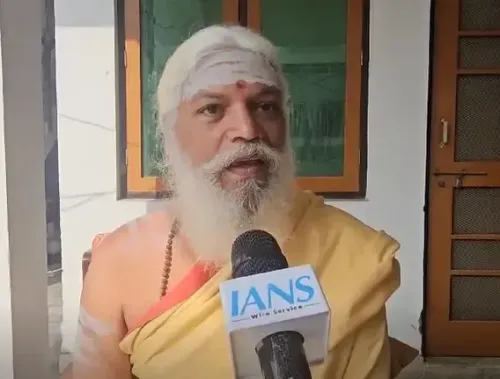
In a conversation with IANS regarding the play, Acharya elaborated on its deeper significance.
He stated, "This play was not designed to unveil the deceptions within us, nor merely to depict us as vulnerable, frail, or tearful. It posed a profound question: Are you genuinely weak, or have you cultivated selfishness within your so-called weakness? It was a challenge to the youth—do you truly wish to exist in weakness? What benefits arise from portraying yourself as helpless? You may gain certain privileges or fulfill selfish desires. Is this the cost of spending a lifetime in weakness, servitude, and confinement?"
He further characterized the Bhagavad Gita as much more than a mere sermon.
"The Bhagavad Gita is not a typical sermon; it is the voice of Dharma articulated on the battlefield of existence. It is not a silent ashram, a Himalayan summit, a riverbank, or the shade of a tree where eager disciples gather and a guru imparts wisdom. No, this is a conflict. It is a battle against one's own blood, a struggle against one's will."
Acharya Prashant remarked that the events of Kurukshetra remain strikingly pertinent today, providing contemporary youth a robust connection to the teachings of the Gita. He noted that young individuals feel the message is not merely directed at Arjuna from millennia ago, but at them in the present, as if they themselves are Arjuna facing similar internal struggles.
He emphasized that the Bhagavad Gita speaks directly to modern challenges, naturally igniting significant interest among the youth. Thousands have joined the Gita Samagam program because, as he mentioned, everyone harbors a profound inner desire to escape lives built on falsehood and inner bondage.
Point of View
I recognize the importance of events like Acharya Prashant's Mahashivratri performance. It not only highlights the intersection of spirituality and philosophy but also addresses contemporary issues that resonate deeply with the youth. Such initiatives serve as a beacon of hope and knowledge in today's fast-paced world.
NationPress
19 Sept 2026
Frequently Asked Questions
What was the significance of Acharya Prashant's performance?
Acharya Prashant's performance blended spirituality with artistic expression, challenging the youth to reflect on their perceptions of weakness and strength.
How many people attended the event?
Approximately 2,000 participants were selected to attend the event based on their commitment to genuine self-education.
What themes were explored during the sessions?
The sessions covered a variety of themes including love, jealousy, artificial intelligence, and pressing global concerns.
Why is the Bhagavad Gita relevant today?
The Bhagavad Gita addresses modern challenges, making its teachings particularly relevant to today's youth who face similar inner battles.
What was the purpose of the exhibition?
The exhibition showcased key moments from Acharya Prashant's 18-city tour, highlighting his interactions with students at top educational institutions.