Shiv Sena (UBT) warns Centre: Address economic pain before India mirrors France unrest
Synopsis
Shiv Sena (UBT) is holding up France's street rebellion — half a million protesters, 170 cities, supply chains paralysed — as a mirror for India. The party's Samaana editorial argues the same ingredients exist here: wage stagnation, exam corruption, drought-hit farmers, and over 31,000 active protest sites. The warning to the Centre is blunt: India's restraint has limits.
Key Takeaways
Shiv Sena (UBT) issued a warning to the Centre via its mouthpiece 'Samaana' on 7 October , drawing parallels between France's mass unrest and India's suppressed economic discontent.
Over 5,00,000 people have protested across more than 170 cities in France over fuel prices, wage freezes, and public sector mismanagement.
The editorial cited Indian workers earning ₹10,000–₹12,000 per month for 12-hour workdays in hubs like Noida , Greater Noida , and Manesar as evidence of a workforce at breaking point.
The opposition's 'Satyagraha' portal reportedly documents over 31,434 active protest sites across India involving farmers, students, and workers.
Maharashtra's drought has reportedly forced the state government to raise ₹40,000 crore in loans, adding to regional economic stress.
The Thackeray camp warned that suppression of union rights and rising costs could exhaust Indian citizens' restraint.
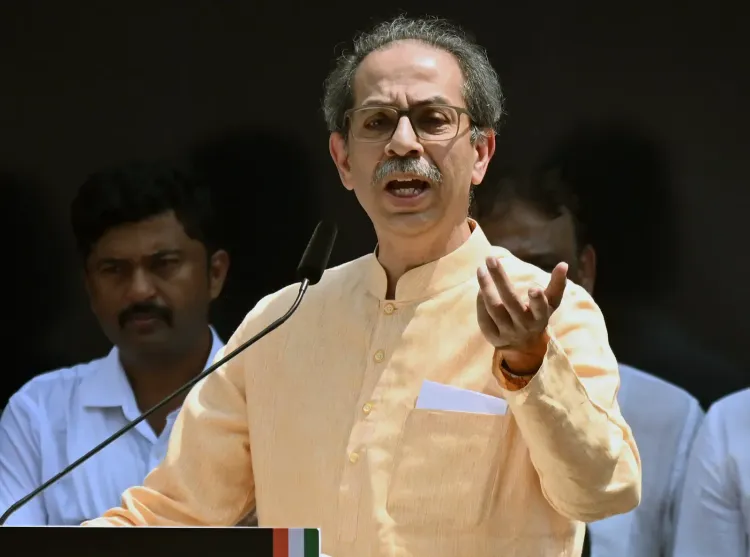
Shiv Sena (Uddhav Balasaheb Thackeray) on Wednesday, 7 October issued a pointed warning to the Centre, drawing a direct parallel between the mass protests convulsing France and what the party described as a dangerous, suppressed economic anger building across India. The caution came through an editorial in the party's mouthpiece, 'Samaana', and called on the ruling administration to act on public grievances before popular patience runs out.
The France Template: What Sparked the Warning
The Samaana editorial detailed how over 5,00,000 citizens — including students, teachers, healthcare workers, and firefighters — have taken to the streets across more than 170 cities in France. The French Ministry of Interior reportedly acknowledged that the situation had moved beyond control, with major disruptions to railways, supply chains, and public services.
According to the editorial, the unrest stems from soaring diesel and energy prices, systemic corruption in education, severe public sector mismanagement, and proposed budget cuts under the Sébastien Lecornu administration. With French public debt climbing to 119% of GDP, planned measures such as freezing public sector wages have eroded purchasing power and triggered widespread outrage.
The India Parallel: Key Grievances Cited
The Thackeray camp argued that Indian citizens face pressures that are, in several respects, equally severe. Rising inflation in essential commodities — pulses, vegetables, and medicines — mirrors the fuel-cost anger that drove French protesters onto the streets, the editorial claimed.
The editorial highlighted multiple structural concerns. Millions of workers, it argued, face low wages of ₹10,000 to ₹12,000 per month for 12-hour workdays, without Provident Fund coverage or healthcare access. Labour agitations in industrial hubs such as Noida, Greater Noida, and Manesar were cited as evidence of a workforce at breaking point.
Systemic corruption in public service examinations was also flagged, with the editorial pointing to paper leaks in tests like NEET and MPSC as key drivers of widespread youth dissatisfaction. Notably, the NEET controversy had earlier triggered national-level protests and a parliamentary debate on examination integrity.
Maharashtra's Drought and Banking Anxiety
Turning to regional economic distress, the editorial highlighted Maharashtra's severe drought conditions, which have reportedly forced the state government to raise ₹40,000 crore in loans. It also pointed to growing middle-class anxiety over banking stability and the safety of household savings amid broader economic stress — a concern that critics argue the Centre has not adequately addressed.
Over 31,000 Protest Sites: The Opposition's Claim
Citing records compiled through the opposition's 'Satyagraha' portal, the editorial claimed that over 31,434 protest sites are currently active across India, spanning farmers demanding Minimum Support Price (MSP) guarantees, students agitating over examination systems, and organised labour.
The editorial drew a pointed legal contrast: while French trade unions operate within a recognised framework that allows strikes to quickly become national policy conversations, the Thackeray camp alleged that India's government 'systematically suppresses union action', invoking laws such as the Maharashtra Essential Services Maintenance Act (MESMA) and criminalising peaceful strikes.
The Warning to the Centre
The Uddhav Thackeray-led Shiv Sena concluded with a stark caution: Indian citizens have so far shown restraint that French protesters have not. However, continued economic neglect, rising costs, and the suppression of democratic rights could, in the party's assessment, push public patience past a point of no return. The editorial did not outline specific policy demands but called broadly on the Centre to address economic grievances urgently.
This is not the first time the Thackeray faction has used international unrest as a lens to critique domestic policy — it has previously drawn comparisons with Sri Lanka's 2022 economic crisis. Whether the Centre responds to or dismisses the warning will likely shape the political temperature ahead of upcoming state assembly cycles.
Point of View
And France's unrest offers a ready-made template. But the underlying data points the editorial marshals — wage stagnation, exam paper leaks, drought-driven state borrowing, tens of thousands of protest gatherings — are not fabrications, and the Centre's silence on structural labour informality and MSP guarantees does leave it exposed. What the editorial does not do is offer a policy alternative; it reads more as a pressure instrument than a manifesto. The real question is whether the BJP-led government has a credible counter-narrative on jobs and wages, or whether it continues to rely on infrastructure optics to absorb socio-economic discontent.
NationPress
7 Oct 2026
Frequently Asked Questions
What did Shiv Sena (UBT) say in its Samaana editorial on 7 October 2026?
The editorial warned the Centre that India's suppressed economic anger — over inflation, low wages, exam corruption, and farm distress — mirrors the conditions that triggered mass protests in France. It cautioned that continued neglect could push Indian public patience to a breaking point.
What is happening in France that Shiv Sena (UBT) referenced?
Over 5,00,000 people have protested across more than 170 cities in France, citing soaring diesel and energy prices, wage freezes, and public sector mismanagement under the Sébastien Lecornu administration. The French Ministry of Interior reportedly acknowledged that the situation had moved beyond control.
What economic grievances did the Samaana editorial highlight about India?
The editorial cited inflation in essential commodities, workers earning ₹10,000–₹12,000 per month for 12-hour shifts in industrial hubs, paper leaks in NEET and MPSC exams, Maharashtra's drought forcing ₹40,000 crore in state borrowing, and over 31,434 active protest sites documented by the opposition's Satyagraha portal.
What is the Satyagraha portal referenced in the Shiv Sena (UBT) editorial?
According to the editorial, the Satyagraha portal is an opposition initiative that tracks active protest gatherings across India. It reportedly documents over 31,434 protest sites involving farmers demanding MSP guarantees, students, and organised labour.
How does Shiv Sena (UBT) compare India's legal framework for protests with France's?
The Samaana editorial argued that French trade unions operate within a recognised legal framework that allows strikes to quickly become national policy discussions. In contrast, it alleged that the Indian government suppresses union action by invoking laws such as the Maharashtra Essential Services Maintenance Act (MESMA) and criminalising peaceful strikes.