Shiv Sena (UBT) warns BJP: Dictatorships fall when dialogue ends
Synopsis
Shiv Sena (UBT)'s Saamana editorial didn't just criticise the BJP — it issued a historical warning: regimes that replace dialogue with lathi charges don't survive. Citing youth protests in Delhi, farmer unrest across Maharashtra, and global parallels from Bangladesh to Libya, the party argues the Modi government is repeating the mistakes of fallen authoritarian regimes.
Key Takeaways
Shiv Sena (UBT) published a scathing editorial in Saamana on 22 July , accusing the BJP -led Centre of cracking down on youth protesters in New Delhi with lathi charges instead of dialogue.
The editorial demanded the resignation of Union Education Minister Dharmendra Pradhan , alleging PM Modi refuses to act for fear of a cascade of Cabinet exits.
It cited protests in Rishikesh , Jharkhand , Chhattisgarh , and five Maharashtra districts as evidence of nationwide civic unrest.
Uddhav Thackeray 's faction accused the ruling party of institutional capture, including alleged executive influence over the Election Commission and judiciary.
The editorial drew parallels with youth-led regime changes in Libya , Bangladesh , and Nepal , warning that authoritarian governance historically ends in collapse.
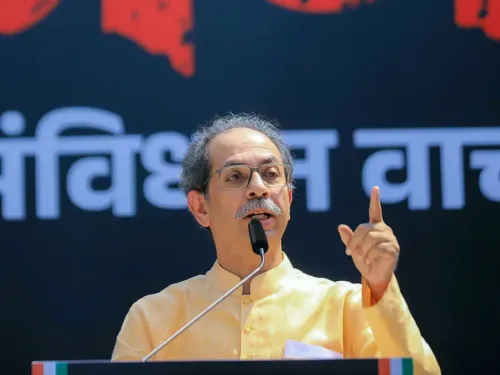
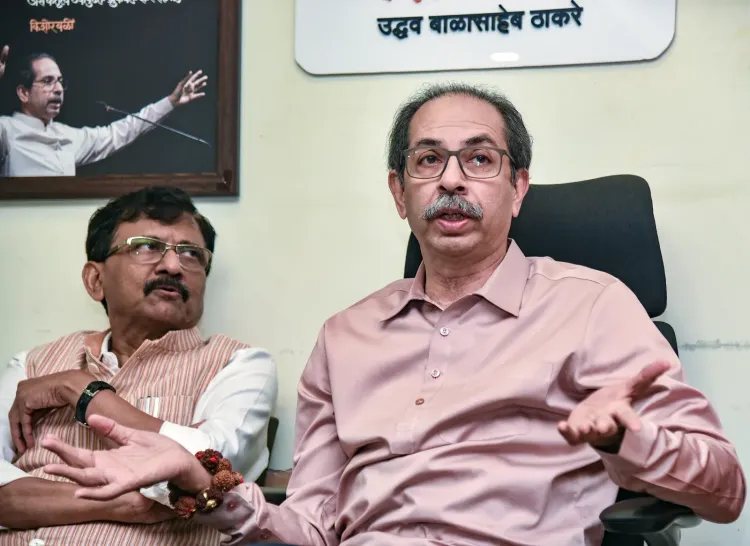
Shiv Sena (Uddhav Balasaheb Thackeray) on Wednesday, 22 July launched a sharp attack on the Bharatiya Janata Party (BJP)-led Central government, warning that the Modi administration is on a path of decline after police action against youth protesters in New Delhi drew widespread condemnation. The party's mouthpiece, 'Saamana', published a scathing editorial arguing that regimes which abandon dialogue with their citizens are historically doomed to fall.
The Editorial's Core Charge
The Saamana editorial accused the ruling administration of deploying police force — including lathi charges — against protesting youth on the streets of Delhi, rather than engaging with their grievances through dialogue. It characterised the crackdown as an act of high-handedness unbefitting the world's largest democracy.
'On the streets of Delhi, police were lathi-charging youth, while angry young people quietly stood their ground and absorbed the blows. When protesters are born who say, 'Hit me more, but I will not move from here', what harm can dictators do to them?' the editorial stated. It went on to describe the use of state force against youth as 'a mockery of humanity' and accused those in power of 'running a demonic regime that breaks the heads of innocent youth.'
The editorial warned directly: 'If those in power do not initiate a dialogue, it seems their rule will not last long.'
Demand for Dharmendra Pradhan's Resignation
The piece singled out Union Education Minister Dharmendra Pradhan, arguing his resignation was the most obvious political response to ongoing youth discontent — but claiming Prime Minister Narendra Modi has deliberately avoided demanding it. The editorial alleged this reluctance stems from fear of a cascading effect.
'In reality, taking the resignation of Education Minister Dharmendra Pradhan was easy, but PM Modi does not take this resignation. Because after that, a queue of resignations would follow in the Cabinet. At least a dozen ministers who are statues of vices like corruption, looting, and inefficiency would have to resign,' the editorial argued.
Land, Environment, and Farmer Protests Cited
The Saamana editorial broadened its critique beyond Delhi, pointing to a pattern of civil unrest across India. It highlighted tree-felling protests in Rishikesh, forest clearances in Jharkhand and Chhattisgarh, and farmer agitations across multiple Maharashtra districts — including Nashik, Akola, Solapur, Bhandara, and Buldhana — over land acquisition, infrastructure projects, and ring-road construction. The editorial presented these as evidence of a government systematically disconnected from citizen concerns.
Institutional Capture and Maharashtra Politics
The Uddhav Thackeray-led faction also accused the ruling party of undermining constitutional institutions, alleging that judicial appointments and the Election Commission of India (ECI) are heavily influenced by the executive. It criticised Maharashtra Chief Minister Devendra Fadnavis over parliamentary conduct and flagged the absence of a designated Opposition Leader in the state legislature as a sign of democratic erosion.
Global Parallels and the Warning
Drawing on historical precedents from student- and youth-led revolutions in Libya, Bangladesh, and Nepal, the editorial warned that a complete breakdown in dialogue between rulers and citizens has historically triggered civil unrest and the collapse of authoritarian regimes. 'Dialogue is crucial in politics. However, dialogue between the Modi government and the public has ended. For the BJP, the voter has become a purchasable commodity,' it stated. The editorial concluded by asserting that 'corrupt and non-responsive regimes are historically dismantled when public patience runs out.' The BJP has not issued a formal response to the editorial as of publication.
Point of View
Successful youth uprising carries a threat that abstract democratic rhetoric does not. What the editorial sidesteps is that Shiv Sena itself governed Maharashtra in coalition and faced its own accountability gaps. The more substantive challenge it raises — whether the Modi government's refusal to engage Dharmendra Pradhan's critics signals broader Cabinet paralysis — is a question that deserves scrutiny beyond opposition point-scoring.
NationPress
21 Oct 2026
Frequently Asked Questions
What did Shiv Sena (UBT)'s Saamana editorial say about the BJP government?
The Saamana editorial, published on 22 July, accused the BJP-led Central government of using police force — including lathi charges — against youth protesters in Delhi instead of engaging in dialogue. It warned that regimes which abandon communication with citizens historically face collapse, drawing parallels with fallen authoritarian governments in Libya, Bangladesh, and Nepal.
Why is Shiv Sena (UBT) calling for Dharmendra Pradhan's resignation?
The editorial argued that Union Education Minister Dharmendra Pradhan's resignation is the most logical political response to ongoing youth unrest. It claimed PM Modi is avoiding the move because it could trigger a chain of Cabinet resignations, implicating ministers it described as corrupt or ineffective.
Which protests did the Saamana editorial highlight beyond Delhi?
The editorial cited tree-felling protests in Rishikesh, forest clearance agitations in Jharkhand and Chhattisgarh, and farmer protests in five Maharashtra districts — Nashik, Akola, Solapur, Bhandara, and Buldhana — over land acquisition, infrastructure projects, and ring-road construction.
What institutional concerns did Shiv Sena (UBT) raise in the editorial?
The party accused the BJP of exerting executive influence over judicial appointments and the Election Commission of India. It also criticised Maharashtra Chief Minister Devendra Fadnavis over parliamentary conduct and flagged the absence of a designated Opposition Leader in the Maharashtra state legislature.
How did the editorial compare the Modi government to global authoritarian regimes?
The Saamana editorial drew direct parallels with student- and youth-led uprisings in Libya, Bangladesh, and Nepal, arguing that a complete breakdown in dialogue between the government and citizens has historically led to civil unrest and regime change. It described the BJP's relationship with voters as transactional rather than democratic.