Shiv Sena (UBT) flags RSS-BJP paradox over student crackdown in Saamana
Synopsis
Shiv Sena (UBT)'s Saamana has exposed what it calls the Sangh Parivar's defining paradox: the RSS chief hosts dialogue sessions with Gen Z while the BJP government it backs is accused of unleashing police against the same generation. The Emergency-era comparison is the sharpest barb — and the demand for Amit Shah to face Parliament the most concrete political ask.
Key Takeaways
Shiv Sena (UBT) published a sharp editorial in Saamana on 7 August targeting ideological contradictions within the Sangh Parivar .
RSS chief Mohan Bhagwat's Gen Z outreach session in Mumbai was called 'hypocritical' given the Centre's reported crackdown on student protesters.
The editorial cited youth leader Riya Ahir as a specific case of alleged police harassment in Mumbai .
A parallel was drawn to the 1975 Emergency , when the RSS actively resisted government suppression of civil liberties — contrasting it with current RSS silence.
The editorial demanded Home Minister Amit Shah address Parliament on alleged police excesses against protesters, including female students.
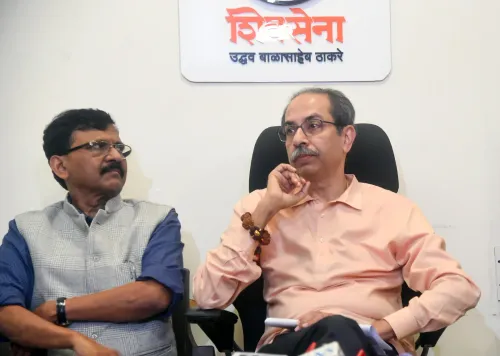
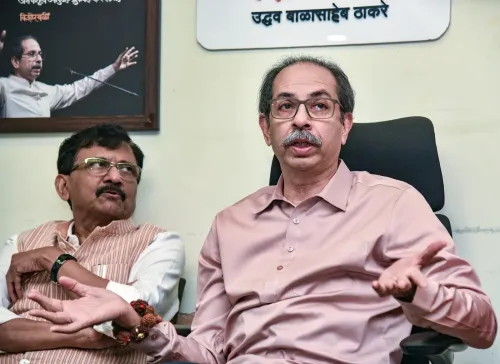
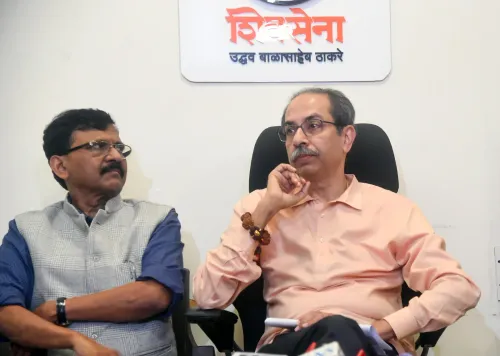
Shiv Sena (Uddhav Balasaheb Thackeray) on Friday, 7 August launched a pointed attack on the ideological contradictions within the Sangh Parivar, accusing the Bharatiya Janata Party (BJP) of suppressing student protests while its parent body, the Rashtriya Swayamsevak Sangh (RSS), projects an image of open dialogue. The critique appeared in the party's mouthpiece Saamana and targeted RSS chief Mohan Bhagwat's decision to host a Mumbai outreach session with Gen Z youth in the wake of the Jantar Mantar student demonstrations.
The Core Contradiction
The Saamana editorial labelled Bhagwat's outreach 'hypocritical', arguing that the RSS chief's call for dialogue sits uneasily alongside the Central government's reported heavy-handed police response to student activists. The Thackeray camp pointed out that while BJP leaders and affiliated groups have branded protesting students 'anti-national' and linked them to the so-called 'Tukde Tukde Gang', the RSS leadership has simultaneously attempted to position itself as a mediator.
This is not merely an internal optics problem — it reflects a structural tension between the BJP's political posture and the RSS's traditionally broader social role.
Alleged Police Harassment and Ground Realities
The editorial cited specific instances of alleged police intimidation, including the case of youth leader Riya Ahir, who was reportedly targeted by law enforcement after she tried to prevent the unlawful detention of fellow protesters in Mumbai. Despite public statements from the Prime Minister offering pardons to student demonstrators, the editorial claimed that police agencies operating under the Home Ministry continue to intimidate students and their families at university campuses and private residences.
'Indian democracy is being transformed into an autocracy, with constitutional institutions dismantled, national assets privatised, and human values eroded,' the editorial stated.
RSS Silence Compared to Emergency-Era Resistance
Drawing a pointed historical parallel, the editorial recalled the 1975 Emergency, when the RSS actively opposed government bans on strikes, protests, and civil liberties. It accused the current RSS leadership of remaining conspicuously silent as what it described as similar authoritarian measures are deployed against today's youth. 'Ideally, the RSS should have raised its voice against these trends. Instead, it remained silent while youth took to the streets to denounce authoritarianism. Is this stance deemed appropriate by Mohan Bhagwat?' the editorial asked.
What Genuine Outreach Would Look Like
The Uddhav Thackeray-led party argued that any credible outreach by the RSS chief must engage actual movement participants — particularly those injured during police lathi charges — rather than what it called 'curated gatherings of Sangh-affiliated youth groups'. The editorial stopped short of dismissing dialogue altogether but set conditions for it to be considered meaningful.
Demand for Parliamentary Accountability
The editorial concluded with a direct demand: Home Minister Amit Shah must address Parliament regarding alleged police excesses and reported misbehaviour toward female protesters. It asserted that genuine resolution requires stopping what it termed false charges and 'curbing state force rather than offering unsolicited sermons to the nation's youth.'
The editorial marks one of the sharpest recent attacks by the Thackeray camp on the internal coherence of the ruling alliance, and comes at a moment when student unrest has become a live political flashpoint ahead of upcoming state electoral cycles.
Point of View
The Thackeray camp places the RSS in an uncomfortable historical mirror. The RSS built its modern legitimacy partly on Emergency-era resistance — and that legacy is now being used as a weapon against it. What the editorial doesn't engage with is whether Bhagwat's outreach, however imperfect, represents a genuine internal pressure point on the BJP. The demand for Shah to appear before Parliament is the most substantive ask, and the one most likely to be ignored — which may itself be the political point.
NationPress
21 Sept 2026
Frequently Asked Questions
What did Shiv Sena (UBT)'s Saamana editorial say about the RSS?
The Saamana editorial accused RSS chief Mohan Bhagwat of hypocrisy for hosting a Gen Z outreach session in Mumbai while the BJP-led Central government reportedly cracked down on student protesters at Jantar Mantar. It argued the RSS is projecting mediation while remaining silent on alleged police excesses.
What is the contradiction Shiv Sena (UBT) is pointing to within the Sangh Parivar?
The party argues that BJP leaders have labelled protesting students 'anti-national' and linked them to the 'Tukde Tukde Gang', while the RSS simultaneously attempts to engage the same youth demographic through dialogue. The editorial says both positions cannot coexist credibly.
Who is Riya Ahir and why was she mentioned in the editorial?
Riya Ahir is a youth leader cited in the Saamana editorial as a specific example of alleged police harassment. She was reportedly targeted by law enforcement after attempting to prevent the unlawful detention of fellow protesters in Mumbai.
How did the editorial compare the current RSS stance to its Emergency-era record?
The editorial recalled that during the 1975 Emergency, the RSS actively opposed government bans on strikes, protests, and civil liberties. It accused current RSS leadership of remaining silent on what it described as similar authoritarian measures being used against today's student protesters.
What did Shiv Sena (UBT) demand from Home Minister Amit Shah?
The editorial demanded that Home Minister Amit Shah address Parliament regarding alleged police excesses and reported misbehaviour toward female protesters. It called for an end to what it termed false charges against students and an immediate curbing of state force.