Shiv Sena (UBT) slams Centre over NEET row: 'Pradhan exit just the beginning'
Synopsis
Shiv Sena (UBT)'s Saamana pulls no punches: Pradhan's resignation is just the first domino. The editorial names Home Minister Amit Shah as accountable for police lathi charges on students, demands a Modi apology, and dismisses the new anti-paper leak bill as a repackaged gimmick — warning that the NEET controversy's political blaze is far from extinguished.
Key Takeaways
Shiv Sena (UBT) declared in its mouthpiece Saamana on 27 July that the Centre became a 'laughing stock' during the 35-day NEET protest at Jantar Mantar .
Education Minister Dharmendra Pradhan's resignation was called the 'first political casualty' of the NEET paper leak controversy.
The editorial cited the deaths of 20 young people linked to the NEET paper leak as the true force uniting the country.
Home Minister Amit Shah was held accountable for police lathi charges on student protesters; a formal apology from PM Modi was demanded.
The anti-paper leak bill — carrying up to 10 years imprisonment and a ₹10 crore fine — was dismissed as a 'gimmick' and rehashed legislation.
Key protest figures named include Abhijeet Dipke , Sonam Wangchuk , and student leader Neha Bora .
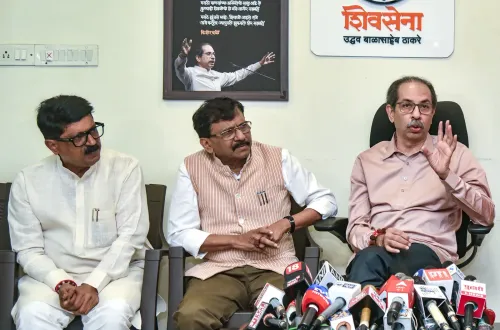
Shiv Sena (Uddhav Balasaheb Thackeray) on Monday, 27 July launched a sharp broadside against the BJP-led NDA government, declaring in its mouthpiece 'Saamana' that the Centre had become a 'laughing stock' during the 35-day agitation by student and youth leaders at Jantar Mantar, New Delhi. The editorial argued that the resignation of Union Education Minister Dharmendra Pradhan was only the opening casualty of a political reckoning that is far from over.
The NEET Protests and Political Fallout
The Saamana editorial contended that the sustained demonstrations against the NEET exam paper leak delivered the Central government a 'full-time reality check', severely denting the narrative of Prime Minister Narendra Modi's political invincibility. According to the party, widespread youth anger made Pradhan the 'first political casualty' of the controversy.
The Thackeray faction noted that the government initially resisted pressure to act — citing reports that Defence Minister Rajnath Singh had publicly stated that resignations were not part of the NDA's working style — before escalating public outrage ultimately forced the administration's hand.
Rejecting Pradhan's Stated Reason for Resignation
The editorial firmly dismissed Pradhan's official explanation for stepping down, in which he cited a desire to preserve national unity and prevent 'anti-national forces' from exploiting the protests. Saamana asked pointedly: 'Which anti-national forces did he see at Jantar Mantar or in protests across the country?'
'Labelling student leaders and climate activists as anti-national is an insult to the genuine outrage felt across the nation. Pradhan's resignation has no connection to national unity — the country was united by the sacrifice of 20 young lives lost due to the NEET paper leak,' the editorial stated.
Key Figures Behind the Movement
The party highlighted several individuals who lent momentum to the 35-day movement. These included Abhijeet Dipke, a US-returnee who founded the 'Cockroach Janata Party' to mobilise against paper leaks; climate activist Sonam Wangchuk, who went on a hunger strike; and student leader Neha Bora.
Notably, the editorial pointed to a contradiction in the government's stance: while the BJP reportedly attempted to brand Wangchuk as a foreign agent, its own ministers were seen visiting him to appeal for an end to his fast.
Accountability Demanded from Modi and Shah
The Saamana editorial asserted that political accountability cannot end with Pradhan's exit alone. It held Home Minister Amit Shah directly responsible for ordering police lathi charges on student demonstrators and demanded a formal apology from Prime Minister Modi.
The Thackeray camp also dismissed the government's newly introduced anti-paper leak legislation — which mandates up to 10 years in prison and a fine of ₹10 crore — as a 'gimmick'. The editorial alleged the bill was rehashed old legislation with revised penalty figures, designed to mislead students and parents rather than address systemic failures.
Warning of Growing Discontent
The Shiv Sena (UBT) editorial credited the digital creativity and spontaneous organising of protesting youth with effectively neutralising the BJP's digital outreach and IT Cell during the month-long agitation. The party warned that unless the administration addresses the root causes of student discontent and administrative failures, the 'blaze of discontent' will continue to spread across the country.
Point of View
The Thackeray faction is raising the political cost well beyond a ministerial reshuffle. The dismissal of the anti-paper leak bill as a gimmick is pointed — if the legislation is indeed recycled statute with inflated penalties, that is a substantive charge that deserves scrutiny, not just political noise. The deeper question is whether the opposition can convert student anger into durable electoral accountability, or whether the momentum dissipates once the news cycle moves on.
NationPress
25 Oct 2026
Frequently Asked Questions
What did Shiv Sena (UBT) say about the NEET protests in Saamana?
Shiv Sena (UBT) said in a Saamana editorial on 27 July that the Centre became a 'laughing stock' during the 35-day student agitation at Jantar Mantar over the NEET paper leak. The party called Dharmendra Pradhan's resignation the 'first political casualty' and warned that the political fallout is far from over.
Why did Shiv Sena (UBT) reject Pradhan's reason for resigning?
The party rejected Pradhan's claim that he resigned to preserve national unity and prevent 'anti-national forces' from exploiting the protests. Saamana argued that labelling student leaders and climate activists as anti-national was an insult, and that the country was actually united by grief over 20 deaths linked to the NEET paper leak.
Who did Shiv Sena (UBT) hold accountable beyond Dharmendra Pradhan?
The editorial held Home Minister Amit Shah directly accountable for ordering police lathi charges on student demonstrators and demanded a formal apology from Prime Minister Narendra Modi. The party made clear that a single ministerial exit was insufficient.
What is Shiv Sena (UBT)'s view on the new anti-paper leak bill?
The party dismissed the bill — which prescribes up to 10 years in prison and a ₹10 crore fine — as a 'gimmick'. It alleged the legislation is rehashed old law with revised penalty figures, intended to mislead students and parents rather than fix the systemic failures that enabled the NEET paper leak.
Who were the key figures highlighted in the NEET protest movement?
The Saamana editorial named Abhijeet Dipke, a US-returnee who founded the 'Cockroach Janata Party' to mobilise against paper leaks; climate activist Sonam Wangchuk, who undertook a hunger strike; and student leader Neha Bora as central figures who sustained the 35-day agitation.