NEET paper leak: Shiv Sena (UBT) slams Modi's X post, demands Pradhan's exit
Synopsis
Shiv Sena (UBT)’s Saamana editorial didn’t just criticise PM Modi’s NEET response — it exposed the accountability vacuum at its centre. With reportedly 152 prior paper leaks ignored and the NSA invoked against protesters, the party argues that a social media post promising fast-track courts, without a single ministerial resignation, is not accountability — it’s optics.
Key Takeaways
Shiv Sena (UBT) criticised PM Modi’s response to the NEET paper leak in a Saamana editorial on 24 July .
PM Modi broke his silence via a post on X , promising fast-track courts — but did not address Parliament or meet protesters.
Protesting students at Jantar Mantar , including activist Sonam Wangchuk , called the PM’s assurances a ‘bandage on a paper leak.’ Critics allege reportedly 152 paper leak incidents occurred during the current administration with no significant action before this 153rd case.
The administration invoked the National Security Act (NSA) in Delhi to curb student demonstrations, drawing sharp criticism.
Union Education Minister Dharmendra Pradhan ’s resignation was demanded by the party, but no action on that front has been taken.
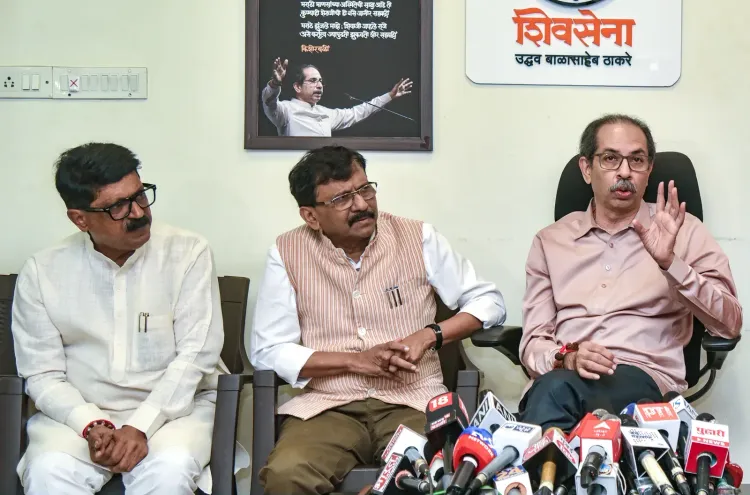
Shiv Sena (Uddhav Balasaheb Thackeray) on Friday, 24 July launched a sharp attack on Prime Minister Narendra Modi over his response to the NEET examination paper leak controversy, calling his promises of fast-track courts “empty rhetoric” and his assurances “castles in the air.” The party’s critique appeared in an editorial in its mouthpiece Saamana, targeting both the substance and the mode of the PM’s intervention.
Modi Breaks Silence — On X, Not in Parliament
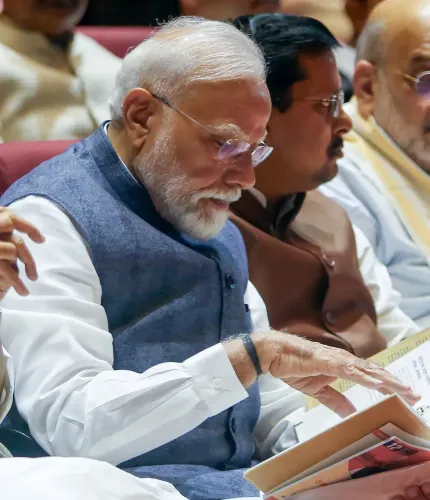
Amid nationwide outrage and escalating student protests, PM Modi broke his silence on the NEET paper leak crisis by posting a statement on social media platform X, pledging that “no individual playing with the future of students will be spared” and announcing the establishment of fast-track courts for swift justice.
However, the Saamana editorial pointedly noted that the Prime Minister chose to communicate via a social media post rather than address Parliament or meet the protesting students directly — a choice critics say reflects the administration’s discomfort with direct accountability.
Students Dismiss Assurances as a 'Bandage on a Paper Leak'
Protests at Jantar Mantar in New Delhi, running for over two months and drawing students alongside environmental activist Sonam Wangchuk, have shown no sign of abating. Demonstrators have faced police lathi charges while demanding systemic reform in the national examination framework.
According to the Saamana editorial, protesting students dismissed the PM’s assurances as a “bandage on a paper leak” and characterised the fast-track court promise as hollow, given the absence of any ministerial accountability.
The Accountability Gap: 153 Leaks, No Resignations
The editorial highlighted that critics and opposition voices have pointed to reportedly 152 paper leak incidents over the past decade under the current administration, none of which drew significant official action. It was only the 153rd leak — and the resulting national fury — that prompted a public response from the Prime Minister.
Notably, the Shiv Sena (UBT) editorial argued that PM Modi should have demanded the resignation of Union Education Minister Dharmendra Pradhan, who holds primary responsibility for the ministry, before announcing punitive measures. “Had the PM demanded the resignation of Union Education Minister Dharmendra Pradhan before announcing fast-track courts, his promises might have carried weight,” the editorial stated.
NSA Invoked Against Protesters
The Saamana editorial also drew attention to a troubling contradiction: while the administration promised strict action against those responsible for the leak, it simultaneously invoked the National Security Act (NSA) in Delhi to curb the student demonstrations. Critics argue this dual approach — promising justice while suppressing dissent — undermines the credibility of the government’s stated commitments.
What Comes Next
As public dissatisfaction deepens over the damage to millions of students’ and parents’ aspirations, the Shiv Sena (UBT) editorial questioned whether the PM’s commitments would translate into concrete systemic reform or remain, as it put it, unfulfilled promises. The opposition’s scrutiny of the fast-track court mechanism — its timeline, scope, and independence — is expected to intensify in the coming parliamentary sessions.
Point of View
But the statement substitutes for accountability rather than initiating it. A social media post promising fast-track courts, while the responsible minister retains his portfolio and protesters face the NSA, is a study in managed optics. The claim of 152 prior leaks without consequence — if verified — points to a systemic failure that predates any single exam cycle. Fast-track courts for culprits matter far less than a structural overhaul of how national examinations are conducted, secured, and audited. Until that conversation happens in Parliament rather than on X, the scepticism of India’s students is entirely rational.
NationPress
22 Oct 2026
Frequently Asked Questions
What did Shiv Sena (UBT) say about PM Modi’s NEET paper leak response?
Shiv Sena (UBT) called PM Modi’s promises of fast-track courts ‘empty rhetoric’ and ‘castles in the air’ in a Saamana editorial on 24 July. The party criticised the PM for communicating via an X post rather than addressing Parliament and for not demanding Education Minister Dharmendra Pradhan’s resignation.
Why are students protesting over the NEET paper leak?
Students have been protesting for over two months at Jantar Mantar in New Delhi, demanding accountability and systemic reform in the national examination system following the NEET paper leak. Protesters, who have faced police lathi charges, argue that the government’s response has been inadequate and that no senior official has been held accountable.
What did PM Modi promise regarding the NEET paper leak?
PM Modi posted on social media platform X that no individual playing with the future of students would be spared, and announced the establishment of fast-track courts for swift justice. He did not, however, call for the resignation of Union Education Minister Dharmendra Pradhan or address Parliament on the issue.
What is the significance of the 152 paper leak figure cited in the Saamana editorial?
According to the Saamana editorial, critics allege that reportedly 152 paper leak incidents occurred during the current administration over the past decade without significant official action. The editorial argues it was only the 153rd leak — and the scale of public fury it generated — that forced an official response from PM Modi.
Why has the National Security Act invocation in Delhi drawn criticism?
Critics argue that invoking the National Security Act (NSA) in Delhi to curb student demonstrations, while simultaneously promising justice for paper leak culprits, represents a contradiction. The Saamana editorial contends this dual approach undermines the government’s stated commitment to protecting students’ interests.