Shiv Sena (UBT) blasts Centre over protest crackdowns, slams Modi-Shah 'silence'
Synopsis
Uddhav Thackeray's Saamana goes beyond routine opposition rhetoric — it accuses the Home Minister of personally defying Supreme Court orders on protest policing, names senior politicians allegedly beaten and detained, and calls out Bollywood's silence in terms drawn from the fascist era. The editorial is the sharpest public attack from the Thackeray camp since the Maharashtra political split.
Key Takeaways
Shiv Sena (UBT) editorial in Saamana on 13 October accused the Centre of enabling a 'civil-war-like' atmosphere through alleged police brutality against protesters.
The piece alleged that PM Modi and Home Minister Amit Shah remained silent amid protests in Delhi and Mumbai .
MP John Brittas , CPI General Secretary M.A.
Baby , and Kerala opposition leader P.
Vijayan were named as individuals allegedly subjected to rough treatment during protests.
Female satyagrahis near Shivaji Park , Mumbai , and in Delhi were allegedly dragged into police vans, per the editorial.
The editorial praised Prakash Raj , Naseeruddin Shah , Jaya Bachchan , and Sanjay Manjrekar while condemning award-winning public figures for their alleged silence.
The Thackeray camp warned that celebrties staying neutral during political repression would amount to 'betrayal of the youth.'
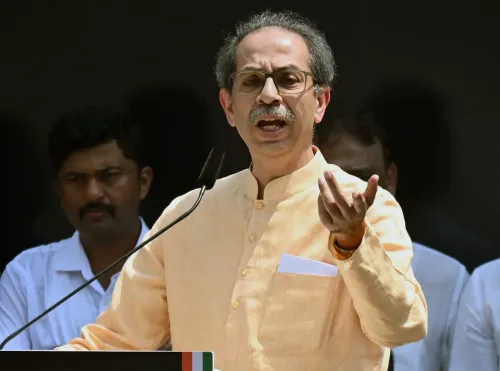
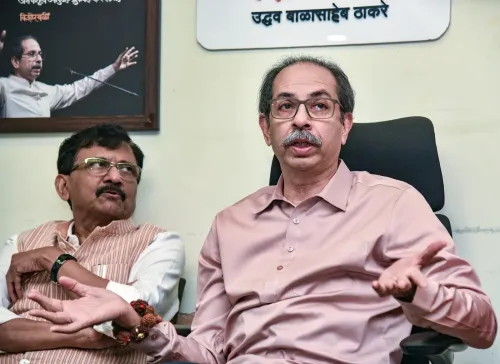
Shiv Sena (Uddhav Balasaheb Thackeray) on Tuesday, 13 October launched a scathing attack on the Centre and state leadership through its mouthpiece Saamana, accusing the government of fostering a 'civil-war-like' atmosphere across the country through alleged police brutality against peaceful protesters in Delhi and Mumbai. The editorial directly targeted Prime Minister Narendra Modi and Home Minister Amit Shah, condemning what it called their 'silence and apathy' amid mounting protests.
What the Saamana Editorial Alleged
The Uddhav Thackeray-led faction's editorial described Delhi as having been 'transformed into a massive police station' where, it alleged, children and young women were being 'shamelessly beaten'. The piece cited Supreme Court directives that prohibit police from using batons on protesters when there is no rioting, accusing security forces in both Delhi and Mumbai of defying those orders by allegedly subjecting 'peaceful satyagrahis to brutal force'.
Specific allegations included that women satyagrahis and journalists in Delhi faced 'ruthless behaviour', with claims that male police personnel molested and manhandled them — accusations that remain unverified independently and were attributed entirely to the Saamana editorial.
Prominent Figures Allegedly Targeted at Protests
The editorial named several public figures it claimed were subjected to rough treatment during peaceful demonstrations. According to the piece, MP John Brittas, CPI General Secretary M.A. Baby, and Kerala opposition leader P. Vijayan were allegedly 'dragged, beaten, and stuffed into prison vans' while participating in a satyagraha. In Mumbai, the editorial alleged that students — including numerous female college students — staging a satyagraha near Shivaji Park were 'cruelly dragged and forced into police vans'.
Attack on Modi, Shah and the BJP
The Thackeray camp criticised Prime Minister Modi for travelling to Chennai to review metro presentations and 'deliver lectures on development' without, the editorial argued, uttering a single word about the unrest gripping the country. Home Minister Amit Shah was accused of 'crushing' Supreme Court orders and 'unleashing brute force on peaceful protesters', with the editorial claiming these actions were fuelling public anger against the Prime Minister.
In a particularly sharp passage, the Saamana editorial accused Shah of 'staying sequestered behind armed guards, ignoring public uprisings and police crackdowns, and instead celebrating by distributing sweets on social media over the BJP's by-election victories in states like West Bengal and Puducherry.'
Intellectuals and Celebrities Called Out
The editorial broadened its attack to prominent award-winning personalities — holders of honours such as Bharat Ratna, Padma Shri, Padma Bhushan, Jnanpith, and Sahitya Akademi awards — as well as film and theatre celebrities. Drawing a parallel to the alleged silence of intellectuals during the eras of Hitler and Mussolini, the piece quoted writer Harishankar Parsai, describing the country's intellectuals as 'nominal tigers who merely play band in a jackal's wedding.'
'While actors and public figures deliver heavy dialogues on screen, they zip their mouths when the nation faces a crisis, acting as beneficiaries of the government just like beneficiaries of welfare schemes,' the editorial claimed.
In contrast, the Thackeray camp praised Prakash Raj, Naseeruddin Shah, and Jaya Bachchan, along with former cricketer Sanjay Manjrekar — all of whom reportedly voiced opposition to police high-handedness — as demonstrating 'true spirit and greater nationalism.'
Warning and Conclusion
The editorial warned that treating opportunistic celebrities as neutral when a political shift occurs would represent 'an ultimate betrayal of the youth who are currently suffering under police oppression and fighting against dictatorship.' It concluded by declaring that 'intellectuals who silently watch such atrocities are enemies of society and of no use to the nation.' This comes amid a broader pattern of opposition parties escalating rhetoric against the Centre over law-enforcement conduct during protest movements — an issue that is likely to remain politically charged in the weeks ahead.
Point of View
Invoking Hitler, Mussolini, and Supreme Court violations in a single breath to frame the BJP government as authoritarian. The Thackeray camp is positioning itself as the moral custodian of protest rights at a moment when the broader INDIA bloc is struggling to consolidate street-level opposition. What is notably missing is any independent verification of the specific allegations of molestation and judicial defiance — serious charges that, if unsubstantiated, risk undermining the editorial's credibility. The singling out of individual celebrities by name, contrasted with unnamed 'submissive artists,' signals the Thackeray faction is also fighting a cultural battle alongside the political one.
NationPress
13 Oct 2026
Frequently Asked Questions
What did Shiv Sena (UBT)'s Saamana allege against the Centre on 13 October?
The Saamana editorial accused the Centre of creating a 'civil-war-like' atmosphere through alleged police brutality against peaceful protesters in Delhi and Mumbai. It specifically targeted PM Modi and Home Minister Amit Shah for what it called their 'silence and apathy' during the unrest.
Which public figures were named as victims of alleged police high-handedness?
The editorial named MP John Brittas, CPI General Secretary M.A. Baby, and Kerala opposition leader P. Vijayan as individuals allegedly dragged, beaten, and placed in police vans during a peaceful satyagraha. These claims were made by Saamana and have not been independently verified.
What did the editorial say about intellectuals and celebrities?
Saamana accused award-winning personalities — including Bharat Ratna and Padma awardees — and film celebrities of staying silent in the face of what it described as repression, comparing them to intellectuals who were silent during the eras of Hitler and Mussolini. It praised Prakash Raj, Naseeruddin Shah, Jaya Bachchan, and Sanjay Manjrekar for speaking out.
Why did the editorial criticise PM Modi specifically?
The editorial criticised PM Modi for travelling to Chennai to review metro presentations and 'deliver lectures on development' without addressing the alleged unrest and police crackdowns. It argued that his silence was fuelling public anger.
What is Saamana, and why does it matter politically?
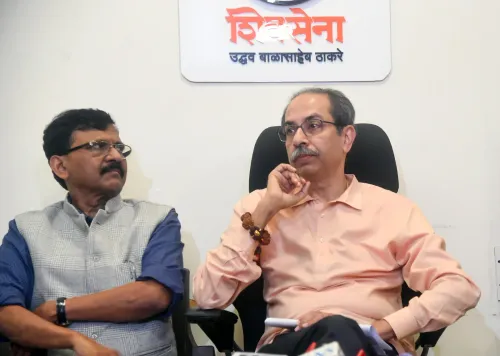
Saamana is the official mouthpiece of Shiv Sena (Uddhav Balasaheb Thackeray) and has historically been used to set the party's political agenda and signal escalations in its stance. An editorial of this sharpness — naming senior Union ministers and invoking fascist-era parallels — signals the Thackeray faction is significantly intensifying its opposition posture ahead of anticipated political battles.