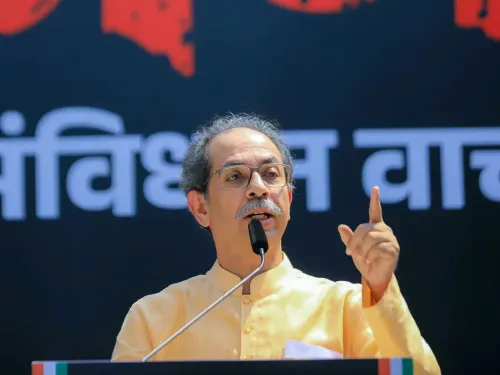
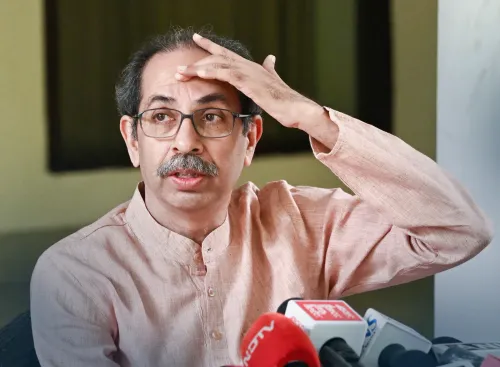
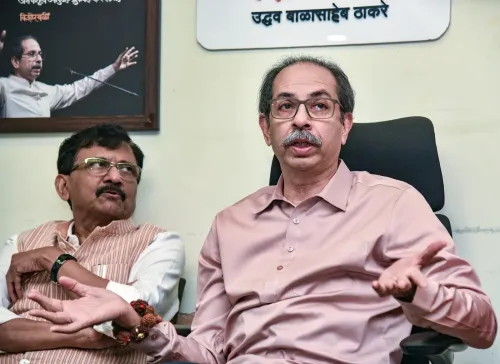
Shiv Sena(UBT) slams Centre over Oct 10 protest crackdown in Saamana
Synopsis
Shiv Sena (UBT) has unleashed one of its sharpest political broadsides yet, accusing the Centre of deploying a near-1-lakh security force, shutting down Delhi's internet and transit, and detaining former CMs Mamata Banerjee and Arvind Kejriwal — all to quell protests it claims represent a democratic turning point. The editorial's UN citation and international media references signal an attempt to globalise the accountability frame.
Key Takeaways
Shiv Sena (UBT) condemned the Centre in its mouthpiece Saamana on 12 October 2026 over an alleged crackdown on anti-government protests.
The editorial claimed nearly 1,00,000 armed personnel were deployed in Delhi on 10 October , sealing access routes and disrupting internet, metro, buses, trains, and flights.
Former CMs Mamata Banerjee and Arvind Kejriwal , as well as politicians Dipankar Bhattacharya and Manoj Jha , were reportedly among those detained, according to the editorial.
In Mumbai , Tushar Gandhi was detained near August Kranti Maidan ; Aaditya Thackeray marched to DN Nagar police station demanding his release.
The editorial cited concern from the United Nations Human Rights Office and coverage by international outlets including The New York Times .
BJP labelled the protests a 'flop show'; Saamana countered that heavy security deployment proved government vulnerability.
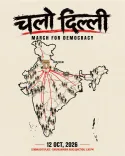
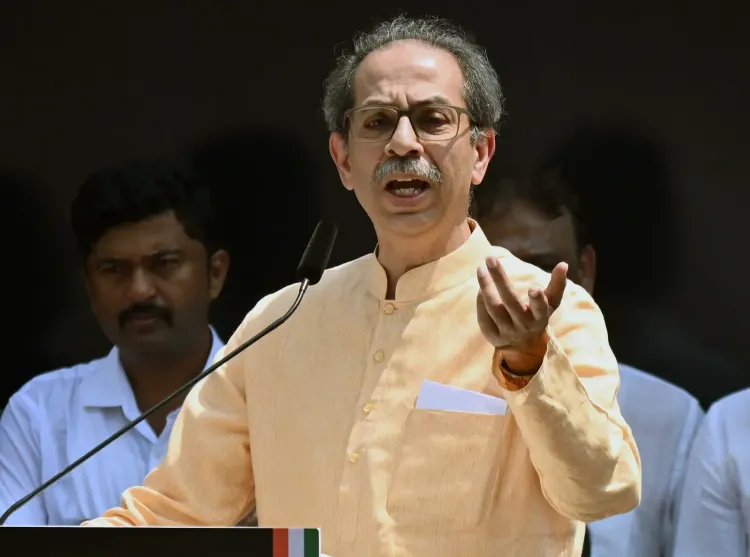
Shiv Sena (Uddhav Balasaheb Thackeray) on Monday, 12 October 2026, accused the Central government of employing what it called 'cowardly' dictatorial measures to suppress large-scale anti-government protests that swept across the country, publishing its sharp rebuke in the party's mouthpiece, 'Saamana'. The criticism follows a sweeping security clampdown in New Delhi and Mumbai on 10 October, during which thousands of protesters, student activists, and prominent opposition figures were reportedly detained.
The Security Apparatus Deployed
According to the Saamana editorial, the Centre recalled armed security personnel from counter-terror and anti-Naxalite postings in Chhattisgarh, Jharkhand, Jammu & Kashmir, and Manipur to enforce what the party described as an unprecedented blockade across Delhi. The editorial claimed that an estimated force of nearly 1,00,000 armed personnel surrounded the residence of Union Home Minister Amit Shah on Krishna Menon Road, with access routes and alleys across the capital sealed off.
The crackdown reportedly disrupted critical public infrastructure, with internet services suspended, metro and local bus networks shut down, and incoming long-distance trains as well as commercial flights affected. According to the editorial, police even boarded an aircraft to detain senior political figures, including Dipankar Bhattacharya and Manoj Jha.
High-Profile Detentions
The editorial alleged that former Chief Ministers were among those arrested during the crackdown, naming former West Bengal Chief Minister Mamata Banerjee and Aam Aadmi Party (AAP) convener Arvind Kejriwal. Despite the extensive logistical shutdown, the party claimed that large crowds of students and civil society members still managed to reach designated protest venues in Delhi.
In Mumbai, Tushar Gandhi, the great-grandson of Mahatma Gandhi, was reportedly detained by police as he attempted to lead a peaceful satyagraha towards August Kranti Maidan. Shiv Sena (UBT) leader Aaditya Thackeray and party workers subsequently marched to DN Nagar police station, demanding his immediate release, the editorial stated.
International Reaction and Media Coverage
The Saamana editorial highlighted what it described as growing international scrutiny. It stated that the United Nations Human Rights Office expressed deep concern over arbitrary detentions, heavy-handed policing, and reports of female demonstrators being taken to undisclosed locations in prison vans. The UN reportedly urged Indian authorities to uphold the right to peaceful assembly and release all detained citizens.
The editorial further noted that global outlets, including The New York Times and major London dailies, published photographs of the crackdown, with coverage framing it as a crisis for Indian democracy.
Thackeray Camp's Counter to BJP
Pushing back against Bharatiya Janata Party (BJP) leaders and state media characterising the demonstrations as a 'flop show', the Thackeray camp argued that the government's reliance on heavy policing exposed its own vulnerability rather than the movement's weakness. The editorial alleged a decade-long pattern of public harassment, treasury exploitation, and electoral manipulation.
'When a dictator is afraid, the demon within him builds armed steel walls for self-protection, but these walls are inevitably destroyed by the rebellion of the people,' the editorial declared, asserting that public outrage over governance has reached a tipping point. Whether these claims and the broader political battle over October 10 will intensify in the coming days remains closely watched.
Point of View
And its language ('dictator', 'demon', 'rebellion') is calibrated for mobilisation, not moderation. The editorial's claims — a 1-lakh security force, flights boarded, former CMs arrested — are serious and require independent verification that the piece itself does not provide. Notably, attributing international media and UN reaction to an editorial, rather than direct sourcing, is a rhetorical device; the actual scope of those reactions deserves scrutiny. The BJP's counter-framing of the protests as a 'flop show' suggests both sides are contesting not just the events but the narrative of scale — and that battle may matter as much as what actually happened on October 10.
NationPress
12 Oct 2026
Frequently Asked Questions
What did Shiv Sena (UBT) say in its Saamana editorial about the October 10 crackdown?
Shiv Sena (UBT) accused the Central government of deploying nearly 1,00,000 armed security personnel in Delhi, shutting down internet services, metro networks, and flights, and detaining thousands of protesters including former Chief Ministers on 10 October 2026. The party's mouthpiece Saamana called the measures 'cowardly' and dictatorial.
Who were reportedly detained during the October 10 anti-government protests?
According to the Saamana editorial, those detained included former West Bengal Chief Minister Mamata Banerjee, AAP convener Arvind Kejriwal, and politicians Dipankar Bhattacharya and Manoj Jha. In Mumbai, Tushar Gandhi — great-grandson of Mahatma Gandhi — was also reportedly detained while leading a satyagraha towards August Kranti Maidan.
What was the UN's reported response to the crackdown?
According to the Saamana editorial, the United Nations Human Rights Office expressed deep concern over arbitrary detentions, heavy-handed policing, and reports of female demonstrators being taken to undisclosed locations. The UN reportedly urged Indian authorities to uphold the right to peaceful assembly and release all detained persons.
How did the BJP respond to the protests?
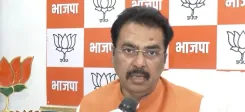
BJP leaders and state media reportedly characterised the demonstrations as a 'flop show', a claim the Shiv Sena (UBT) editorial directly rebutted, arguing the government's large security deployment itself proved its anxiety about the scale of public opposition.
What role did Aaditya Thackeray play during the Mumbai crackdown?
Shiv Sena (UBT) leader Aaditya Thackeray led party workers to DN Nagar police station in Mumbai to demand the immediate release of Tushar Gandhi, who had been detained while attempting to lead a peaceful satyagraha towards August Kranti Maidan, according to the editorial.