Ahmedabad plane crash: 72 hours of chaos, 18 days of DNA identification
Synopsis
One year after Air India Flight AI-171 killed around 260 people in Ahmedabad, the officials who led the response have spoken. The Civil Hospital ran non-stop for 18 days matching 254 victims by DNA; police worked 20-hour shifts in toxic smoke to secure the site. Their accounts reveal the full, grinding scale of what followed India's deadliest recent aviation disaster.
Key Takeaways
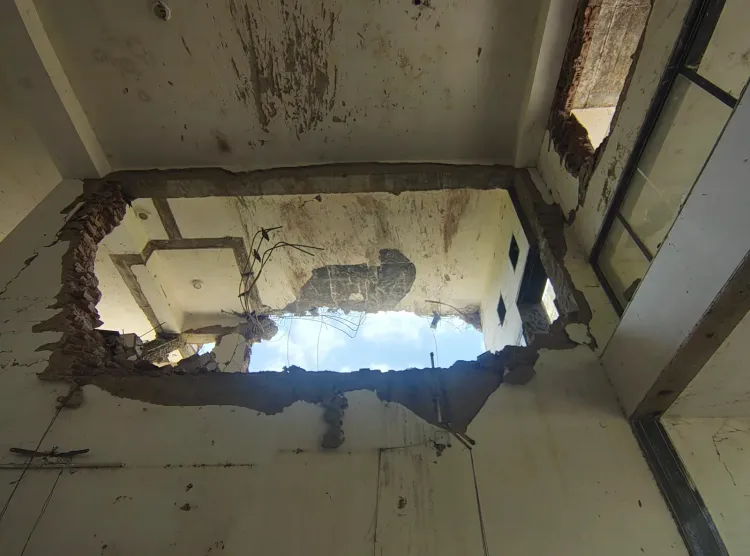
Air India Flight AI-171 crashed on 12 June last year in Ahmedabad's Meghaninagar area, striking the B.J.
Medical College hostel complex.
Of 242 on board, only one survived the aircraft impact; ground fatalities brought the overall toll to approximately 260 .
Civil Hospital Medical Superintendent Dr Rakesh Joshi activated mass-casualty protocols within minutes; injured survivors stopped arriving after roughly one hour .
254 victims were identified via DNA matching and 6 via facial identification; the handover process ran for 17–18 days .
The first DNA match was confirmed within 48 hours of the crash.
Joint Commissioner Neeraj Budgujar led crash-site security for 72 hours , with officers working shifts of 18–20 hours in hazardous conditions.
On the first anniversary of the Air India Flight AI-171 disaster, senior officials from Ahmedabad Civil Hospital and the city police have offered the most detailed public account yet of the emergency response, forensic operations, and multi-agency coordination that followed one of India's deadliest aviation tragedies. The crash, which occurred on 12 June last year, killed around 260 people in total — 241 on board and at least 19 on the ground — and triggered a round-the-clock relief operation that stretched across weeks.
How the disaster unfolded
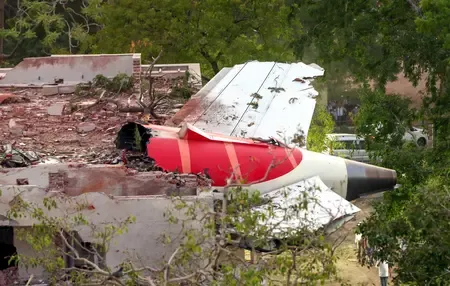
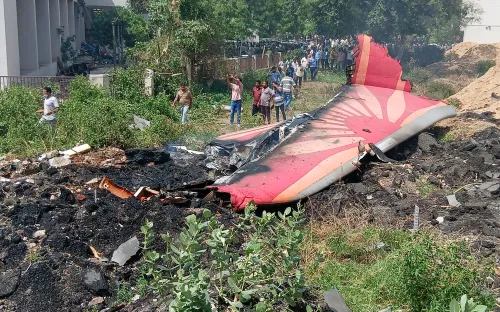
Air India Flight AI-171, a Boeing 787-8 Dreamliner bound for London, crashed shortly after take-off from Sardar Vallabhbhai Patel International Airport and struck the B.J. Medical College hostel and mess complex in the Meghaninagar area of Ahmedabad, triggering an intense fire. Of the 242 passengers and crew on board, only one survived the aircraft impact, according to officials. The overall death toll, including ground fatalities, stood at approximately 260.
Inside the hospital's mass-casualty response
Civil Hospital Medical Superintendent Dr Rakesh Joshi was mid-way through a seven-hour surgery when his Chief Security Officer called at approximately 1:40–1:45 pm to report heavy smoke near the campus. Within seconds, the call was updated: a plane had crashed. 'I handed over my surgery to Professor Jayshree and immediately changed and left,' Dr Joshi recalled.
He immediately broadcast a group alert to hospital teams, directing all staff not engaged in critical care to report to the trauma centre. Multidisciplinary units — surgeons, anaesthetists, emergency medicine specialists, neurosurgeons, and physicians — were activated within minutes to form triage teams. 'The first patient I encountered was a gardener with burn injuries who reported that the aircraft had fallen on the hostel mess,' he said. 'For the first 40–50 minutes, injured patients continued to arrive, including at least one individual who claimed to have been a passenger on the aircraft.'
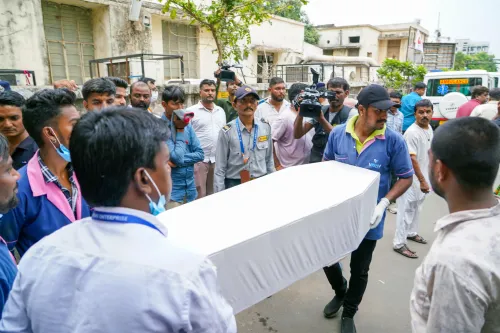
After roughly one hour, the flow of injured survivors stopped entirely. Severely burnt, unrecognisable bodies began arriving instead, making conventional identification impossible.
Weeks of DNA identification work
Under the supervision of forensic department head Dr Dharmendra Patel, continuous post-mortem examinations were conducted. DNA samples were collected, labelled, and dispatched to the Forensic Science Laboratory with crash-specific case numbers. Relatives were accommodated at B.J. Medical College and Kasauti Bhavan, where counselling was organised. Under Dr Meeta Khandelwal, DNA samples were also collected from family members to enable matching with victim remains.
The first DNA match was confirmed within 48 hours of the crash. Approximately 90–95 per cent of bodies were received at the hospital within the first three to four hours. In all, 254 victims were identified through DNA matching and six through facial identification. 'The entire identification and handover process continued for around 17 to 18 days,' Dr Joshi said.
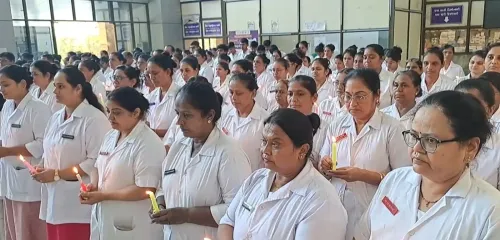
He described the early days as deeply distressing, with hundreds of relatives arriving in shock — many of them connected to the medical campus itself. 'The psychological pressure was immense, requiring continuous counselling and structured communication to manage uncertainty,' he recalled. He confirmed that no staff left duty on the day of the crash, with surgeries, post-mortems, and administrative work continuing round the clock.
Police operations: securing the crash zone
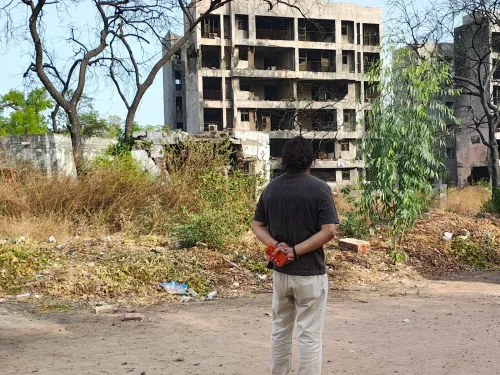
Joint Commissioner of Police (Sector 1) Neeraj Budgujar, who served as crash-site in-charge for the first 72 hours, described a parallel emergency operation focused on securing the zone and preventing unauthorised access. He said he spotted smoke rising from his office shortly after a crime conference had concluded and immediately proceeded to the site.
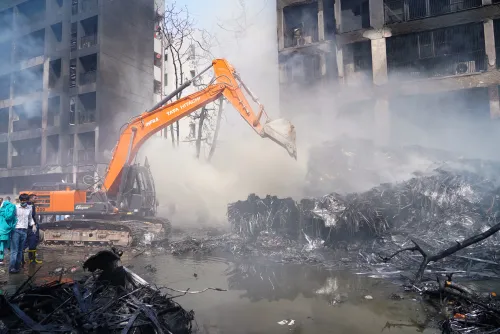
On arrival, firefighting was already underway and body evacuation had begun. His immediate priority was cordoning off the open area to protect victims' belongings — passports, jewellery, mobile phones — and to secure the aircraft's black box. CISF and Army personnel were already present when police arrived. Once bodies were moved to the civil hospital, local police established barricades and cleared civilians, including relatives searching for missing persons.
Officers worked shifts of 18 to 20 hours and used wet cloths for protection before masks were made available, given the intense heat, smoke, and hazardous air at the site. Senior officers including Vidhi Chaudhary at the control room, Jaipal Rathod, and Sharad Singhal managed mortuary and hospital coordination in parallel teams. Coordination with the Aircraft Accident Investigation Bureau (AAIB) and arrangements for VVIP visits added to the operational load. No major injuries to police personnel were reported, according to Budgujar.
A convergence of institutions
Both officials characterised the broader operation as an unprecedented convergence of emergency systems — hospitals, police, forensic experts, municipal authorities, civil aviation investigators, and support organisations — functioning without interruption across days and nights. As the first anniversary is observed, their accounts underscore not only the immediate scale of destruction but the prolonged human, administrative, and forensic effort required in its aftermath. Investigations by the AAIB into the causes of the crash are ongoing.
Point of View
Whether B.J. Medical College's hostel has been rebuilt or relocated, and whether the multi-agency coordination model has been codified for future disasters. One year on, the human story has been told — the systemic lessons have not.
NationPress
27 Sept 2026
Frequently Asked Questions
What happened in the Ahmedabad Air India plane crash?
Air India Flight AI-171, a Boeing 787-8 Dreamliner bound for London, crashed on 12 June last year shortly after take-off from Sardar Vallabhbhai Patel International Airport, striking the B.J. Medical College hostel and mess complex in Meghaninagar. Of 242 people on board, only one survived; ground fatalities brought the total death toll to approximately 260.
How were the victims of the Ahmedabad plane crash identified?
Because most bodies were severely burnt and unrecognisable, DNA sampling was the primary identification method. Samples were collected from victims and matched against DNA taken from relatives; 254 victims were identified through DNA and 6 through facial identification. The entire process took 17 to 18 days, with the first match confirmed within 48 hours of the crash.
How did Ahmedabad Civil Hospital respond to the mass-casualty event?
Medical Superintendent Dr Rakesh Joshi activated mass-casualty protocols within minutes of the crash, assembling multidisciplinary trauma teams including surgeons, anaesthetists, and neurosurgeons. Injured survivors arrived for the first 40–50 minutes before the flow stopped entirely, after which the hospital shifted to post-mortem and forensic identification work that continued round the clock for weeks.
What did police do at the Ahmedabad crash site?
Joint Commissioner of Police Neeraj Budgujar led crash-site operations for the first 72 hours, cordoning off the area, protecting victims' belongings, and securing the aircraft's black box. Officers worked 18–20 hour shifts in intense heat, smoke, and hazardous air, coordinating with CISF, Army personnel, and the Aircraft Accident Investigation Bureau (AAIB).
What is the current status of the investigation into the Air India crash?
The Aircraft Accident Investigation Bureau (AAIB) is the lead investigative authority for the crash. Officials referenced coordination with the AAIB during site operations; no final investigation report has been publicly disclosed as of the first anniversary.