AI-171 crash one year on: How Ahmedabad's K9 unit worked the wreckage
Synopsis
A year after Air India flight AI-171 killed 260 people in Ahmedabad, the quiet work of three police dogs — Ela, Electric, and Tyson — is finally being told. Over five days in extreme heat and unstable wreckage, they helped locate the remains of up to eight victims, remains that proved critical for DNA-based identification in one of India's worst aviation disasters.
Key Takeaways
Air India flight AI-171 crashed into B.J.
Medical College , Ahmedabad, on 12 June 2025 , killing 260 people in total.
Ahmedabad Police's K9 Unit was deployed to the crash site within hours, operating for five consecutive days in six-hour shifts .
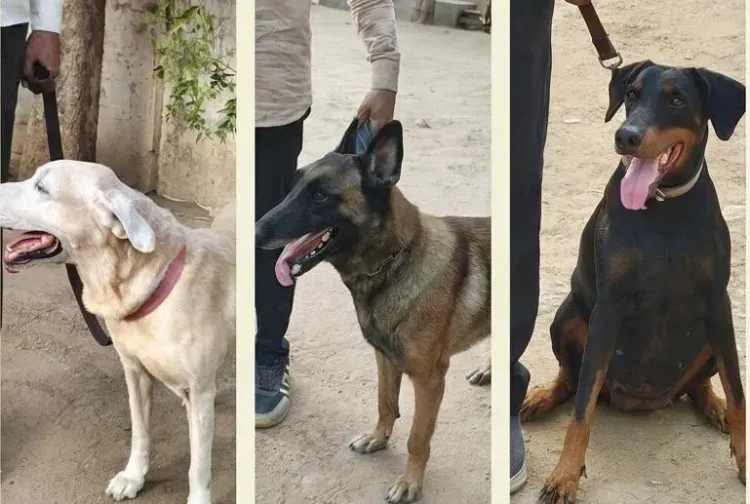
Three dogs — Ela (explosive detection, Doberman), Electric (tracker, Belgian Malinois), and Tyson (tracker, Labrador) — led the canine response.
The unit helped locate the remains of 7 to 8 victims , with finds critical for DNA-based identification .
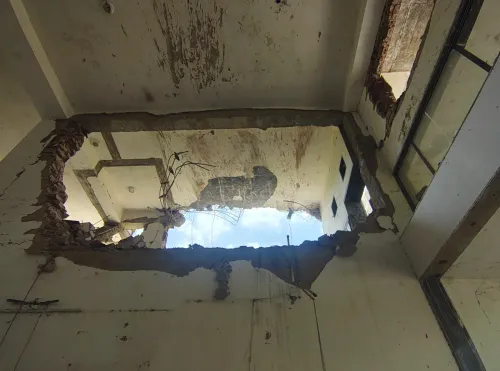
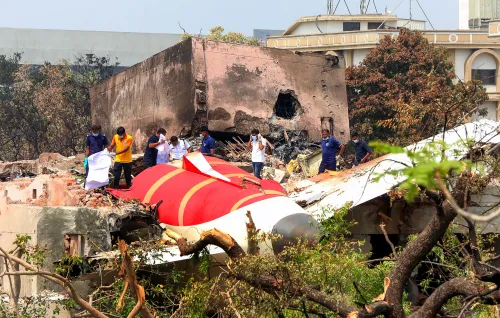
Handlers worked through fire-damaged structures, unstable debris, smoke, and extreme summer heat throughout the deployment.
Ahmedabad Police's K9 Unit has 16 fully trained dogs across narcotics, explosives, and tracking specialisations.
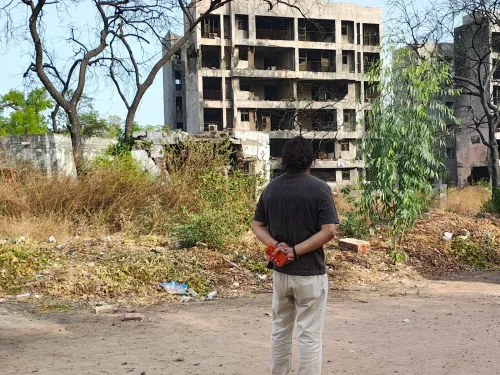
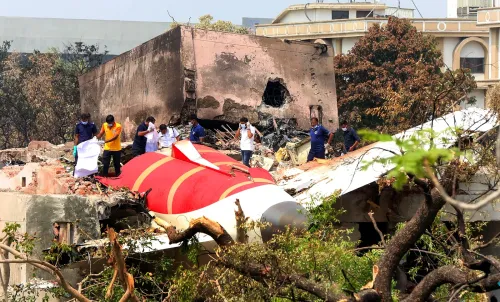
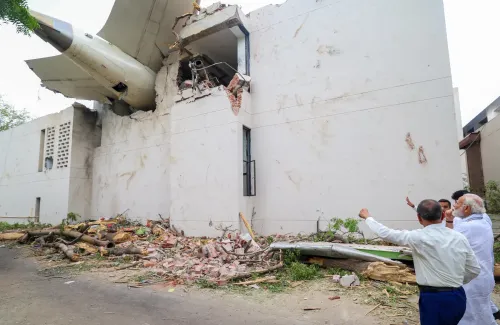
One year after Air India flight AI-171 crashed into the campus of B.J. Medical College in Ahmedabad on 12 June 2025, the role of the city police's K9 Unit in the recovery operation is coming into focus — a five-day deployment that helped locate the remains of seven to eight victims amid fire-damaged debris, lingering smoke, and extreme summer heat.
The London-bound Boeing 787-8 Dreamliner had gone down shortly after take-off from Sardar Vallabhbhai Patel International Airport (SVPIA), striking the college complex and surrounding residential buildings in the Meghaninagar area. Of the 242 people on board — 230 passengers and 12 crew members — only one passenger survived. On the ground, 19 people were killed and 67 others seriously injured, bringing the total death toll to 260.
First Response: K9 at the Scene
As firefighters, National Disaster Response Force (NDRF) teams, State Disaster Response Force (SDRF) units, and medical personnel converged on the site within minutes, Ahmedabad Police's K9 Unit was also dispatched following reports of a blast and crash. Head Constable Balvant Singh was among the first handlers to arrive, accompanied by Ela, a Doberman trained in explosive detection.
The initial deployment was precautionary — with fuel, unstable structures, and intense fire all presenting hazards, the team held on standby for hours while firefighters worked to bring the blaze under control. Around 30 people were rescued during the initial response phase, even as sections of the hostel buildings and college complex remained dangerously unstable.
Tracker Dogs Enter the Operation
Once the flames were largely contained and search operations expanded, tracker dogs were brought into the recovery effort. Head Constable Ramdevsinh Jadeja entered the zone with Electric, a Belgian Malinois trained to locate human remains, deployed to identify areas within the debris field requiring closer inspection.
Subsequently, Head Constable Mayursinh Parmar joined the operation with Tyson, a Labrador tracker dog. Tyson assisted recovery teams in locating human remains within the disaster zone, including the remains of a victim's leg — a discovery that took on particular significance given that authorities ultimately relied extensively on DNA analysis to identify those killed. Even partial remains, officials noted, could provide crucial forensic evidence.
Throughout this period, Balvant Singh and Ela continued conducting explosive-detection sweeps across the wreckage to protect recovery workers operating in the site.
Five Days in Extreme Conditions
The K9 Unit operated at the crash site for five consecutive days in six-hour rotational shifts. Handlers and dogs worked through fire-damaged structures, unstable debris, residual smoke, and intense summer temperatures — conditions that test even the most experienced working dogs, which are known to struggle in prolonged heat.
According to police personnel involved in the operation, the unit helped locate the remains of seven to eight victims. 'Those discoveries were considered significant because even small remains could provide crucial evidence for identification through DNA testing,' officials said.
The Unit Behind the Operation
Ahmedabad Police's K9 Unit currently comprises 16 fully trained dogs, including several experienced senior animals. The unit's capabilities span three broad specialisations: narcotics detection, explosive detection, and tracking and search work. Dogs are trained to detect drugs and hazardous substances, recover stolen property, locate missing persons, and assist in searches for both living and deceased individuals.
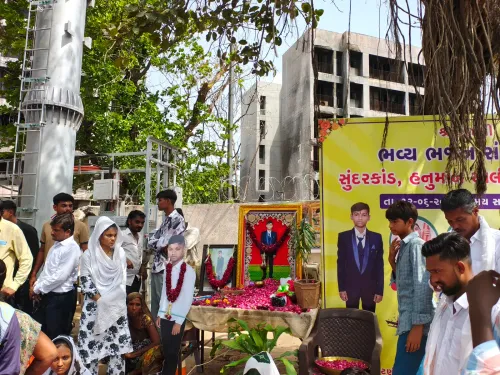
As the first anniversary of the AI-171 crash is observed, the unit's contribution stands as a reminder of how specialist animal-assisted response fits into large-scale disaster recovery — and of the scale of the tragedy that unfolded in Meghaninagar on that afternoon in June.
Point of View
With three dogs doing work that no human team could replicate in the debris field, underscores that animal-assisted recovery remains critically under-resourced and under-documented in India's NDRF framework. The reliance on DNA identification — which the dogs directly enabled by surfacing partial remains — also points to a gap: had identification infrastructure been faster, family notification timelines would have shortened considerably. A year on, the question is whether the AI-171 operation has prompted any structural upgrade to K9 capacity in India's major city police forces.
NationPress
25 Sept 2026
Frequently Asked Questions
What was the role of the K9 unit in the AI-171 crash recovery?
Ahmedabad Police's K9 Unit was deployed to the AI-171 crash site on 12 June 2025 to assist in explosive detection and victim recovery. Over five days, three dogs — Ela, Electric, and Tyson — helped locate the remains of seven to eight victims, which were critical for DNA-based identification.
How many people died in the Air India AI-171 crash?
A total of 260 people died — 241 of the 242 on board (230 passengers and 12 crew, with one passenger surviving) and 19 people on the ground. Another 67 people on the ground were seriously injured.
Which dogs were deployed at the AI-171 crash site?
Three dogs from the Ahmedabad Police K9 Unit were deployed: Ela, a Doberman used for explosive detection; Electric, a Belgian Malinois tracker; and Tyson, a Labrador tracker. Each was handled by a dedicated head constable.
Why was DNA testing needed to identify AI-171 victims?
The crash triggered a fierce fire that complicated identification efforts, and many victims could only be identified through forensic examination. Authorities relied extensively on DNA analysis, making the recovery of even partial human remains — assisted by the tracker dogs — critically important.
How large is the Ahmedabad Police K9 Unit?
The unit currently has 16 fully trained dogs, including experienced senior animals. Its capabilities cover three specialisations: narcotics detection, explosive detection, and tracking and search work.