Revolutionizing Tamil Nadu Campaigns: AI Holograms Captivate Voters
Synopsis
Discover how AI holograms are transforming political campaigns in Tamil Nadu as Vijay's virtual avatar captivates crowds, blending technology with voter engagement ahead of the Assembly elections.
Key Takeaways
AI holograms are revolutionizing political campaigns in Tamil Nadu.
Vijay's holographic avatar has gained viral fame on social media.
Political parties are increasingly adopting digital tools to engage voters.
This technology enhances voter interactions, especially with younger audiences.
Challenges exist, but innovation continues to shape the future of campaigning.
Chennai, April 14 (NationPress) The political campaign scene in Tamil Nadu is undergoing a rapid transformation, with AI-driven holograms becoming a remarkable innovation as the Assembly elections approach.
A recent initiative in Kumbakonam showcased how technology is bridging the gap created by the absence of prominent campaign figures, effectively capturing the attention of voters.
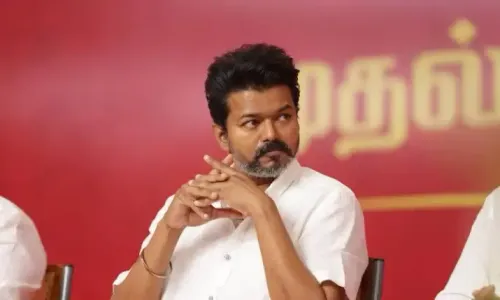
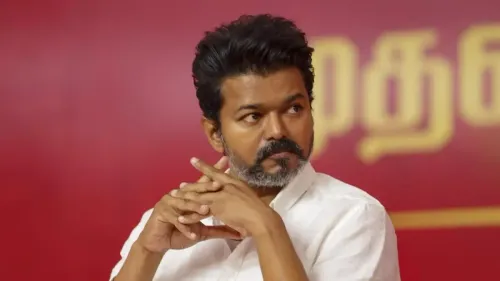
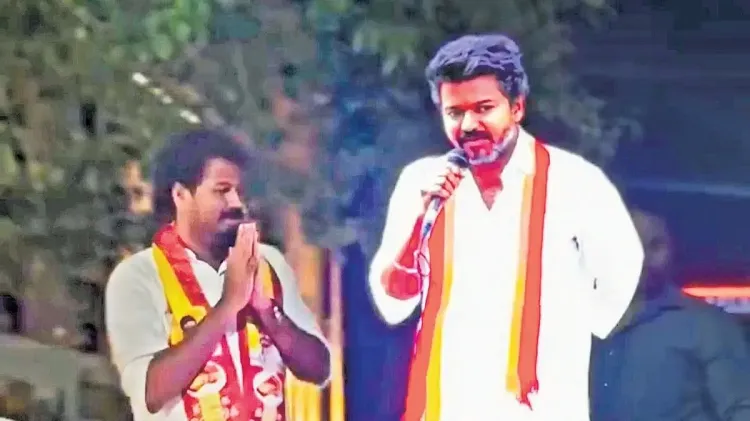
At the forefront of this movement is a holographic representation of actor and Tamilaga Vettri Kazhagam (TVK) President Vijay, which has gained immense popularity on social media. This hologram, displayed on a mobile platform, offered a lifelike visual of Vijay engaging with voters, complete with synchronized speech and movements, causing many attendees to momentarily feel as though he was actually there.
This project has generated considerable interest among political factions. The company that developed this technology has reported a surge in inquiries from candidates across various parties, as well as requests to create holographic representations of revered political figures like M. Karunanidhi and J. Jayalalithaa, highlighting the emotional resonance such innovations can have with voters.
The rising interest reflects a broader evolution in campaign tactics, where digital outreach is increasingly supplementing traditional strategies.
Even in states such as Andhra Pradesh and Karnataka, where elections are not imminent, political leaders are investigating the benefits of AI-enhanced tools to boost their visibility and engage with constituents.
The service providers have reported receiving an influx of inquiries from candidates of all affiliations, especially with just ten days remaining before the Assembly elections.
While holographic campaigning isn't entirely novel—Prime Minister Narendra Modi famously utilized this technology during the 2014 general elections—what distinguishes the current trend is the incorporation of artificial intelligence.
Advanced lip-syncing, realistic movements, and mobility have rendered these holographic displays more engaging and suitable for rural environments.
Political analysts emphasize that these innovations signify the increasing penetration of advanced technology in grassroots politics.
The concept of a 'virtual leader' addressing crowds from a moving vehicle adds a novel element to the campaign experience, particularly resonating with younger voters.
A small team of six, comprising young engineers, orchestrated this campaign using 3D hologram fan display systems to produce sharper and more dynamic visuals than conventional projection techniques.
Despite its effectiveness, the technology faces hurdles, such as ensuring stable projection quality on moving vehicles and addressing environmental challenges, although companies are actively working to enhance their systems.
With costs starting at approximately Rs 50,000 per day, holographic campaigning is gradually carving out a distinct niche as a cutting-edge, impactful facet of India's evolving electoral strategies.
Point of View
Political figures are becoming more accessible, particularly to younger audiences, while preserving the emotional connection that traditional campaigning fosters.
NationPress
22 Sept 2026
Frequently Asked Questions
What are AI holograms in political campaigns?
AI holograms are realistic digital projections of political figures that facilitate engagement with voters, often used to create an immersive campaign experience.
How do these holograms work?
The holograms utilize advanced technology to synchronize speech and movements, creating a lifelike representation of the political figure addressing the audience.
What impact do AI holograms have on voter engagement?
AI holograms enhance voter engagement by providing a novel and interactive way for candidates to connect with the electorate, particularly among younger demographics.
Are there any challenges associated with holographic campaigning?
Yes, challenges include maintaining projection quality on moving vehicles and managing environmental factors that may disrupt the visual experience.
Why is this technology gaining popularity in Tamil Nadu?
The technology is gaining popularity due to its ability to bridge the gap created by the physical absence of prominent campaigners and its emotional resonance with voters.