How did Ajit Dada's departure impact Maharashtra's political scene?
Synopsis
The loss of Ajit Dada reverberates through Maharashtra's political landscape. His pragmatic approach and commitment to the common man set him apart. With tributes pouring in, his absence leaves a profound void. Explore the implications of his exit and the political shifts it triggers in the region.
Key Takeaways
Ajit Dada was a transformative leader in Maharashtra.
His political approach was characterized by pragmatism and empathy.
His passing has created a significant void in leadership.
PM Modi acknowledged his contributions during a tribute.
Allegations against him were dismissed as unsubstantiated by his supporters.
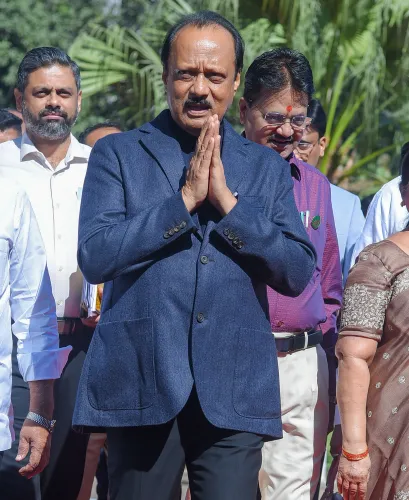
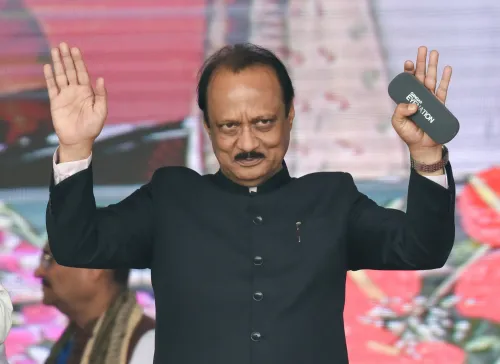
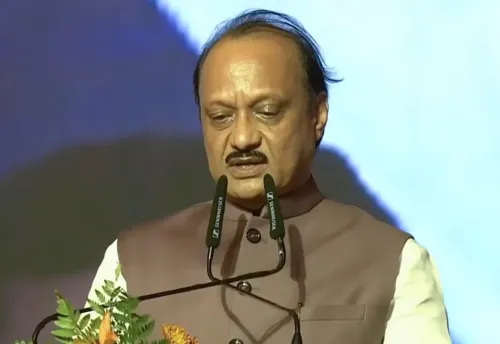
Mumbai, Jan 30 (NationPress) In its editorial featured in Saamana, the Shiv Sena Uddhav Balasaheb Thackeray (UBT) expressed that the exit of former Deputy Chief Minister Ajit Pawar will certainly alter the dynamics of Maharashtra's political environment.
"While his powerful supporters will be on the lookout for a new leader, they will inevitably never encounter another Dada, who has departed this world; his funeral rites were performed, and his remains were laid to rest in Baramati. His passing has profoundly impacted many lives — a natural reaction to the loss of a genuine people's leader," the editorial remarked.
It described Ajit Dada's political approach as pragmatic, marked by wisdom and empathy. "Unlike Sharad Pawar's party, which is composed of the influential and elite (watanadars), Dada navigated the intricate political landscape by uniting these powerful entities and guaranteeing their success. However, he had the remarkable ability to leverage that influence for the benefit of the everyday citizen," the Thackeray faction stated.
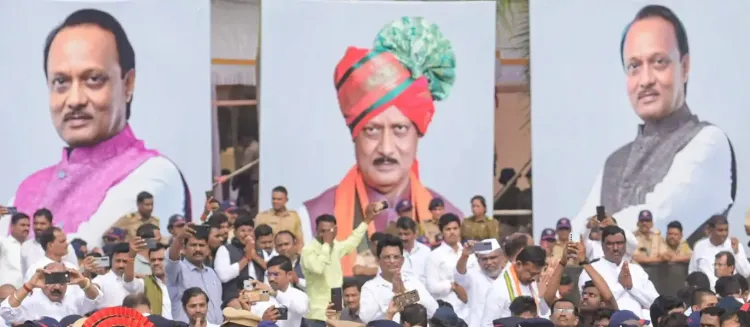
The editorial continued, "Ajit Dada has returned to the cosmos far too soon. While many who contribute little to society remain, the Almighty chose to take Maharashtra's cherished leader, leaving the state shrouded in sorrow. Thousands from all over Maharashtra gathered in Baramati to pay their last respects to him."
"Prime Minister Narendra Modi, who previously accused Ajit Dada of being involved in a Rs 70,000 crore irrigation scandal, expressed in his tribute that Dada's premature passing is a loss that cannot be mended. He acknowledged that Dada's legacy will forever be tied to his substantial contributions towards Maharashtra's progress and the cooperative sector. PM Modi designated Home Minister Amit Shah as his special representative for the funeral, where Dada was honored with full state respect," the editorial noted.
The article pointed out that the irrigation scam accusations made by PM Modi and Chief Minister Devendra Fadnavis were entirely baseless. They could not substantiate any claims, yet they severely tarnished his reputation. The editorial suggested that had Dada not been ensnared by these fabrications, he might not have opted to forsake his "home" to switch allegiances.
“Even after aligning with the BJP, Ajit Dada never compromised his principles. He did not frequently travel to Delhi, nor did he regard Modi, Shah, or Fadnavis as his ultimate authority. He rejected the BJP’s divisive agenda and avoided engaging in divisive rhetoric involving 'Hindu-Muslim', 'India-Pakistan', or slogans like 'Batenge toh Katenge'," the editorial highlighted.
"During the Municipal Corporation elections, he disregarded the BJP’s preferences and forged a partnership with Sharad Pawar's party. He courageously showcased evidence of how Pune and Pimpri-Chinchwad were exploited during the BJP's rule. When threatened that the irrigation scam investigations were still ongoing, he retorted strongly, asserting that he possessed files on the BJP's own irrigation frauds, specifically referencing a project in Purandar where tender amounts were allegedly inflated to redirect funds to party coffers," the party alleged in the editorial.
According to the editorial, Dada adhered to democratic principles and frequently voiced his concern over the absence of a Leader of Opposition in both Legislative Houses. He was an exceptional figure who would invite opposition leaders, such as Eknath Khadse, to official discussions to incorporate their insights into financial legislations. His generosity was well-known. He provided a seat from his own party’s allocation on the State Cooperative Bank board to opposition member Pandurang Phundkar. As Finance Minister, he demonstrated his largesse by allocating resources to opposition leaders and MLAs. He was witty, playful, yet sincere, often addressing the challenges of the underprivileged immediately, the editorial noted.
"Although he never endured the trials of imprisonment or physical hardship in politics, he capitalized on the opportunities that power offered to transform himself into a genuinely people-centric leader," the editorial concluded.
Point of View
The departure of Ajit Dada marks a significant chapter in Maharashtra's political narrative. His balanced approach and commitment to serving the public underscore the need for integrity in politics. As we reflect on his contributions, the focus must remain on fostering unity and addressing the challenges ahead.
NationPress
20 Sept 2026
Frequently Asked Questions
What was Ajit Dada known for?
Ajit Dada was known for his pragmatic political approach and dedication to the welfare of the common man.
How did his death impact Maharashtra's political landscape?
His demise has led to a significant shift in the political dynamics, leaving many of his followers searching for new leadership.
What was the controversy surrounding Ajit Dada?
Ajit Dada faced allegations of involvement in a major irrigation scam, which were deemed unfounded by his supporters.
How did PM Modi respond to Ajit Dada's passing?
PM Modi referred to Dada's death as an irreparable loss and acknowledged his contributions to Maharashtra's development.
What legacy did Ajit Dada leave behind?
Dada's legacy includes his commitment to democratic norms and his efforts to bridge gaps between political factions.