What Led to the Reunion of NCP Factions, According to Ajit Pawar?
Synopsis
In a revealing interview, Deputy Chief Minister Ajit Pawar sheds light on the unexpected alliance between the two factions of the NCP. With the upcoming Municipal Corporation elections looming, he explains how strategic vote arithmetic drove the reconciliation, aiming to unify their voter base against the BJP. Discover the political implications behind this significant move.
Key Takeaways
Strategic alliance formed between NCP factions to consolidate votes.
Vote arithmetic plays a crucial role in election strategies.
Ajit Pawar's approach is flexible regarding candidate nominations.
Political landscape in Maharashtra remains volatile following the 2023 NCP split.
Local elections require unique strategies that may diverge from state-level alliances.
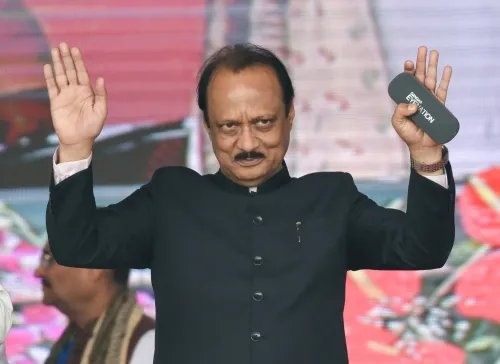
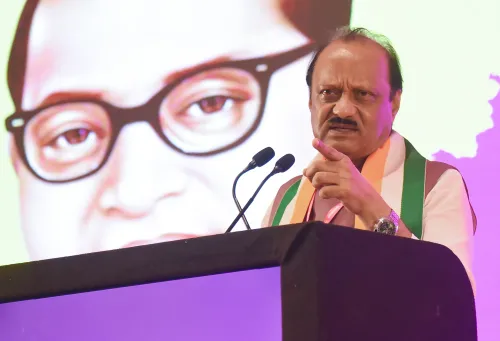
Pune, Jan 12 (NationPress) In the midst of intense campaigning for the forthcoming Municipal Corporation elections in Maharashtra, Deputy Chief Minister Ajit Pawar clarified the motivations behind the surprising alliance between the two factions of the Nationalist Congress Party (NCP).
During an interview with a local TV station, Pawar detailed the strategic reasoning for uniting with the Sharad Pawar-led faction in Pune and Pimpri-Chinchwad, emphasizing the essential objective of preventing a fragmentation of their shared vote bank.
He mentioned that he initially approached Eknath Shinde, the Deputy Chief Minister, to explore a potential collaboration between their respective factions, given that the Bharatiya Janata Party (BJP) intended to run independently in the Pune elections.
"I inquired with Eknath Shinde about the possibility of contesting together, considering that the BJP was going solo. At that moment, he (Eknath Shinde) refused, stating his discussions with the BJP were still ongoing," Deputy CM Pawar remarked.
Pawar noted that Shinde reached out just before the 'AB' form (candidate nomination) deadline, proposing an alliance after his negotiations with the BJP fell through.
At that point, however, Deputy CM Pawar declined, having already announced his candidates, suggesting a last-minute change would incite internal dissent.
After failing to coordinate with Shinde's Shiv Sena in Pune, the two factions of the NCP, led by Ajit Pawar and Sharad Pawar, began discussions.
Pawar stressed that "arithmetic" was crucial for the reconciliation in this local body election.
He highlighted that if the factions contested separately, the division of loyal NCP supporters would ultimately benefit the BJP.
"In the end, the total number of seats secured is what counts. If these votes unite, our strength amplifies," he explained.
Despite speculation that Deputy CM Ajit Pawar insisted all candidates run under his 'Clock' symbol, he clarified his adaptable stance.
In regions where the Sharad Pawar faction held more influence, Ajit Pawar agreed to allow their candidates to take the lead.
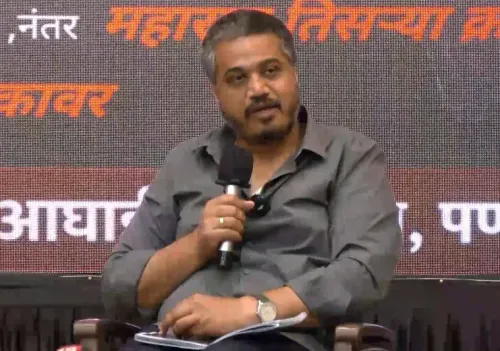
He confirmed that high-level discussions occurred between himself, NCP-SP MP Amol Kolhe, and NCP MLA Rohit Pawar to finalize the seat-sharing agreement.
The political landscape in Maharashtra has been unstable since the 2023 split within the NCP, which saw Ajit Pawar joining the Mahayuti government in alliance with the BJP and Eknath Shinde's Shiv Sena.
Ajit Pawar's faction aligns with the BJP at the state level, yet local elections often witness unique "local adjustments".
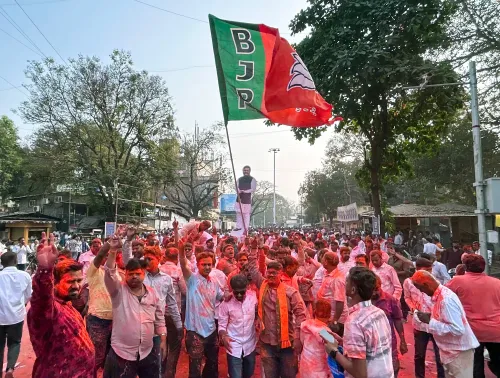
In this case, the BJP's choice to contest the Pune Municipal Corporation and Pimpri-Chinchwad Municipal Corporation elections independently compelled other political stakeholders to reassess their strategies.
Political analysts suggest that the reunification of the "Two NCPs" for the Pune local elections signifies a crucial tactical shift, indicating that regional supremacy is prioritized by both factions over broader state-level alliances.
Point of View
It is essential to recognize the significance of Ajit Pawar's insights into the NCP factions' reunion. Amidst a dynamically shifting political landscape, this reconciliation underscores the critical nature of voter unity, particularly against the backdrop of the BJP's independent campaign. It is a testament to the evolving nature of alliances in Indian politics where regional strategies often take precedence over broader party affiliations.
NationPress
18 Oct 2026
Frequently Asked Questions
Why did Ajit Pawar seek an alliance with Sharad Pawar's faction?
Ajit Pawar aimed to prevent vote splitting between the two NCP factions, which could benefit the BJP in the elections.
What was the initial response of Eknath Shinde to the proposed alliance?
Eknath Shinde initially declined the alliance, as he was still in discussions with the BJP about their election strategy.
What does Ajit Pawar mean by 'arithmetic' in the context of the elections?
Ajit Pawar refers to the importance of consolidating votes to enhance their chances of winning seats, rather than competing separately.
How did the political landscape change in Maharashtra after the NCP split?
The split led to Ajit Pawar aligning with the BJP and Eknath Shinde's Shiv Sena, creating a need for strategic adjustments among other political players.
What implications does this alliance have for local elections?
The alliance is expected to strengthen the NCP's position in local elections by uniting their voter base against the BJP.