Akhilesh flags Ayodhya vendor death during eviction drive
Synopsis
Samajwadi Party president Akhilesh Yadav has raised the death of Bihar migrant Deepak Kumar, a water-cart vendor who allegedly died after being chased by enforcement officials during an anti-encroachment drive in Ayodhya, demanding accountability from the BJP state government.
Key Takeaways
Deepak Kumar , a Bihar resident selling water from a cart in Ayodhya , died during an anti-encroachment drive, according to Samajwadi Party president Akhilesh Yadav's post on 2 August 2026 .
Kumar's wife alleges enforcement officials chased him with a stick, causing him to fall and die.
Local police stated they were not informed of the incident and that a post-mortem would have been conducted had they been notified — raising procedural concerns.
Yadav called the BJP-led state administration 'insensitive and inhuman' and demanded action against those responsible.
Ayodhya has seen repeated clearance drives tied to urban redevelopment linked to the Ram Temple precinct, affecting informal and migrant vendors.
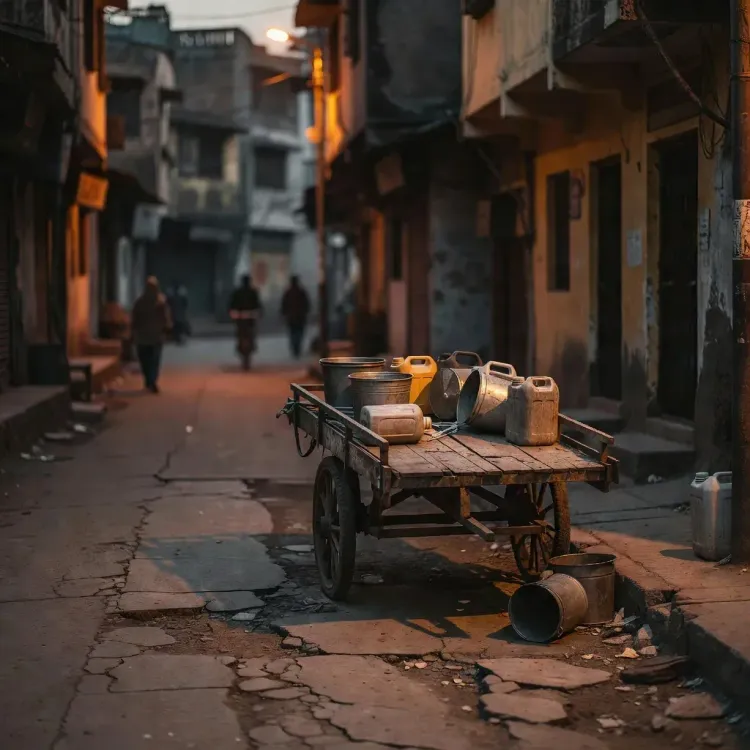
A water-seller from Bihar is dead, and his wife says enforcement officials chased him with sticks. Samajwadi Party president Akhilesh Yadav raised the case of Deepak Kumar — a migrant vendor who sold water from a cart in Ayodhya — on Sunday, 2 August 2026, alleging that the man died after being pursued by enforcement personnel during an anti-encroachment drive, and demanding action against those responsible.
Yadav quoted the widow's account directly: that enforcement officials 'dandaa lekar dauraaya tha' ('chased him wielding a stick'), after which Kumar fell and died. The police, Yadav noted, have said they were never informed of the incident — and that had they been, a post-mortem would have been conducted. The absence of a post-mortem is now at the centre of the controversy.
A migrant worker, a cart, and a clearance drive in Ayodhya
Deepak Kumar was a resident of Bihar working as a street vendor in Ayodhya — one of thousands of migrant workers who depend on informal trade in the city. Ayodhya has been the site of repeated anti-encroachment operations tied to large-scale urban redevelopment and pilgrimage infrastructure work linked to the Ram Temple precinct. Clearance drives targeting street vendors and cart-sellers have accompanied this redevelopment push.
His wife's allegation — that enforcement personnel chased her husband, causing him to fall and die — remains unverified and is contested by the local police, who say they received no information about the incident. The gap between what the family claims happened and what authorities say they know is precisely what Yadav is pressing on.
Yadav's charge: 'insensitive and inhuman' administration under BJP
Yadav did not stop at narrating the incident. He used it to make a broader indictment: 'BJP raaj mein shaasan-prashaasan behad samvedanheen aur amaanaveeya ho gaya hai' — 'Under BJP rule, governance and administration have become extremely insensitive and inhuman.' He closed with a demand: 'Doshiyon ke viruddh karravaai ho!' — 'Action must be taken against the guilty.'
The framing is a well-worn but potent opposition tactic in Uttar Pradesh: when enforcement operations result in civilian deaths or injuries, the Samajwadi Party has consistently highlighted them to argue that the BJP state government prioritises development optics over the lives of the poor — particularly migrant and informal workers who have no political constituency to protect them.
The post-mortem question and what comes next
The police's own admission — that a post-mortem would have been conducted had they been informed — makes the procedural failure hard to dismiss. Whether an independent inquiry is ordered by the Ayodhya district administration or the Uttar Pradesh government will be the first test of how seriously the state treats the allegation. Any FIR against enforcement personnel, or its conspicuous absence, will be watched closely.
For the thousands of migrant street vendors working in Ayodhya's rapidly changing urban landscape, Deepak Kumar's death is a reminder that redevelopment has human costs that rarely make it into the official narrative of progress.
Point of View
Human-scale grievance at a moment when Ayodhya's redevelopment is a flagship BJP narrative. Yadav's intervention follows a recognisable opposition playbook: use individual tragedies to challenge the state's claim of humane governance. The police's own admission about the missing post-mortem is the most politically damaging detail, because it suggests institutional indifference rather than a disputed account. How the Yogi Adityanath government responds — or does not — will shape whether this remains a social media moment or becomes a sustained accountability story.
NationPress
16 Sept 2026
Frequently Asked Questions
Who was Deepak Kumar and how did he die in Ayodhya?
Deepak Kumar was a migrant from Bihar who sold water from a cart in Ayodhya. According to his wife's account cited by Akhilesh Yadav, he died after enforcement officials chased him with a stick during an anti-encroachment drive, causing him to fall. The exact circumstances are disputed and unverified.
Why is Akhilesh Yadav raising the Ayodhya vendor death case?
Akhilesh Yadav, as Samajwadi Party president, raised the case to criticise the BJP-led Uttar Pradesh government, calling its administration 'insensitive and inhuman' and demanding action against those responsible for the death.
Was a post-mortem conducted on Deepak Kumar?
No. Uttar Pradesh police stated they were not informed of the incident, and said a post-mortem would have been conducted had they been notified — a procedural gap that has drawn political scrutiny.
What is the anti-encroachment drive in Ayodhya about?
Ayodhya has seen repeated clearance drives targeting street vendors and informal traders as part of large-scale urban redevelopment and pilgrimage infrastructure work linked to the Ram Temple precinct under the BJP state government.
What action has been demanded in the Ayodhya vendor death case?
Akhilesh Yadav has publicly demanded that action be taken against those responsible. No official inquiry or FIR has been confirmed as of the time of his post.