Akhilesh blames BJP corruption for UP city flooding
Synopsis
Samajwadi Party president Akhilesh Yadav blamed BJP corruption for drainage collapse across UP cities including Lucknow, Gorakhpur, Varanasi and Prayagraj, and pledged river desilting if voted to power ahead of the 2027 assembly elections.
Key Takeaways
Akhilesh Yadav attributed urban waterlogging in Uttar Pradesh to BJP-era corruption destroying drainage infrastructure, not to excessive rainfall.
He specifically named Lucknow, Gorakhpur, Varanasi and Prayagraj — all designated Smart Cities Mission cities — as badly affected.
Yadav argued river siltation from pollution and nullah discharge has severely impaired natural river flow across UP.
The Samajwadi Party pledged to dredge and deepen rivers if it returns to power, restoring aviral (unobstructed) natural flow.
Yadav warned of disease spread from stagnant water and called for urgent attention to communities dependent on riverine economies .
He closed with a political slogan: 'भाजपा जाएगी, नदी जीवन पाएगी' — framing river restoration as an electoral promise ahead of the 2027 UP assembly elections .
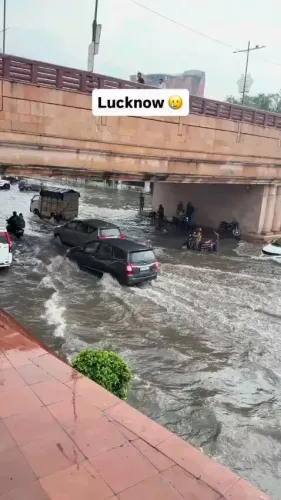
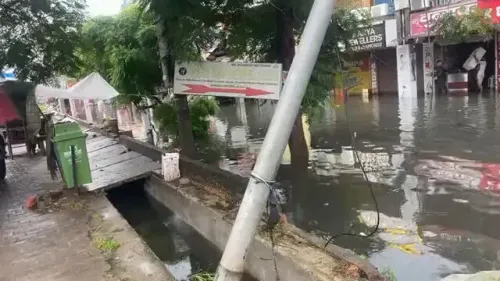
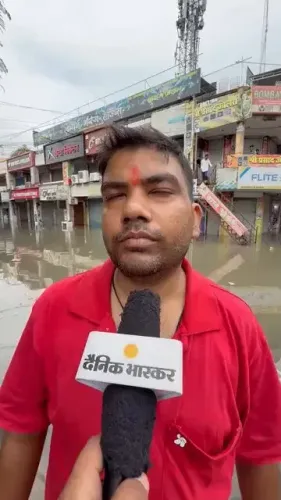
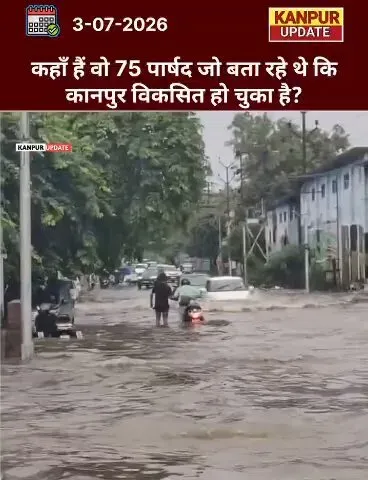
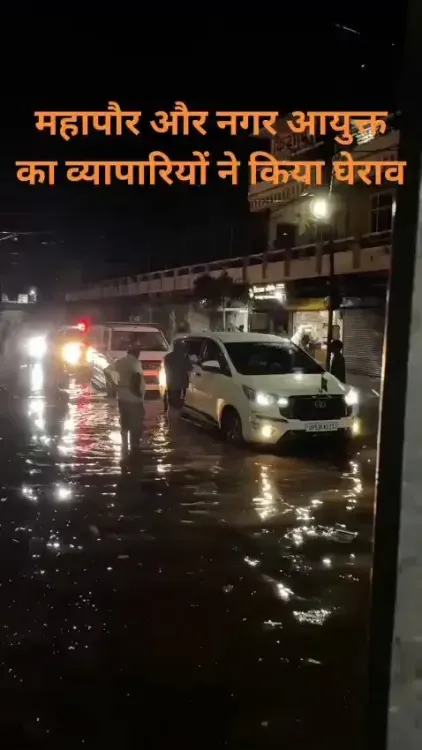
As monsoon floodwaters swamp the streets of Lucknow, Gorakhpur, Varanasi and Prayagraj, Samajwadi Party president Akhilesh Yadav has fired a pointed broadside at the BJP state government — arguing that clogged drains, silted rivers, and systemic corruption are the real culprits behind Uttar Pradesh's recurring urban floods, not heavy rainfall alone.
Posting on X on Sunday, 27 September 2026, Yadav wrote: 'शहरों में जलभराव का मुख्य कारण अधिक वर्षा नहीं बल्कि भाजपाई भ्रष्टाचार की वजह से जलनिकासी की व्यवस्था का फ़ेल हो जाना है' — 'The primary reason for waterlogging in cities is not heavy rain but the failure of drainage systems caused by BJP corruption.' From street-level drains to major nullahs, he said, blockages leave floodwater with nowhere to go.
Silted rivers and a failing drainage chain
Yadav went further than routine monsoon complaint. He traced the problem upstream — literally — arguing that pollution discharge and nullah outflows into rivers have allowed silt to accumulate so heavily that natural flow is severely obstructed. Temporary embankments thrown up against a swollen river, he said, are no lasting answer: 'बंधा बनाकर उफनती नदी के पानी को रोकना कोई कारगर उपाय नहीं है' — 'Constructing an embankment to hold back a flooding river is no effective solution.'
The critique carries ecological weight as well as political bite. When rivers slow and silt up, he noted, the aquatic life and self-cleansing ecosystem that once kept rivers naturally pure — nirmal — collapses. Riverine communities and those whose livelihoods depend on river economies are, he said, 'badly affected.'
SP's river-desilting pledge for UP
Yadav used the moment to lay out a concrete counter-promise. If the Samajwadi Party returns to power, he said, it will dredge rivers to make them deeper so they flow aviral — 'continuously and without obstruction' — and allow their ecosystems to restore river health naturally. The pledge is specific enough to function as an early manifesto plank ahead of the 2027 Uttar Pradesh assembly elections.
The four cities he named — Lucknow (the state capital), Gorakhpur, Varanasi and Prayagraj — are not chosen at random. All four were included in the Smart Cities Mission launched in 2015, which earmarked funds specifically for urban infrastructure upgrades including drainage. That the mission's flagship UP cities still face monsoon flooding makes the political point almost without comment.
'BJP will go; the rivers will live'
Yadav closed with a line designed to land: 'भाजपा जाएगी, नदी जीवन पाएगी' — 'The BJP will go; the rivers will find life.' The rhetorical economy is deliberate. It fuses governance failure, environmental neglect, and electoral consequence into a single couplet. He also landed a sardonic jab: it seems, he wrote, that even the BJP government's 'tears of shame' are flowing and adding to the floodwaters.
The broader pattern is familiar in UP politics — opposition parties have linked monsoon flooding and river siltation to alleged governance shortfalls for multiple assembly terms. What shifts the register here is the specificity: named cities, a named infrastructure mission, a named ecological remedy, and a countdown to 2027. This is less a complaint and more an opening argument.
Point of View
Not just a seasonal grievance — the naming of Smart Cities Mission towns turns a central government flagship scheme into evidence of BJP failure at the state level. By pairing the corruption charge with a concrete ecological remedy (river desilting), he attempts to shift the SP brand from pure opposition to credible governance alternative. The 'BJP will go; the rivers will live' couplet is designed for amplification, embedding an environmental identity into electoral messaging at a moment when river health and urban flooding resonate deeply with voters along the Ganga belt.
NationPress
27 Sept 2026
Frequently Asked Questions
Why is Akhilesh Yadav blaming BJP for UP city flooding?
Akhilesh Yadav argues that corruption under the BJP state government has led to the collapse of drainage infrastructure — clogged drains and silted rivers — rather than unusually heavy rainfall being the primary cause of urban waterlogging across cities like Lucknow, Gorakhpur, Varanasi and Prayagraj.
What is the Samajwadi Party's plan for UP rivers?
Akhilesh Yadav has pledged that a future SP government will dredge and deepen rivers to restore unobstructed natural flow, allowing river ecosystems to self-cleanse and reviving the livelihoods of communities dependent on riverine economies.
Which UP cities have faced waterlogging in 2026?
Yadav specifically named Lucknow, Gorakhpur, Varanasi and Prayagraj as cities where drainage failures have caused severe waterlogging, all of which were included in the Smart Cities Mission launched in 2015.
What is the Smart Cities Mission and why is it relevant here?
The Smart Cities Mission, launched in 2015, included UP cities such as Gorakhpur, Varanasi and Prayagraj for urban infrastructure upgrades including drainage. Akhilesh Yadav's critique implicitly uses their continued flooding as evidence that the mission has failed to deliver on the ground.
What did Akhilesh Yadav say about river siltation?
He argued that pollution discharge and nullah outflows into rivers have caused heavy silt accumulation, severely obstructing natural river flow, and that building embankments against flooding rivers is not an effective long-term solution — dredging and deepening rivers is.