Akhilesh Yadav marks Goa Revolution Day, recalls Lohia's 1946 satyagraha
Synopsis
Samajwadi Party president Akhilesh Yadav marked Goa Revolution Day on 18 June 2026 by honouring Ram Manohar Lohia's 1946 civil-disobedience satyagraha against Portuguese rule in Goa, framing it as the foundational lesson in socialist resistance.
Key Takeaways
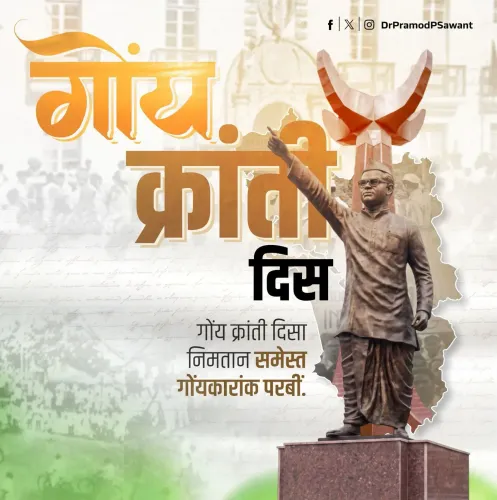
Akhilesh Yadav posted a tribute on 18 June 2026 marking Goa Kranti Divas (Goa Revolution Day).
Ram Manohar Lohia launched a non-violent civil-disobedience campaign in Goa on 18 June 1946 against Portuguese colonial rule.
The satyagraha is regarded as a foundational moment in Goa 's organised freedom struggle, predating liberation by 15 years .
The Samajwadi Party , founded in 1992 , explicitly roots its ideology in Lohiaite socialism combining anti-colonial and social-justice demands.
Yadav framed the 1946 act as a lesson in fighting for rights 'even in front of a raised gun' — a phrase linking historical resistance to the party's contemporary identity.
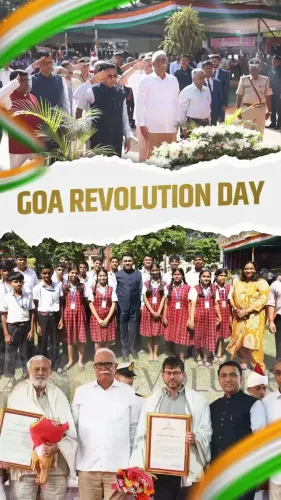
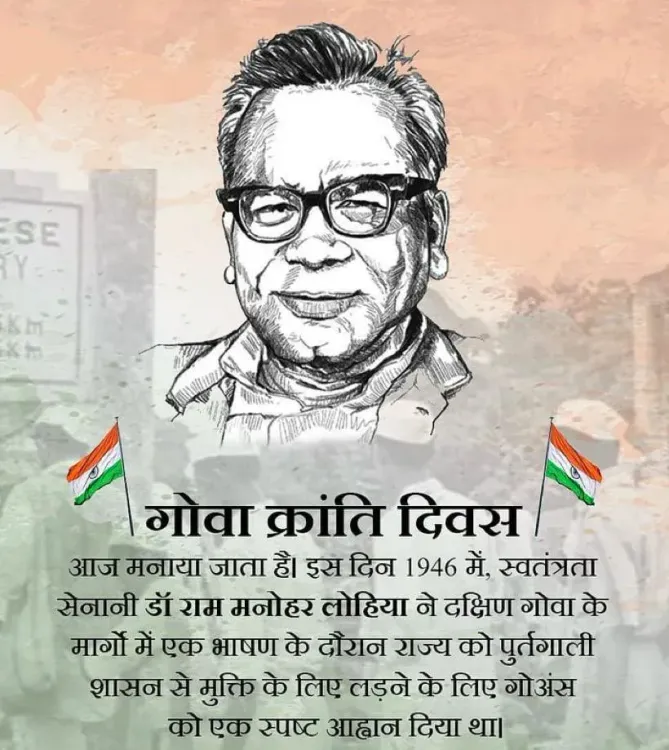
Samajwadi Party president Akhilesh Yadav on Thursday, 18 June 2026 paid tribute to socialist icon Ram Manohar Lohia on Goa Revolution Day, invoking the latter's historic civil-disobedience campaign launched on this date in 1946 as a foundational lesson in fighting for rights against overwhelming odds.
In his post on X, Yadav wrote that socialists learned from the revered Lohia the lesson of fighting for their rights even in the face of a cocked gun — 'तनी हुई बंदूक के सामने अपने हक़ की लड़ाई' ('fighting for one's rights in front of a raised gun') — referring to Lohia's act of launching a satyagraha in Goa on 18 June 1946 to ignite the flame of freedom through civil disobedience against Portuguese colonial rule.
Context
The date 18 June is observed as Goa Revolution Day (Goa Kranti Divas) in memory of Ram Manohar Lohia's non-violent protest that year. Lohia, then a prominent figure in the Indian National Congress's socialist wing, entered Goa — still under Portuguese administration — and addressed a public gathering in defiance of colonial prohibitions, an act that led to his arrest and is widely regarded as a catalyst for the territory's organised freedom movement.
Goa remained under Portuguese rule for another 15 years, finally being liberated on 19 December 1961 through Operation Vijay. The 1946 satyagraha is nonetheless celebrated as the moment when mass civil resistance in the territory was first publicly and boldly articulated.
Policy Backdrop
The Samajwadi Party, founded in 1992, explicitly traces its ideological lineage to Lohiaite socialism, which combined anti-colonial struggle with demands for social equality, caste justice, and economic redistribution. Ram Manohar Lohia (1910–1967) remains the party's principal intellectual reference point, and his anniversaries and associated historical dates are regularly commemorated in its official communication.
Yadav's invocation of the phrase 'fighting for rights in front of a raised gun' carries a dual resonance: it honours a specific historical act while simultaneously framing the contemporary Samajwadi Party's political identity as one of principled resistance — a recurring motif in the party's messaging, particularly in Uttar Pradesh, where it is the principal opposition force.
Stakeholders and Impact
The tribute is directed at socialist activists, party workers, and the broader constituency that identifies with the Lohiaite tradition across Uttar Pradesh, Goa, and other states. Descendants of Goa's freedom-movement participants and historians of the anti-colonial struggle are also among those for whom this date holds significance.
For the Samajwadi Party, commemorating such dates reinforces its claim to a distinct political inheritance separate from both the BJP and the Congress — positioning the party as the custodian of a radical, grassroots socialist tradition that predates independence itself.
What's Next
Political observers will watch whether the Samajwadi Party organises ground-level events around Goa Kranti Divas in subsequent years, particularly as the party builds its national profile ahead of future electoral cycles. Annual commemorations of Lohia-linked dates have historically served as occasions for the party to consolidate cadre, articulate policy positions on social justice, and signal ideological continuity to its core voter base.
Any references to this date during Uttar Pradesh assembly sessions or national-level socialist conclaves will be worth tracking as indicators of how the party intends to translate historical memory into contemporary political mobilisation.
Point of View
He draws a direct line from pre-independence radical socialism to the party's present-day oppositional stance. The choice of language — 'fighting for rights in front of a raised gun' — is pointed, invoking a tradition of principled, non-violent courage that implicitly contrasts with what the party portrays as state coercion in contemporary Uttar Pradesh. Such commemorations serve a dual function: consolidating the ideological identity of the party's cadre while projecting a national, pan-India freedom-movement credential that transcends the party's UP-centric electoral base. In a political landscape where all major parties compete to claim the legacy of the independence struggle, the SP's consistent Lohiaite framing offers a distinct, non-Congress, non-BJP lineage.
NationPress
19 Sept 2026
Frequently Asked Questions
What is Goa Kranti Divas and why is it celebrated on 18 June?
Goa Kranti Divas (Goa Revolution Day) is observed on 18 June to commemorate Ram Manohar Lohia 's non-violent civil-disobedience satyagraha launched in Goa on 18 June 1946 against Portuguese colonial rule, which is regarded as the first major organised act of public resistance in the territory's freedom struggle.
Who was Ram Manohar Lohia and what did he do in Goa in 1946?
Ram Manohar Lohia ( 1910–1967 ) was a leading Indian socialist thinker and freedom fighter. On 18 June 1946 , he entered Goa — then under Portuguese administration — and publicly addressed a gathering in defiance of colonial prohibitions, launching a satyagraha that catalysed the territory's organised independence movement.
Why does Akhilesh Yadav commemorate Lohia-related dates?
The Samajwadi Party , led by Akhilesh Yadav , traces its ideological roots directly to Lohiaite socialism. Commemorating dates associated with Ram Manohar Lohia reinforces the party's distinct political identity and its claim to a socialist, social-justice tradition separate from both the BJP and the Congress .
When was Goa finally liberated from Portuguese rule?
Goa was liberated from Portuguese colonial rule on 19 December 1961 through Operation Vijay , the Indian military action that ended over 450 years of Portuguese presence in the territory — 15 years after Lohia's 1946 satyagraha.
What is the Samajwadi Party's connection to Lohiaite socialism?
The Samajwadi Party , founded in 1992 , explicitly positions itself as the inheritor of Lohiaite socialism — an ideology that combined anti-colonial struggle with demands for caste justice, social equality, and economic redistribution, as articulated by Ram Manohar Lohia during and after the independence movement.