Akhilesh Yadav shares poem celebrating bicycle, SP's symbol
Synopsis
Samajwadi Party president Akhilesh Yadav shared a Hindi poem on X celebrating the bicycle as an affordable, egalitarian ride, crediting poet Uday Pratap Singh. The verses extol the cycle as the vehicle of workers, farmers and soldiers — echoing the party's three-decade-old symbolism rooted in its 1992 adoption of the bicycle as its election emblem.
Key Takeaways
Akhilesh Yadav posted a Hindi poem by Uday Pratap Singh praising the bicycle on 3 June 2026.
The verses describe the cycle as affordable, fuel-free and dear to workers, farmers and soldiers.
The bicycle has been the Samajwadi Party's official election symbol since its founding in 1992.
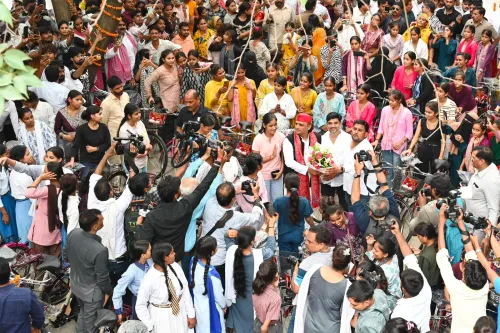
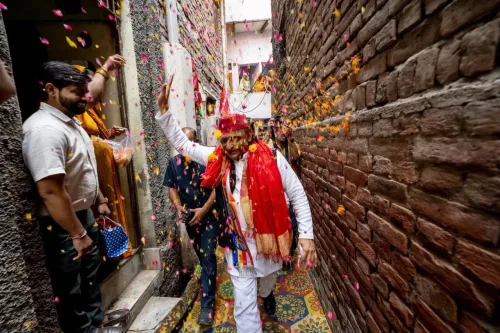
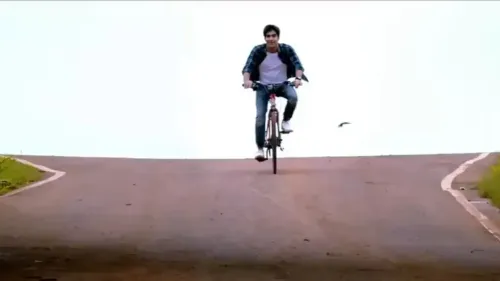
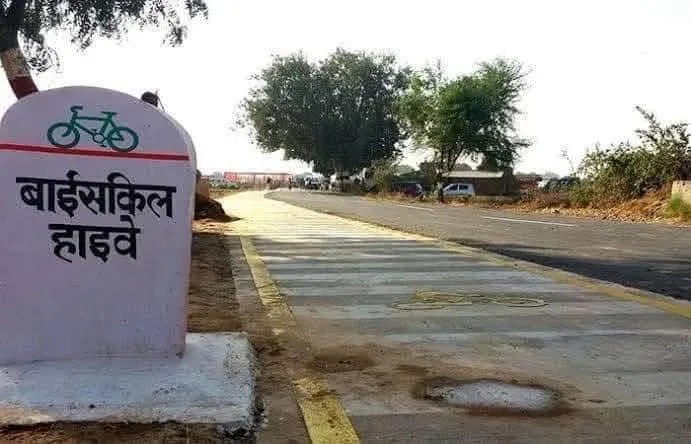
The post was accompanied by three images and shared on Akhilesh Yadav's verified X handle.
The messaging aligns with the party's long-running framing of the cycle as a symbol of egalitarian mobility in Uttar Pradesh.
Samajwadi Party president Akhilesh Yadav on Wednesday, 3 June 2026, shared a Hindi poem on X glorifying the bicycle as an affordable, egalitarian mode of transport, attributing the verses to Shri Uday Pratap Singh. The post, accompanied by three images, lands at a politically resonant moment given that the bicycle is the Samajwadi Party's official election symbol.
The poem, titled around the refrain 'साइकिल भी है खूब सवारी, थोड़े दाम काम दे भारी' ('The bicycle too is a fine ride, little in cost yet great in use'), runs across several stanzas extolling the cycle's low maintenance, accessibility and universal appeal. It calls the vehicle 'सभी जनों को दिल से प्यारी' ('dear to the hearts of all people') and frames it as the companion of 'साथी श्रमिक किसानों' ('fellow workers and farmers'), soldiers, hosts and guests alike.
Context
The verses celebrate the bicycle as a vehicle that needs no fuel or water, demands only the rider's effort and balance, and can traverse paths where motor vehicles cannot go. 'Push hard and climb the hill,' the poem urges, adding that the cycle 'removes the helplessness of all'. Another stanza describes it as a child's plaything that 'never asks for oil' and keeps its owner content.
By circulating the composition under his own handle, Akhilesh Yadav places the cycle at the centre of public conversation without making an overt political claim in the post itself. The verses are credited to Uday Pratap Singh, with the Samajwadi Party leader serving as the amplifier rather than the author.
Policy backdrop
The Samajwadi Party, founded in 1992, adopted the bicycle as its election symbol at inception to signal accessibility for ordinary citizens. Over three decades, the party has repeatedly invoked the cycle as a metaphor for affordable mobility, environmental simplicity and grassroots reach across Uttar Pradesh, India's most populous state and the party's traditional stronghold.
Indian political parties have long deployed cultural forms — folk songs, couplets and poetry — to build emotional resonance around their symbols. The bicycle, in Samajwadi Party messaging, has been positioned as the antithesis of elite consumption: a vehicle that the farmer, labourer and student can equally own and operate.
Stakeholders and impact
The poem explicitly invokes constituencies the Samajwadi Party has historically courted: workers, farmers, soldiers, and ordinary households across rural and small-town India. Lines such as 'इस पर मोहित सब नर नारी' ('every man and woman is enchanted by it') seek to extend that appeal beyond a single demographic.
For supporters, the post functions as a cultural reaffirmation of party identity. For neutral observers, it is a reminder of how deeply the symbol is woven into the party's outreach grammar — one that travels easily on social media, in regional languages, and through forms accessible to readers without formal political vocabulary.
What's next
With the next Uttar Pradesh assembly cycle on the horizon, symbolic messaging of this kind is likely to recur across Samajwadi Party social media channels and ground campaigns. The party's emphasis on the cycle as a unifier across class and occupation suggests that cultural artefacts — poems, songs, visuals — will continue to do work that formal manifestos cannot, carrying the symbol into homes well before any official poll notification.
Point of View
The brand and the bridge to the rural voter. By amplifying a poem rather than authoring a statement, Akhilesh Yadav lets cultural form carry political weight, a softer register that travels further on social media than a press release. Expect more such symbolic seeding as Uttar Pradesh's next electoral cycle approaches.
NationPress
20 Sept 2026
Frequently Asked Questions
What did Akhilesh Yadav post about the bicycle?
Akhilesh Yadav shared a Hindi poem on X praising the bicycle as an affordable, fuel-free ride loved by workers, farmers, soldiers and ordinary citizens. He credited the verses to Uday Pratap Singh.
Why is the bicycle important to the Samajwadi Party?
The bicycle is the official election symbol of the Samajwadi Party, adopted at the party's founding in 1992 to signify accessibility and affordability for common citizens.
Who wrote the bicycle poem shared by Akhilesh Yadav?
The poem is credited in the post to Shri Uday Pratap Singh. Akhilesh Yadav shared the verses on his X handle without claiming authorship.
When did the Samajwadi Party adopt the cycle symbol?
The Samajwadi Party adopted the bicycle as its election symbol in 1992, the year the party was founded.
What does the poem say about the bicycle?
The poem calls the bicycle a fine ride that costs little but offers great utility, needs no fuel or water, suits workers, farmers, soldiers, hosts and guests alike, and can travel paths where motor vehicles cannot go.