Akhilesh Yadav shares poem in praise of the bicycle
Synopsis
Samajwadi Party president Akhilesh Yadav shared a Hindi poem by Uday Pratap Singh celebrating the bicycle as a fuel-free, low-cost ride that does heavy work. The verses reinforce the party's election symbol and tap into themes of affordability, sustainable mobility and the cultural resonance of the cycle in Uttar Pradesh politics.
Key Takeaways
Akhilesh Yadav posted a Hindi poem on the bicycle on 3 June 2026.
The poem is attributed to poet Shri Uday Pratap Singh.
The bicycle is the Samajwadi Party's official election symbol.
Verses highlight that the cycle 'never asks for fuel' and offers 'little cost, heavy work'.
Akhilesh Yadav's 2012-2017 UP government ran a bicycle scheme for schoolgirls.
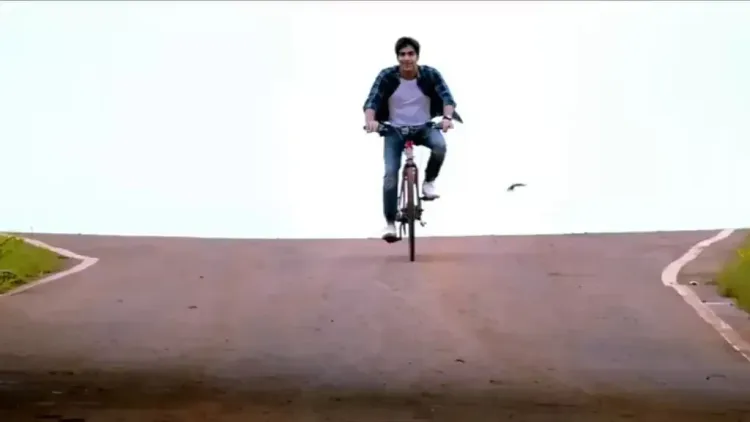
The post arrived with an accompanying video clip.
Samajwadi Party president Akhilesh Yadav on Wednesday, 3 June 2026 shared a Hindi poem extolling the virtues of the bicycle, the party's election symbol, in a post on X attributed to poet Shri Uday Pratap Singh. The verses, accompanied by a video, frame the cycle as a thrifty, eco-friendly mode of transport that delivers heavy returns for a modest price.
The poem, written in rustic Hindi, reads in translation: 'The bicycle is children's plaything; it never asks for fuel; it runs in the rush of crowds; it keeps in step with the world; its master remains content; the bicycle too is a fine ride; little cost, heavy work it does.' The closing attribution names Shri Uday Pratap Singh ji as the author.
Context
The bicycle has been the Samajwadi Party's official election symbol since the party's founding, chosen to project accessibility and a connect with ordinary citizens. Akhilesh Yadav, who served as Uttar Pradesh Chief Minister from 2012 to 2017 and is currently a Lok Sabha MP, has repeatedly invoked the symbol in his political messaging.
By foregrounding a folk-style ode rather than a direct political message, the post leans on cultural idiom to reinforce the party's identity. The phrase 'kabhi na maange tel' (never asks for fuel) doubles as a quiet jab at rising motor-fuel prices, while 'thode daam kaam de bhaari' (little cost, heavy work) underlines themes of affordability.
Policy backdrop
During Akhilesh Yadav's tenure as Chief Minister, the Uttar Pradesh government ran a bicycle distribution scheme aimed at schoolgirls, designed to boost rural school enrolment and improve mobility for adolescent girls. Bicycle-for-students schemes have been replicated by several Indian states over the years as low-cost interventions linking education access with sustainable transport.
The verses also tap into a wider policy conversation around non-motorised transport. With Indian cities grappling with air-quality concerns and household budgets squeezed by fuel costs, the bicycle is increasingly being positioned in public discourse as both an equity tool and a climate-friendly mode of urban mobility.
Stakeholders and impact
The primary audiences for such symbolic messaging are school students, rural youth and the Samajwadi Party's traditional support base across Uttar Pradesh. For party workers, the post offers a shareable cultural artefact that ties the election symbol to everyday utility rather than electoral arithmetic alone.
The choice of a poem by a regional Hindi poet also signals continuity with the party's emphasis on vernacular literature and folk culture. It allows the message to circulate beyond political circles into literary and educational networks where the bicycle carries connotations of self-reliance and childhood memory.
What's next
Observers will be watching for any follow-up communication from Samajwadi Party leaders that links the symbolic messaging to concrete proposals on transport, schools or fuel costs, particularly as Uttar Pradesh approaches its next assembly election cycle. Cultural posts of this kind often precede a sharper policy framing in the weeks that follow.
For now, the verses serve as a reminder that the bicycle, beyond being a ballot-paper icon, remains embedded in the party's narrative of affordability and grassroots reach — a narrative Akhilesh Yadav appears determined to keep in public view.
Point of View
Deployed through verse rather than slogan. By circulating a folk poem rather than a direct attack line, Akhilesh Yadav refreshes the bicycle's emotional register — thrift, childhood, anti-fuel-price resilience — without committing to a specific policy ask. It fits a longer arc where regional parties lean on cultural artefacts to keep their symbols salient between elections, particularly in a state where fuel costs and rural mobility remain live voter concerns.
NationPress
22 Sept 2026
Frequently Asked Questions
What did Akhilesh Yadav post about the bicycle?
Akhilesh Yadav shared a Hindi poem by Uday Pratap Singh praising the bicycle as a fuel-free, low-cost ride that keeps pace with the world. The post included a video and referenced the Samajwadi Party's election symbol.
Who is Uday Pratap Singh, the poet cited in the post?
Uday Pratap Singh is credited as the author of the Hindi verses shared by Akhilesh Yadav. Independent biographical details beyond the attribution in the post are not established here.
Why is the bicycle important to the Samajwadi Party?
The bicycle is the Samajwadi Party's official election symbol, chosen to project accessibility and a connection with ordinary citizens across Uttar Pradesh.
Did Akhilesh Yadav run a bicycle scheme as Chief Minister?
Yes. During his 2012-2017 term as Uttar Pradesh Chief Minister, his government distributed bicycles to schoolgirls to boost rural school enrolment and mobility.
What does the poem actually say?
In translation, the verses call the bicycle children's plaything, note that it never asks for fuel, runs through crowds, keeps in step with the world, keeps its owner content, and delivers heavy work at little cost.