Akhilesh Yadav condemns attack on communal harmony
Synopsis
Samajwadi Party president Akhilesh Yadav on 27 July 2026 posted a sharp Hindi couplet on X condemning what he called an attack on communal harmony, reinforcing his party's long-standing secular platform in Uttar Pradesh.
Key Takeaways
Akhilesh Yadav posted a Hindi couplet on 27 July 2026 condemning a perceived attack on communal harmony.
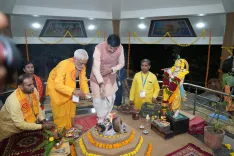
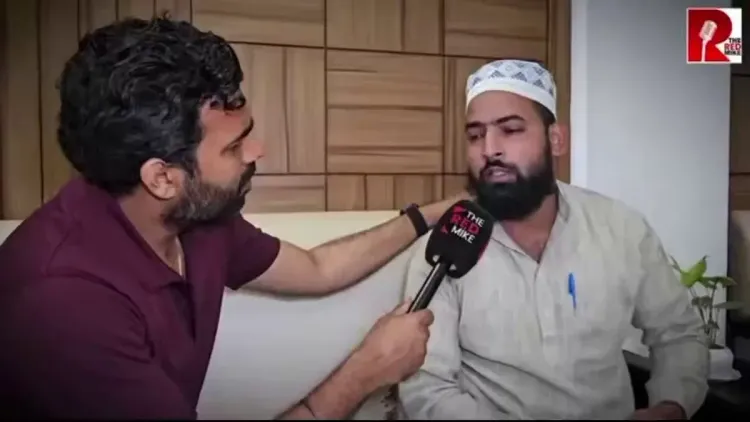
The phrase 'सौहार्द पर प्रहार, निंदनीय ये बात!' translates as 'A strike against harmony — this is condemnable.' The post included a video , suggesting a specific incident prompted the statement, though no location or event was named in the text.
The Samajwadi Party has framed communal harmony as central to governance in Uttar Pradesh since its founding in 1992 .
No response from the Uttar Pradesh government had been issued as of publication.
Follow-up statements from SP leaders or on-ground visits are expected in coming days.
Samajwadi Party president Akhilesh Yadav on Monday, 27 July 2026, issued a sharp rebuke over what he described as an assault on social harmony, posting a two-line Hindi verse on X that read: 'सौहार्द पर प्रहार, निंदनीय ये बात!' — translating broadly as 'A strike against harmony — this is condemnable.' The brief but pointed statement signals the SP chief's concern over an incident perceived to threaten communal amity, though he did not name a specific location or event.
Context
The post, comprising a single couplet in Hindi, carries the hallmarks of Akhilesh Yadav's social-media style: short, rhetorically charged, and aimed at a broad audience of Uttar Pradesh voters and party workers. The phrase 'सौहार्द पर प्रहार' ('a strike against harmony') is a deliberate rhetorical choice, framing an unnamed event as a direct attack on the fabric of coexistence. The post included a video, the contents of which provide additional context that the SP leadership evidently wants viewers to draw upon.
The Samajwadi Party, founded in 1992, has consistently positioned communal harmony as a cornerstone of its political identity in Uttar Pradesh. Akhilesh Yadav, who served as Chief Minister of the state from 2012 to 2017 and is currently a Lok Sabha MP, regularly uses social media to draw attention to what the party frames as governance failures or social-cohesion breakdowns under the incumbent administration.
Policy Backdrop
The Samajwadi Party's platform has, since its founding, emphasised secularism and the protection of minority communities as central governance commitments. In Uttar Pradesh — home to roughly 20 crore people and one of the most electorally consequential states in India — questions of communal peace carry significant political weight. Any perceived breakdown in social harmony in the state tends to draw swift responses from opposition leaders, particularly those whose electoral coalitions depend on minority and marginalised-community support.
Opposition parties in Uttar Pradesh have increasingly used social media platforms to amplify local incidents and frame them within a broader narrative of law-and-order or administrative failure. Akhilesh Yadav's post fits squarely within this pattern, using minimal words to convey maximum political intent — a condemnation that is simultaneously a critique of the state government without naming it directly.
Stakeholders and Impact
The statement is directed at multiple audiences: minority communities in Uttar Pradesh who look to the SP as a political guarantor of their safety; party workers seeking a cue from the leadership; and the broader electorate that the SP hopes to mobilise ahead of future state contests. By framing the issue in verse-like moral terms rather than partisan attack language, the post is designed to appeal beyond the party's core base.
The Uttar Pradesh government and the ruling party at the state level have not, as of publication, issued a public response to the post. Follow-up statements from senior SP leaders or clarifications on the specific incident referenced in the accompanying video are expected in the coming hours and days.
What's Next
Political observers will watch for whether Akhilesh Yadav or other Samajwadi Party leaders elaborate on the specific incident referenced in the video attached to the post. A more detailed press statement or a visit by SP representatives to an affected area would signal that the party intends to make this a sustained political issue rather than a one-off social-media intervention. The response — or silence — from the Uttar Pradesh government will also be closely tracked as an indicator of how the ruling establishment reads the political salience of the episode.
Point of View
Verse-like condemnation is a calculated political signal — one that avoids naming an adversary while placing the SP firmly on the side of social peace. The choice of Hindi poetry over prose amplifies emotional resonance and shareability, particularly among the party's core base in Uttar Pradesh. This intervention fits a well-established opposition playbook of using social media to frame state-level law-and-order episodes as systemic failures of the ruling government. Whether this escalates into a sustained political campaign will depend on how the underlying incident develops and whether the Uttar Pradesh administration responds publicly.
NationPress
26 Oct 2026
Frequently Asked Questions
What did Akhilesh Yadav post on 27 July 2026?
Akhilesh Yadav posted a Hindi couplet on X reading 'सौहार्द पर प्रहार, निंदनीय ये बात!' — meaning 'A strike against harmony — this is condemnable' — along with a video, condemning what he described as an attack on communal harmony.
Which incident is Akhilesh Yadav referring to in his post?
Akhilesh Yadav did not name a specific incident or location in his post text. The accompanying video is expected to provide additional context, and further clarification from SP leaders is awaited.
What is the Samajwadi Party's position on communal harmony?
The Samajwadi Party, founded in 1992, has consistently placed secularism and communal harmony at the centre of its political platform, particularly in Uttar Pradesh, where it draws significant support from minority and marginalised communities.
Has the Uttar Pradesh government responded to Akhilesh Yadav's statement?
As of publication on 27 July 2026, no public response from the Uttar Pradesh government or the ruling party at the state level had been issued.
Why does Akhilesh Yadav frequently post about communal harmony?
As SP president and leader of the principal opposition in Uttar Pradesh, Akhilesh Yadav uses such statements to reinforce his party's secular credentials, mobilise minority voters, and frame governance failures as threats to social cohesion ahead of future elections.