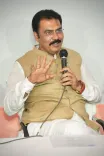
Akhilesh Yadav slams BJP over criminal-induction culture
Synopsis
Samajwadi Party president Akhilesh Yadav on 8 August 2026 posted a sharp Hindi couplet accusing the BJP of institutionalising the welcome of criminals into its ranks, escalating opposition rhetoric ahead of the 2027 Uttar Pradesh assembly elections.
Key Takeaways
Akhilesh Yadav posted a Hindi couplet on 8 August 2026 accusing the BJP of celebrating and welcoming criminals.
The post reads: 'In the BJP, criminals are celebrated; the tradition of welcoming the guilty continues.' The charge is a recurring opposition critique directed at the BJP, which has governed Uttar Pradesh since 2017 .
The timing points to early positioning ahead of the 2027 UP assembly elections .
No specific individual or incident was named in the post, keeping it as a broad political indictment.
The welcome mat for the convicted is still out in the Bharatiya Janata Party — that is the charge Samajwadi Party president Akhilesh Yadav levelled on Saturday, 8 August 2026, in a pointed Hindi barb that cut straight to one of Uttar Pradesh's most enduring political fault lines.
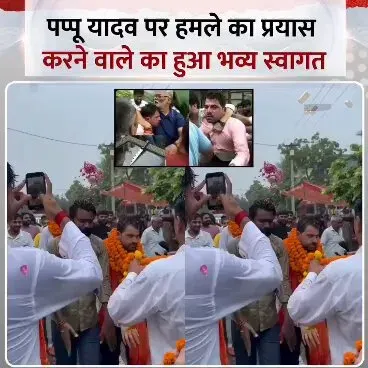
Yadav's post reads: 'Bhajpa mein aparadhiyon ki balihaar hai, doshiyon ke swagat ki parampara jaari hai' — 'In the BJP, criminals are celebrated; the tradition of welcoming the guilty continues.' The couplet-like phrasing is deliberate: crisp, quotable, designed to travel.
A decade-old charge, sharpened for 2027
The accusation is not new, but its timing is. With the 2027 Uttar Pradesh assembly elections moving into view, the Samajwadi Party has been methodically rebuilding its narrative around law, order, and the character of political defectors. Every inductee with a pending criminal case who crosses into BJP territory becomes ammunition in that campaign.
Opposition parties across India have long argued that the ruling party at the Centre — in power since 2014 nationally and in Uttar Pradesh since 2017 — has absorbed leaders carrying serious criminal records in the pursuit of electoral arithmetic. The BJP has consistently denied shielding criminals, pointing to its own anti-crime drives in the state. The charge-and-counter cycle is well-worn; what changes each cycle is the electoral stakes.
Why Akhilesh keeps returning to this theme
Akhilesh Yadav, as both a Lok Sabha MP and the principal opposition voice in UP, has a strategic interest in anchoring the BJP to a 'criminalised politics' image ahead of the state polls. The Samajwadi Party's own record on this front has drawn scrutiny over the years, which is precisely why the party's messaging now leans on brevity and rhythm — a couplet lands harder than a press conference when your own glass house is visible.
Watch for a BJP response from state spokespersons and any fresh political realignments in Lucknow that might give the charge a specific face and incident to attach to.
In UP's politics, the battle over who owns the crime narrative rarely ends — it only reloads.
Point of View
Vague enough to be unfalsifiable. By avoiding specific names, the SP chief keeps the charge alive as a general indictment rather than a debatable fact. The broader arc here is the Samajwadi Party's attempt to occupy the 'clean politics' high ground in UP, a posture that becomes harder to sustain the closer the 2027 polls get and the more coalition arithmetic demands its own compromises. BJP's response, or deliberate silence, will signal how seriously it rates the charge's traction with voters.
NationPress
22 Sept 2026
Frequently Asked Questions
What did Akhilesh Yadav say about BJP and criminals?
Akhilesh Yadav posted a Hindi couplet on 8 August 2026 saying 'In the BJP, criminals are celebrated; the tradition of welcoming the guilty continues,' accusing the party of inducting individuals with criminal records.
Why is Akhilesh Yadav attacking BJP over criminal politicians?
The Samajwadi Party has consistently accused the BJP of absorbing leaders with pending criminal cases for electoral gain. The attacks have intensified as the 2027 Uttar Pradesh assembly elections approach.
Has BJP responded to Akhilesh Yadav's criminal induction charge?
No official BJP response to this specific post has been reported yet. The party has historically denied shielding criminals and pointed to its anti-crime record in Uttar Pradesh.
When is the next Uttar Pradesh assembly election?
The next Uttar Pradesh assembly election is scheduled for 2027 , and political positioning by both the Samajwadi Party and BJP has already begun intensifying.
What does 'doshiyon ke swagat ki parampara' mean?
The Hindi phrase means 'the tradition of welcoming the guilty' — Akhilesh Yadav used it to allege that inducting individuals with criminal backgrounds has become routine practice within the BJP.