Akhilesh Yadav slams BJP over Chitrakoot water crisis, Jal Jeevan Mission
Synopsis
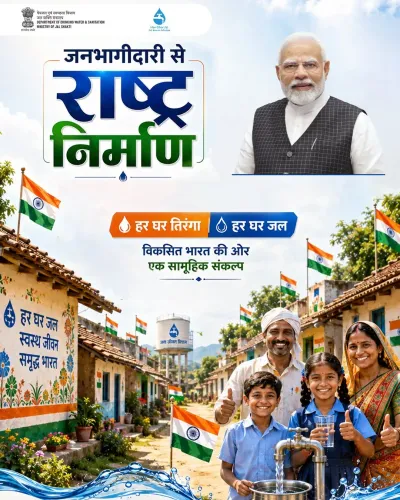
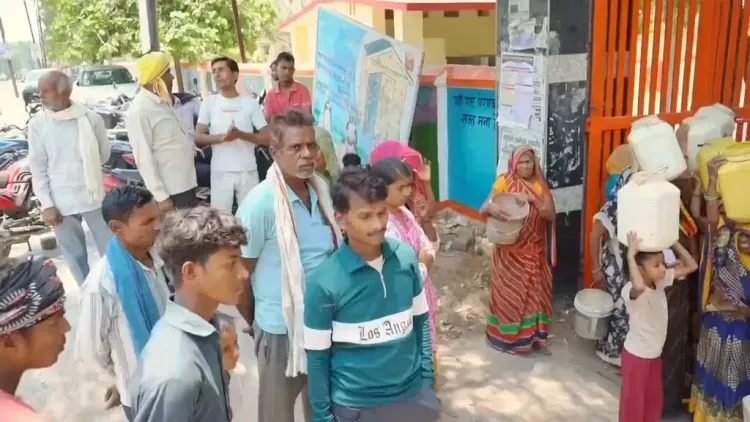
Samajwadi Party president Akhilesh Yadav has accused the BJP of failing residents of Chitrakoot, where the elderly, women and children are struggling for water. He alleged Jal Jeevan Mission tanks are collapsing and the Har Ghar Jal slogan exists only on walls, demanding water today over promises of a developed India by 2047.
Key Takeaways
Akhilesh Yadav targeted the BJP over the drinking water crisis in Chitrakoot in a post on 3 June 2026 .
He alleged that Jal Jeevan Mission tanks are collapsing and the Har Ghar Jal slogan remains confined to walls.
Yadav contrasted immediate water needs with the Centre's Viksit Bharat 2047 vision.
The Jal Jeevan Mission was launched in August 2019 to deliver tap water to all rural households.
Bundelkhand, including Chitrakoot, has long faced documented water scarcity and scheme implementation gaps.
The issue is expected to feed into the political narrative ahead of the 2027 Uttar Pradesh assembly elections.
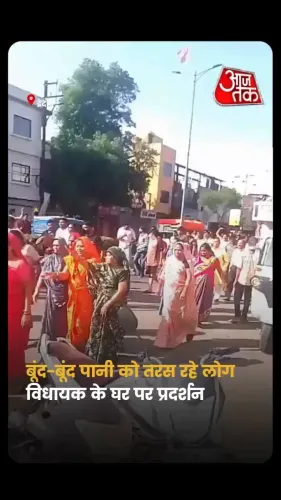
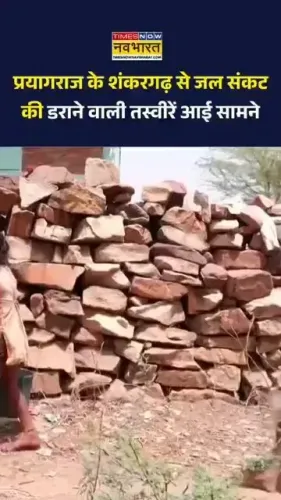
Samajwadi Party president Akhilesh Yadav on 3 June 2026 launched a sharp attack on the Bharatiya Janata Party over the drinking water crisis in Chitrakoot, alleging that the ruling party's development claims had gone 'underground' as elderly residents, women and children struggle for water. In a post on X, the former Uttar Pradesh Chief Minister linked the distress on the ground to what he described as failures of the Jal Jeevan Mission and the 'Har Ghar Jal' programme.
Context
Yadav wrote that watching the 'pitiable condition of elderly people, women and children craving water in Chitrakoot' had made the BJP's development pitch invisible. He claimed citizens were saying, in his translation, 'Give us water today; what will we do with the dream of a developed India of 2047?' The reference is to the Centre's stated vision of Viksit Bharat (Developed India) by the centenary of Independence.
The Samajwadi Party chief went further, asserting that 'as long as the BJP's mega-corrupt rule continues, the tanks of the Jal Jeevan Mission will keep collapsing and the slogan of Har Ghar Jal will remain written only on walls.' He closed with the rhyming slogans 'Bhajpa jaaye to jal aaye' (Let the BJP go so water can come) and 'Har pyaasa kahe aaj ka, nahin chahiye BJP' (Every thirsty person says today: we don't want the BJP).
Policy backdrop
The Jal Jeevan Mission was launched by the Government of India in August 2019 with the goal of providing functional household tap water connections to every rural household, originally targeted for completion by 2024 and subsequently extended. Uttar Pradesh, India's most populous state, is among the largest implementation theatres for the scheme, with the state government executing works under central funding norms.
Chitrakoot, located in the Bundelkhand region of southern Uttar Pradesh, has long been flagged in policy literature for chronic water scarcity, low groundwater tables and recurring drought-like conditions. Government audits over multiple years have documented gaps in the maintenance and functionality of rural water assets in the region, a pattern that opposition parties in the state have repeatedly invoked to question the BJP's delivery record.
Stakeholders and impact
The immediate stakeholders in the dispute are rural households across Bundelkhand, particularly women and children who typically bear the burden of fetching water over long distances when piped supply fails. For the Samajwadi Party, Bundelkhand is a politically sensitive belt where the party has sought to rebuild its rural base after consecutive setbacks in the 2017 and 2022 assembly elections.
For the BJP, which governs both the Centre and Uttar Pradesh, the Jal Jeevan Mission is among the flagship welfare deliverables it has placed at the heart of its rural outreach. Allegations of falling overhead tanks and non-functional connections, if amplified, cut at one of the scheme's most visible markers of success — the physical infrastructure in villages.
Yadav's post also carried a cryptic line: 'Now if someone again holds a swatantra (independent) hostage, the BJP people will say this was not right.' The reference is open to interpretation and the post does not specify the incident or person alluded to.
What's next
Attention is likely to shift to the next round of updated coverage and functionality data for the Jal Jeevan Mission in Uttar Pradesh from the Ministry of Jal Shakti, and to any state-level reviews of rural water supply infrastructure. With the 2027 Uttar Pradesh assembly elections on the horizon, the condition of water assets in Bundelkhand is set to remain a recurring flashpoint between the Samajwadi Party and the ruling alliance, with each side seeking to define the development scorecard on its own terms.
Point of View
He reframes a long-term aspirational narrative as a deflection from present-day failures. The choice of Chitrakoot is strategic — a district where water scarcity is structurally entrenched and politically resonant. Expect this framing to harden as the 2027 assembly contest approaches and rural infrastructure becomes a central scorecard.
NationPress
20 Sept 2026
Frequently Asked Questions
What did Akhilesh Yadav say about Chitrakoot?
Akhilesh Yadav said elderly residents, women and children in Chitrakoot are craving water and that this exposes the BJP's development claims. He argued that people want water today rather than promises of a developed India by 2047.
What is the Jal Jeevan Mission?
The Jal Jeevan Mission is a central government scheme launched in August 2019 to provide functional tap water connections to every rural household in India. It is implemented in partnership with state governments, including Uttar Pradesh.
Why is Chitrakoot facing a water crisis?
Chitrakoot lies in the Bundelkhand region, which has historically faced chronic water scarcity, low groundwater levels and recurring drought-like conditions. Audits over several years have flagged gaps in maintenance and functionality of rural water supply assets in the region.
What is 'Har Ghar Jal'?
'Har Ghar Jal' is the operational slogan and goal of the Jal Jeevan Mission, signifying piped water to every household. Akhilesh Yadav alleged the slogan exists mainly on walls rather than in working taps.
How does this link to the 2027 UP elections?
Rural water supply is emerging as a key delivery metric for the BJP government in Uttar Pradesh. Opposition parties like the Samajwadi Party are using gaps in scheme implementation, particularly in Bundelkhand, to build their campaign narrative ahead of the 2027 assembly polls.