Akhilesh Yadav Slams UP's CCTV Project as 'Chadhaava-Chori TV'
Synopsis
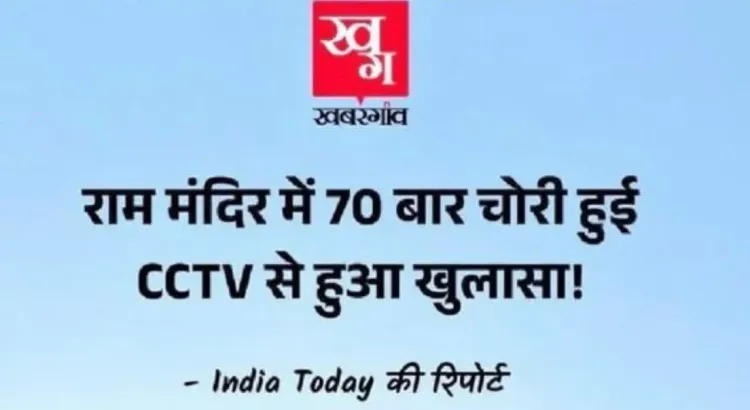
Samajwadi Party president Akhilesh Yadav on 26 June 2026 coined the term 'Chadhaava-Chori TV' to allege that the UP government's CCTV project had become a corruption racket, claiming seventy instances of looting in forty days and demanding accountability for years of alleged graft.
Key Takeaways
Akhilesh Yadav on 26 June 2026 accused the Uttar Pradesh government's CCTV project of being a vehicle for large-scale corruption.
He coined the phrase 'Chadhaava-Chori TV' as a satirical renaming of the surveillance initiative.
Yadav alleged 70 instances of looting in 40 days and 7 weeks , drawing comparisons with historical episodes of plunder.
He questioned how much public money may have been stolen, distributed, and concealed over several preceding years.
The post is part of the Samajwadi Party's long-running challenge to the BJP administration's law-and-order and governance record in Uttar Pradesh .
Demands for an independent audit of CCTV tender awards and expenditure records are expected to intensify.
Samajwadi Party president Akhilesh Yadav on Friday, 26 June 2026, launched a sharp attack on the Uttar Pradesh government's CCTV surveillance project, alleging that it had become a vehicle for large-scale corruption rather than a law-and-order tool.
Context
In his post, Yadav wrote in Hindi: 'CCTV ka naam Chadhaava-Chori TV sabit hoga' — 'the name CCTV will prove to stand for Chadhaava-Chori TV' (roughly, 'Offering-and-Theft TV'). He drew a pointed historical comparison, arguing that those who allegedly looted 'seventeen' times over centuries are remembered in infamy, but those who looted 'seventy' times in just 40 days would be 'inscribed in black letters across seven lifetimes' in history. He described the conduct as 'akhand nindaniya' — 'absolutely and utterly condemnable.'
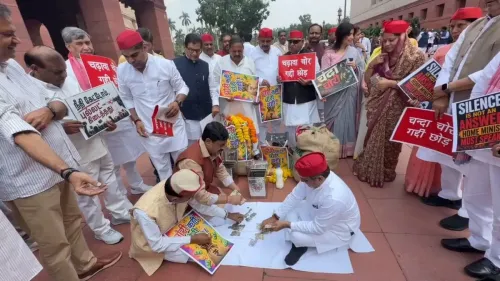
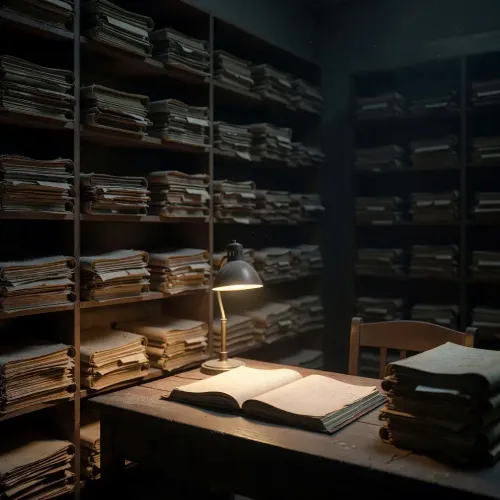
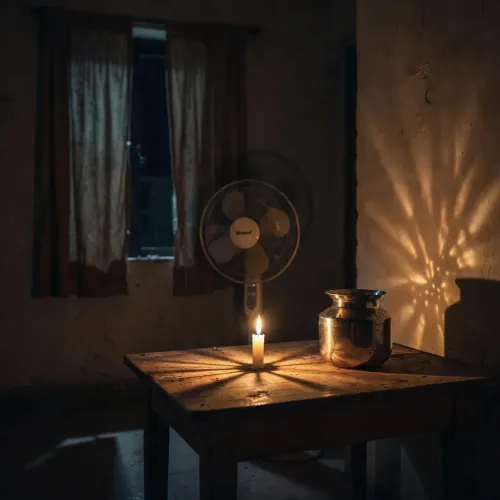
Yadav further questioned how much must have been stolen, shared, concealed, and passed up the chain of command over the preceding years if so much could allegedly disappear in just seven weeks. The post is accompanied by an image and is directed unmistakably at the ruling Bharatiya Janata Party (BJP) administration in Lucknow.
Policy Backdrop
The Uttar Pradesh government under Chief Minister Yogi Adityanath, who has been in office since 2017, has repeatedly promoted mass CCTV installation across public spaces as a flagship law-and-order initiative. The project has been presented as central to the administration's claim of improved security and reduced crime in the state.
Akhilesh Yadav and the Samajwadi Party have consistently challenged that narrative, arguing since 2017 that large surveillance contracts create opportunities for graft rather than delivering genuine public safety. The current post represents a continuation — and escalation — of that long-running critique.
Stakeholders and Impact
Uttar Pradesh taxpayers bear the financial cost of the state's surveillance infrastructure, making allegations of tender irregularities or fund diversion a matter of direct public interest. The Samajwadi Party, as the principal opposition in the state legislature, has a political stake in keeping corruption allegations against the ruling dispensation in the public eye.
The BJP administration has not issued an immediate public response to Yadav's post. Opposition messaging of this kind — using vivid numerical contrasts and historical analogies — is a well-established feature of SP-BJP political rivalry in Uttar Pradesh, where governance performance and anti-corruption credibility are central electoral themes.
What's Next
Yadav's remarks are likely to intensify demands for an independent audit of CCTV tender awards, expenditure records, and any ongoing recovery proceedings linked to the project. State assembly sessions and upcoming local-body or state election cycles are expected to serve as forums where the opposition will press for official data on fund utilisation.
If formal audit findings or legislative debates surface, they could sharpen the political and legal dimensions of the controversy — and test whether the ruling party can rebut the corruption narrative with documented project outcomes.
Point of View
Deliberate corruption enterprise. By invoking historical infamy and the metaphor of seven lifetimes, he attempts to elevate a local procurement controversy into a civilisational moral indictment of the ruling party. The 'Chadhaava-Chori TV' coinage is designed to travel virally and neutralise the BJP's own law-and-order branding. This fits a broader SP pattern of using social media to set the agenda for state assembly debates and pre-election narratives in India's most electorally significant state.
NationPress
25 Sept 2026
Frequently Asked Questions
What did Akhilesh Yadav say about the UP CCTV project?
Akhilesh Yadav alleged on 26 June 2026 that the Uttar Pradesh government's CCTV project had become a corruption scheme, coining the term 'Chadhaava-Chori TV' and claiming 70 instances of looting in just 40 days.
What does 'Chadhaava-Chori TV' mean?
'Chadhaava-Chori TV' is a satirical phrase coined by Akhilesh Yadav, roughly translating to 'Offering-and-Theft TV', used to mock the Uttar Pradesh government's CCTV surveillance initiative as a vehicle for corruption.
Which government is Akhilesh Yadav targeting with this post?
Yadav's remarks are directed at the BJP government in Uttar Pradesh led by Chief Minister Yogi Adityanath, which has promoted mass CCTV installation as a flagship law-and-order measure since 2017.
Has the UP government responded to Akhilesh Yadav's CCTV corruption allegations?
No immediate public response from the BJP administration in Uttar Pradesh has been reported following Yadav's post on 26 June 2026.
What action could follow Akhilesh Yadav's allegations about the CCTV project?
The allegations are likely to fuel demands for an independent audit of CCTV tender awards and expenditure records, with the issue expected to feature prominently in state assembly debates and the next election cycle.